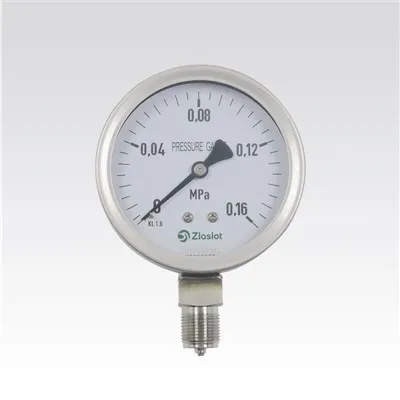

How do I choose a digital pressure gauge for a laboratory application?
Leave a message

Selecting the right digital pressure gauge for laboratory applications is a critical decision that can significantly impact the accuracy and reliability of your experiments and measurements. As a supplier of digital pressure gauges, I understand the importance of making an informed choice. In this blog post, I will guide you through the key factors to consider when choosing a digital pressure gauge for your laboratory.
Understanding Your Laboratory Requirements
The first step in choosing a digital pressure gauge is to understand the specific requirements of your laboratory application. Consider the following aspects:
Pressure Range
Determine the minimum and maximum pressure values that you need to measure. It is essential to select a gauge with a pressure range that can accommodate your application's requirements. For example, if you are working with low-pressure systems, a gauge with a range of 0-10 psi might be suitable. On the other hand, if you are dealing with high-pressure applications, you may need a gauge with a range of 0-10,000 psi or more.
Accuracy
Accuracy is a crucial factor in laboratory applications, as even small errors in pressure measurement can lead to significant discrepancies in your results. Look for a digital pressure gauge with a high level of accuracy, typically expressed as a percentage of the full-scale reading. For most laboratory applications, an accuracy of ±0.1% or better is recommended.
Resolution
Resolution refers to the smallest change in pressure that the gauge can detect and display. A higher resolution gauge can provide more precise measurements, which is particularly important in applications where small pressure changes need to be monitored. Consider the level of resolution required for your specific application and choose a gauge accordingly.
Temperature Range
Laboratory environments can vary widely in temperature, so it is important to select a digital pressure gauge that can operate within the temperature range of your laboratory. Some gauges are designed to withstand extreme temperatures, while others are more suitable for moderate temperature environments. Make sure to check the temperature specifications of the gauge before making a purchase.
Media Compatibility
The type of media that you will be measuring can also affect the choice of digital pressure gauge. Some gauges are designed to work with specific types of media, such as gases, liquids, or corrosive substances. Ensure that the gauge you choose is compatible with the media you will be using to avoid damage to the gauge and inaccurate measurements.
Types of Digital Pressure Gauges
There are several types of digital pressure gauges available on the market, each with its own advantages and disadvantages. Here are some of the most common types:
Strain Gauge Pressure Gauges
Strain gauge pressure gauges are the most widely used type of digital pressure gauge. They work by measuring the deformation of a strain gauge element when pressure is applied. Strain gauge gauges are known for their high accuracy, wide pressure range, and good stability. They are suitable for a variety of laboratory applications, including general pressure measurement, process control, and calibration.


Capacitive Pressure Gauges
Capacitive pressure gauges measure pressure by detecting changes in capacitance between two electrodes. They offer high accuracy, fast response times, and excellent long-term stability. Capacitive gauges are often used in applications where high precision is required, such as semiconductor manufacturing, aerospace, and research laboratories.
Piezoelectric Pressure Gauges
Piezoelectric pressure gauges use the piezoelectric effect to measure pressure. They generate an electrical charge when pressure is applied to a piezoelectric crystal. Piezoelectric gauges are known for their high sensitivity, fast response times, and wide frequency response. They are commonly used in applications where dynamic pressure measurements are required, such as shock and vibration testing, engine research, and fluid dynamics.
Optical Pressure Gauges
Optical pressure gauges use optical techniques to measure pressure. They offer high accuracy, non-contact measurement, and immunity to electromagnetic interference. Optical gauges are often used in applications where traditional pressure gauges may not be suitable, such as high-temperature environments, vacuum applications, and cleanroom environments.
Additional Features to Consider
In addition to the basic specifications, there are several additional features that you may want to consider when choosing a digital pressure gauge for your laboratory:
Display
The display of the digital pressure gauge is an important factor to consider, as it will affect the readability and usability of the gauge. Look for a gauge with a clear, easy-to-read display that can be viewed from different angles. Some gauges also offer additional features, such as backlighting, digital filtering, and data logging.
Output Options
Depending on your application, you may need a digital pressure gauge with specific output options. Common output options include analog outputs (such as 4-20 mA or 0-10 V), digital outputs (such as RS-232, RS-485, or USB), and wireless outputs (such as Bluetooth or Wi-Fi). Make sure to choose a gauge with the output options that are compatible with your data acquisition system or control equipment.
Calibration
Regular calibration is essential to ensure the accuracy and reliability of your digital pressure gauge. Look for a gauge that is easy to calibrate and comes with a calibration certificate. Some gauges also offer built-in calibration features, such as auto-zero and span adjustment, which can simplify the calibration process.
Durability
Laboratory environments can be harsh, so it is important to choose a digital pressure gauge that is durable and can withstand the rigors of daily use. Look for a gauge with a rugged construction, protective housing, and shock and vibration resistance. Some gauges also offer additional features, such as IP ratings, which indicate the level of protection against dust and water.
Where to Find the Right Digital Pressure Gauge
As a supplier of digital pressure gauges, I offer a wide range of products to meet the needs of different laboratory applications. Whether you are looking for a Digital Melt Presssure Gauges, High Temperature Mechanical Melt Presssure Gauges, or Vacuum Digital Pressure Gauge, I can help you find the right solution for your specific requirements.
If you have any questions or need assistance in choosing a digital pressure gauge for your laboratory, please feel free to contact me. I am always happy to provide expert advice and guidance to help you make the best decision for your application.
Conclusion
Choosing the right digital pressure gauge for your laboratory application is a complex decision that requires careful consideration of several factors. By understanding your laboratory requirements, the different types of digital pressure gauges available, and the additional features to consider, you can make an informed choice that will ensure the accuracy and reliability of your measurements.
As a supplier of digital pressure gauges, I am committed to providing high-quality products and excellent customer service. If you are interested in purchasing a digital pressure gauge for your laboratory, please contact me to discuss your specific requirements and to get a quote. I look forward to working with you to find the right solution for your application.
References
- "Pressure Measurement Handbook," by Peter Spitzer
- "Digital Pressure Gauges: A Comprehensive Guide," by InstrumentationTools.com
- "Choosing the Right Pressure Gauge for Your Application," by Omega Engineering