

What is Ceramic Pressure Transmitters
Ceramic pressure sensors are used to integrate pressure sensing into manufacturing equipment or directly into pressure sensors. They are generally well suited for aggressive applications and can be battery powered as they require minimal power to operate.Greater strength and durability.
Advantages of Ceramic Pressure Transmitters
Greater strength and durability. Compared to their stainless steel counterparts, sensing diaphragms made of ceramic are 10x stronger. This quality results in greater durability and longevity. Ceramic's superior resistance to abrasion further enhances these characteristics.
Lower cost. Ceramic diaphragms are less expensive to manufacture than stainless steel ones. This quality, coupled with longer service life, can result in significantly lower equipment costs.
Better corrosion and chemical resistance. Ceramic is chemically inert and corrosion resistant, making it highly compatible with most process materials.
Smaller environmental risk. Ceramic sensors do not contain oil, reducing their risk of negatively impacting the surrounding environment due to fluid leaks.
Higher temperature and pressure operating capacities. Ceramic is capable of withstanding greater pressures and temperatures than stainless steel. It also displays a broader range of sensitivity, with the ability to simultaneously measure low pressure while withstanding high overpressure.
Why Choose US
Our Factory
Shanghai Ziasiot Technology Co., Ltd. is an experienced manufacture of pressure and temperature sensors, transmitters.
Products
The main products developed and produced by our company consist of multiple series, including wireless sensors, flow sensors, linears, pressure sensors, liquid level sensors, high temperature melt pressure sensors , melt pressure gauge, high temperature melt pressure transmitter, temperature sensor, fusion index instrument, pressure calibration system, smart digital instrument, blasting switch, smart home system, smart module, smart body scale, laboratory instrument, Internet of Things, and Automated complete control system.
Our Certification
In order to emphasize Our commitment to quality and reputation, the R & D and production process of all zias brands ensure to meet and possess RoHS, ISO, CE, CMC, CPA, ex and other certifications.
Production and Quality
ZiasIOT devotes itself to enhancing manufacturing industry and its productivity. The capability of controlling temperature and pressure in industrial field is vital to promote productivity and produce high-quality products.
Ceramic sensors are made of ceramic materials. Ceramic materials have natural resistance to abrasion. This quality helps protect sensors against corrosion.
In a typical pressure sensor with stainless steel diaphragm, pressure is measured by the movement of a diaphragm, and the movement is measured by a measurement cell behind the diaphragm. A transfer medium like oil transfers the pressure on to the diaphragm. There is the risk of contamination of this filling oil. The metal diaphragm is also thin and fragile to facilitate easy transfer of oil, hence leading to a lot of wear and tear.
Using a pressure sensor with ceramic diaphragm eliminates the need of a transfer medium and a metal diaphragm. In a ceramic sensor, pressure to be measured is directly applied onto the sensing diaphragm. Non usage of filling oil gives the name dry cells to ceramic sensors.
Important Details to Know When Selecting a Ceramic Pressure Sensor
Types of ceramic sensors
Offers a wide range of ceramic pressure sensors that can be used to measure pressure rates or fluid levels. From full transducer packages to smart metering systems, range of ceramic sensors provides solutions for every potential application.
Flush mount versus monolithic
Flush mount sensors are flat, smooth and feature no dead volume of media pressure. Monolithic sensors, on the other hand, have an indentation in the side that is exposed to the pressure media. Flush mount solutions from offer a wider range of pressure tolerances, from 0.5 bar to as high as 600 bar.
Piezoresistive versus capacitive
Ceramic pressure sensors are either piezoresistive or capacitive by nature. Both are resistant to corrosion and are compatible with a wide array of environmental conditions and are suitable for various industrial, automotive or medical applications.
Differential pressure sensors
Ceramic differential pressure sensors measure differential pressure using a single sensor rather than two. This saves on cost and improves accuracy by narrowing down the possibility of error. Should errors occur, a single sensor makes them easier to pinpoint, which helps users to repair, replace or recalibrate equipment quickly and limit costly downtime.
Amplified versus unamplified
If users prefer to calibrate and amplify their own sensors,offers sensors with a millivolt of output that provides a blank slate for design. This option gives users the freedom to amplify their own transducer signal and allows them to maintain control over both pressure range and output frequency.
Ratiometric versus non-ratiometric
Amplified units consist of ratiometric and non-ratiometric sensors. Which of these two models will be appropriate depends largely on the voltage requirements of the application. Generally, lower voltage applications (0.5 V to 4.5 V) should choose a ratiometric sensor, while applications that use 12 V or more should use a non-ratiometric sensor.
Ceramic pressure sensor sizes
Sensors come in a variety of sizes, ranging from 9 mm in diameter up to 32.4 mm in diameter. The 9 mm sensor is an exciting addition to the line of pressure sensors because it provides an ideal solution for small spaces and applications that otherwise may have been too constrictive for simple installation. The 9 mm solution comes pre-calibrated and pre-amplified, so customers must only add a cable to begin using it.
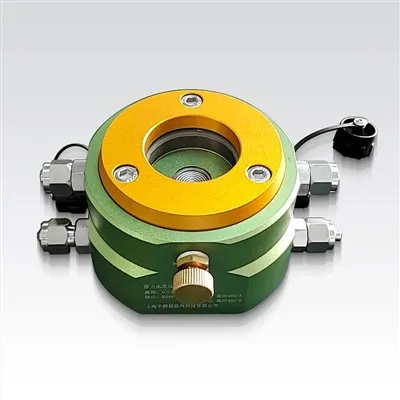
Ceramic Pressure Transmitter is a commonly used pressure sensor type. Compared with other types of pressure sensors, it has the following comparative characteristics:
1. High temperature performance: Ceramic Pressure Transmitter has good high temperature performance and can work stably at higher temperatures. It can usually work in high temperature environments above 200°C and is suitable for high temperature application scenarios.
2. Corrosion resistance: Ceramic material itself has excellent corrosion resistance, so Ceramic Pressure Transmitter has good adaptability to corrosive media and is suitable for use in working conditions that require high corrosion resistance.
3. High accuracy: Ceramic Pressure Transmitter has high accuracy and stability, can provide accurate pressure measurement results, and is suitable for application scenarios that require high measurement accuracy.
4. Vibration resistance: Ceramic Pressure Transmitter has good anti-vibration performance, can maintain stable working condition in a vibrating environment, and is not susceptible to external vibration interference.
5. Long-term stability: Due to the stable physical and chemical properties of ceramic materials, Ceramic Pressure Transmitter usually has good long-term stability and can maintain accuracy and performance stability for a long time.
It is worth noting that although Ceramic Pressure Transmitter has many advantages, it also has some limitations, such as being susceptible to shock and overload, and being relatively expensive. Therefore, when selecting a pressure sensor, it is necessary to comprehensively consider various factors according to specific application requirements and environmental conditions, and select a suitable type and specification of pressure sensor.

Precautions for Using Ceramic Pressure Transmitters
Prevent leakage
If the fittings, valves, and three valve groups used with the pressure transmitter are leaking, it will cause measurement errors. Liquid or steam is easy to find leakage. Soap water can be used to check the leakage point. Observe whether there is any leakage in the exhaust drain plug of the pressure guiding pipe joint, card sleeve joint, valve joint, transmitter high and low pressure chamber.
Anti-clogging
Blockage often occurs in the pressure guide pipe and valve. When there are impurities in the pressure guiding tube or valve of the pressure transmitter, the pressure will not be transmitted smoothly, and there will be a hysteresis in the measured value of the transmitter, which cannot reflect the change of process pressure or flow rate in a timely and true manner. When the blockage only occurs on one pressure-guiding pipe, the output signal of the transmitter will be too large or small, and the fluctuation of the measurement signal will be significantly reduced. Sewage and flushing of the pressure-guiding pipe shall be carried out in strict accordance with the regulations. It must be handled in time to ensure the smoothness of the pressure-guiding pipeline.
Anti-corrosion
The environmental conditions on site are poor, and most of the measured media are corrosive. According to the measured media, the structural material and the sealing ring of the transmitter should be correctly selected. When measure liquid and water, the pressure guiding tube and the transmitter measurement room should be insulated heat tracing measures; if the temperature of the measured medium is too high, it is necessary to protect the measuring chamber and the diaphragm with an isolation liquid; isolation measures must be taken when measuring corrosive media. Choose the installation location of the transmitter reasonably. The transmitter installed on site must have a protection box.

Ceramic pressure sensors measure pressure by detecting the deformation of ceramic elements and converting these changes into measurable and analyzable electrical signals. These sensors typically include several core components: ceramic elements, metal substrates, and electrodes. The ceramic element, the key part of the sensor, is usually made from materials with piezoelectric effects, such as alumina or lead zirconate titanate. The metal substrate supports the ceramic element and provides electrical connections, while electrodes collect the electrical signals produced by the ceramic element. When pressure is applied to the ceramic element, it deforms, generating an electrical signal through the change in piezoelectric effect, which is proportional to the applied pressure. The output signal of ceramic pressure sensors can be measured through piezoresistive measurement (using a Wheatstone bridge to convert resistance changes into a voltage signal) or capacitive measurement (using conditioning circuits to convert capacitance changes into a voltage signal).
When selecting the appropriate ceramic pressure sensor, it is essential to consider multiple key factors to ensure the sensor meets the specific requirements of the application. First, the choice of measuring range is crucial and must be determined based on the application's needs to ensure the sensor can cover the required pressure range. Second, accuracy is also an important consideration and sensors with the appropriate accuracy level should be selected based on the application's requirements for measurement precision.
Beyond basic measurement needs, environmental conditions play a decisive role in choosing the right ceramic pressure sensor. The specific requirements of the application environment, such as temperature resistance and corrosion resistance, have a direct impact on sensor performance. Therefore, when selecting a sensor, it is necessary to consider whether it can operate stably under specific environmental conditions, such as high temperatures, high pressures, or corrosive environments.
For applications with small measurement ranges and high accuracy requirements, high-accuracy sensors should be prioritized. For applications with larger measurement ranges, sensors with a wider range should be selected.
For those applications in high-temperature, high-pressure, or corrosive environments, choosing sensors that can withstand these harsh conditions is particularly critical. Such comprehensive consideration not only ensures the sensor's applicability and reliability but also maintains efficiency and precision in long-term operation.
Primary Applications of Ceramic Materials in Sensing
Pressure Sensors
Ceramic pressure sensors utilize the piezoelectric effect to convert pressure into an electrical signal. They are known for their high accuracy, durability, and stability, making them widely used in the automotive, medical, industrial, and aerospace sectors.
Temperature Sensors
Ceramic temperature sensors exploit the property of ceramic materials' resistance to changing temperatures. They offer high accuracy, a broad measuring range, and stability, finding applications in industrial, medical, and environmental monitoring.
Flow Sensors
Ceramic flow sensors leverage the piezoelectric effect or acoustic properties of ceramic materials. Capable of measuring the flow of liquids or gases, they are appreciated for their accuracy, wide range, and stability, and are employed in industrial, agricultural, and environmental monitoring.
Precautions in the Operation of Pressure Transmitters
Check for signal interference around the pressure transmitter. If there is any, try to eliminate it, or connect the sensor shielding wire to the metal shell to enhance anti-interference capability.
The pressure transmitter should be regularly cleaned, and the installation holes should be kept clean to prevent the pressure transmitter from coming into contact with corrosive or overheated media.
When wiring the pressure transmitter, the cable should be threaded through the waterproof connector (accessory) or wound around a flexible tube and tightly sealed with a sealing nut to prevent rainwater and other liquids from leaking into the pressure transmitter housing through the cable.
When measuring gas pressure with a pressure transmitter, the pressure port should be opened at the top of the process pipeline. The pressure transmitter should also be installed at the upper part of the process pipeline so that the accumulated liquid can easily flow into the process pipeline.
When measuring liquid pressure with a pressure transmitter, the pressure port should be opened on the side of the process pipeline to avoid sedimentation.
Voltage higher than 36V should not be used on the pressure transmitter, as it may cause damage.
Pressure transmitters installed outdoors in winter must be protected against freezing to prevent the liquid in the pressure port from expanding due to freezing, which may cause sensor damage.
When measuring steam or other high-temperature media with a pressure transmitter, a condenser such as a buffer tube (coil) should be connected. The working temperature of the pressure transmitter should not exceed the limit. The buffer tube needs to be filled with a suitable amount of water to prevent overheated steam from contacting the pressure transmitter. The buffer radiator should not leak air.
The installation position of the pressure transmitter for measuring liquid pressure should avoid liquid impact (water hammer phenomenon) to prevent sensor overvoltage damage.
The pressure transmitter's impulse tube should be installed in a place with small temperature fluctuations.
Prevent sediment deposition in the impulse tube of the pressure transmitter.
The medium being measured by the pressure transmitter should not freeze. Once frozen, the diaphragm may be damaged as it is generally thin.
FAQ
Q: What are the four types of pressure transmitters?
Gauge Pressure Transmitter.
Absolute Transmitters.
Differential-Pressure Transmitter.
Multivariable Pressure Transmitters.
Q: What is the purpose of a pressure transmitter?
Q: What are the applications of ceramic pressure sensor?
Q: Which is better ceramic or stainless steel sensing element?
Q: How many types of pressure transmitters are there?
Q: What is an example of a pressure transmitter?
Q: What is the difference between pressure sensor and pressure transmitter?
Q: Why is ceramic better than metal?
Q: Is a pressure transmitter analog or digital?
Q: How does a ceramic pressure sensor work?
Q: What is application of ceramic method?
Q: What are the applications of ceramic in electronics?
Q: What are the advantages of a pressure transmitter?
Q: Which is better ceramic or stainless steel sensing element?
Q: What are the advantages of pressure sensors?
Q: How do you maintain a pressure transmitter?
Q: Do pressure transmitters need to be calibrated?
Q: What is the preventive maintenance of level transmitter?
Q: Why do pressure transmitters fail?
Q: How are pressure transmitters calibrated?
As one of the most professional settlement sensor manufacturers and suppliers in China, we're featured by quality products and low price. Welcome to wholesale the best selling settlement sensor for sale here from our factory. Contact us for customized service.
Static Level Meter, Electromagnetic Flowmeter, Standard Melt Pressure Transmitter