

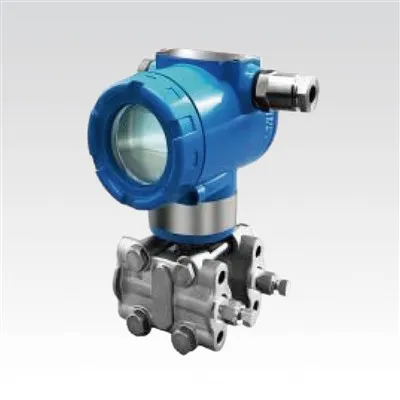
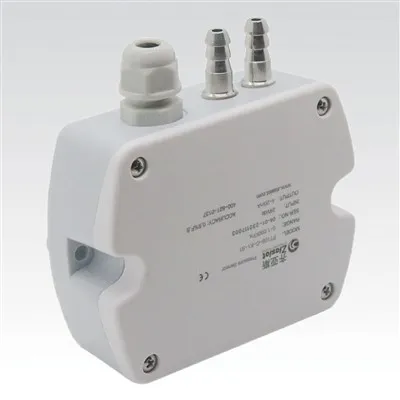
Advantages of Ziasiot Differential Pressure Transmitters
High accuracy and reliability
Robust construction, guaranteed safety
Minimum inventory and design
Minimal influence of the environment
Flexibility for use in all your applications and processes
Programmable linear or square-root output
Long term superior stability continuous emission monitoring systems


Why Choose US
Our Factory
Shanghai Ziasiot Technology Co., Ltd. is an experienced manufacture of pressure and temperature sensors, transmitters.
Products
The main products developed and produced by our company consist of multiple series, including wireless sensors, flow sensors, linears, pressure sensors, liquid level sensors, high temperature melt pressure sensors , melt pressure gauge, high temperature melt pressure transmitter, temperature sensor, fusion index instrument, pressure calibration system, smart digital instrument, blasting switch, smart home system, smart module, smart body scale, laboratory instrument, Internet of Things, and Automated complete control system.
Our Certification
In order to emphasize Our commitment to quality and reputation, the R & D and production process of all zias brands ensure to meet and possess RoHS, ISO, CE, CMC, CPA, ex and other certifications.
Production and Quality
ZiasIOT devotes itself to enhancing manufacturing industry and its productivity. The capability of controlling temperature and pressure in industrial field is vital to promote productivity and produce high-quality products.
Typically, the two pressures to be measured are applied to opposite sides of a single diaphragm. The deflection of the diaphragm, either positive or negative concerning the resting state, determines the pressure difference. Some industrial differential sensors use two separate absolute sensors with internal electronics to calculate and provide the pressure difference. Another way to achieve a differential pressure measurement is by using two absolute pressure sensors and then calculating the difference on an industrial control system. This is useful in situations where two different types of sensors are required because of either the medium being measured (i.e. a liquid and a gas) or the environment of the measurement.
Electronic Differential Pressure Transmitter Working Principle
The result measured by the differential electronic transmitter is the pressure difference, i.e. △ P= ρ g△h。 Since the oil tank is often cylindrical and the area s of its cross-section circle is constant, then the gravity g = △ P · s= ρ G △ h · s, s remains unchanged, and G is positively correlated with △ P. That is, as long as the △ p value is accurately detected, it is inversely proportional to the liquid level height h and positively correlated with the height difference △ h. When the temperature changes, although the oil volume expands or shrinks and the actual liquid level increases or decreases, the detected pressure remains unchanged. If the user needs to display the actual liquid level, it can also be solved by introducing medium temperature compensation.
Differential pressure transmitters are comprised of a robust electronic module and two sensory diaphragms that provide the electronic reading of applied forces in a containment vessel. These arrangements are physically connected in set configurations depending upon the application requirements.
Applied pressure readings are acquired by the diaphragms, which register pressure as surface deformation and translate that value into an electronic signal. This signal is transferred to the differential pressure module, which compares the two values and expresses the pressure difference as a value of pounds per square inch (psi), bar, or kilopascals (kPa). These diaphragms are all-welded to maintain the container integrity in vacuum conditions and for wet leg applications, such as level measurement in crude oil distilleries.

How to Install the Differential Pressure Transmitter
When the installation position is too close to the upstream of the production line, the unmelted material will wear to the top of the sensor. Generally speaking, the sensor can be located on the barrel in front of the filter screen, before and after the melt pump, or in the mold. First, a throttling device is installed in the pipeline. When the fluid passes through, a differential pressure is created before and after it, and the differential pressure has a relationship with the flow rate. With a certain relationship, the differential pressure is measured with a differential pressure transmitter, and the measured value of the flow is obtained.
Check the size of the mounting hole: the size of the mounting hole is not appropriate. During the installation process of the differential pressure transmitter, only the appropriate mounting hole can avoid the wear of the thread. Usually, we can use the mounting hole measuring instrument to measure the mounting hole. Fine detection to make appropriate adjustments. Measure the pressure difference between two points. Such as measuring tower equipment, the pressure difference between two points in the pipeline or the resistance loss between two points.
During extrusion production, if the extruder has not reached the operating temperature before starting production, both the sensor and the extruder will be damaged to a certain extent. Before dismantling, it should be confirmed that the temperature of the barrel is high enough and the material inside the barrel is in a softened state. After proper calculation, differential pressure transmitter can also be used to measure the interface of liquid.
Although the circuits are designed to withstand harsh extrusion processing environments, most sensors are also not waterproof and are not conducive to normal operation in wet environments. It is necessary to choose a special sensor with strong water resistance. Measure the weight of the liquid. When the liquid level H is constant, use the differential pressure transmitter to measure the size of the differential pressure AP, and then the weight T of the liquid can be obtained.
Keeping the installation holes clean is mainly to prevent the molten material from being blocked, which is extremely important to ensure the normal operation of the equipment. Before the extruder is cleaned, all pressure sensors should be removed from the barrel to avoid damage. If this occurs, steps should be taken to raise the sensor in the mounting hole. When there is no special pressure or vacuum instrument, under certain conditions, differential pressure transmitters can be used to measure pressure (negative pressure through the atmosphere) and measure vacuum (positive pressure through the atmosphere)
All differential pressure transmitters should be removed prior to cleaning the extruder barrel with a wire brush or special compound. When the barrel is heated, the sensor should also be removed and the top of the sensor should be wiped with a soft, non-abrasive cloth. The sensor hole should also be cleaned with a clean drill and guide sleeve.

Sugar industry and wine industry: Extraction of fruit juice, syrup, grape juice, etc., alcohol GL degree, ethane ethanol interface, etc.
Dairy industry: Condensed milk, lactose, cheese, cottage cheese, lactic acid, etc.
Mining: Coal, potash, brine, phosphate, the compound, limestone, copper, etc.
Oil refining: Lubricating oil, aromatics, fuel oil, vegetable oil, etc.
Food processing: Tomato juice, fruit juice, vegetable oil, starch milk, jam, etc.
Pulp and paper industry: Black pulp, green pulp, pulp cleaning, evaporator, white pulp, caustic, etc.
Chemical industry: Acid, caustic soda, urea, detergent, polymer density, ethylene glycol, sodium chloride, sodium hydroxide, etc.
Use Differential Pressure Transmitters
Measure a differential pressure, to monitor a pump.
Measure a pressure drop, to monitor filter clogging.
Measure hydrostatic liquid or gas level measurement continuously, for a pressure vessel.
The high pressure (HP) side of the level sensor cell measures pressure.
The low pressure (LP) side of the level sensor cell measures the headspace pressure.
The pressure difference between the high and low pressure sides allows the pressure transmitter to calculate the level.
The density must be constant to guarantee the accuracy of the level measurement.
Measure a volume or mass flow of a fluid (liquid flow, gas flow, water flow or steam flow).
In the latter case, the differential pressure transmitter is associated with a primary element which creates a differential pressure according to the flow rate of a fluid.
Measure an interface or a density.
For applications with very low or very high temperatures, the differential pressure sensors can be equipped with one or two diaphragm seals.
Pressure Transmitters Vs Differential Pressure Transmitters
Functions of pressure transmitter & DP transmitter
Pressure transmitters and differential pressure transmitters measure the difference between pressure and two pressures, but there are many parameters that they indirectly measure. Like a pressure transmitter, in addition to measuring pressure, it can also measure the liquid level in the device. When measuring the liquid level in an atmospheric pressure vessel, a pressure changer is required. When measuring the liquid level of a pressurized container, two pressure transducers can be used, that is, one for the lower measurement limit and one for the upper measurement limit. Their output signals can be subtracted to measure the liquid level. Generally, a differential pressure transmitter is used. It can also be used to measure the density of the medium when the liquid level and pressure in the container remain unchanged. The measurement range of the pressure transmitter can be very wide, from the absolute pressure of 0 to 100MPa (generally).
In addition to measuring the differential pressure value of the two measured pressures, the differential pressure transmitter can also measure the flow rate with various throttling elements, and can directly measure the liquid level of the pressure vessel and the liquid level of the atmospheric pressure vessel, as well as the pressure and negative pressure.
The structure of pressure and differential pressure transmitters
From the structure of pressure and differential pressure transmitters, there are ordinary type and isolation type. There is one ordinary measuring bellows, which directly senses the pressure and differential pressure of the measured medium; the isolated measuring bellows receives the pressure of a stable liquid (usually silicone oil), and this stable liquid is It is sealed between two diaphragms, and the diaphragm that receives the measured pressure is the outer diaphragm. The diaphragm of the original ordinary diaphragm is the inner diaphragm. When the outer diaphragm receives the pressure signal, the pressure of the outer diaphragm is transmitted to the ordinary diaphragm intact through the transmission of silicone oil, and the pressure of the outer diaphragm is measured.
(1) If the indication value of the low-level liquid level measurement transmitter system of the differential pressure liquid level gauge becomes the maximum or minimum, first check whether the instrument is normal. If the indication is normal, change the liquid level control to manual remote control, and you can see the liquid level change. If the liquid level can stabilize within a certain range, the liquid level control system is faulty. If the liquid level is unstable, it is usually a fault caused by the process system, and the cause should be found from the process.
(2) If the low-level liquid level measurement transmitter and the on-site direct reading indicator of the differential pressure type differential pressure liquid level gauge are incorrectly indicated, first check whether the on-site direct reading indicator is normal; if the indication is normal, check the differential pressure liquid level indicator. Check whether the sealing fluid of the negative pressure conduit of the level gauge leaks; if there is leakage, refill the sealing fluid and adjust the zero leakage.
(3) When the indication value of the low-level liquid level measurement transmitter system of the differential pressure liquid level gauge changes frequently, the capacity of the liquid level control object should be analyzed first, and the cause of the failure should be analyzed. Large capacity is generally the cause of instrument failure. If the capacity is small, it is necessary to analyze whether the operating state of the technology has changed. Technological changes, if any, are likely to be frequent. No change may be the cause of instrument failure.
6 Steps to Properly Maintain the Differential Pressure Transmitter
Choose the right position: When the differential pressure transmitter is installed too close to the upstream of the line, the unmelted material will wear to the top of the sensor. If the sensor is installed too far behind, there will be a stagnation zone of molten material between the sensor and the screw stroke, where the melt is likely to degrade and the pressure signal may transmit distortion. In general, the sensor can be located on the barrel in front of the screen, in front of or behind the melt pump, or in the mold.
Check the size of the mounting hole: If the size of the mounting hole is not suitable, the threaded part of the differential pressure transmitter is more susceptible to certain wear during the installation process. This will not only directly affect the sealing of the equipment, but also make the pressure sensor not fully function, and may even pose a safety hazard. Only the proper mounting holes can avoid the wear of the threads. Usually we can use the mounting hole measuring instrument to carry out fine inspection of the mounting holes to make appropriate adjustments.
Avoid low temperature interference: In the extrusion production process, if the extruder does not reach the operating temperature before starting the production, the sensor and the extruder will be damaged to a certain extent. In addition, if the sensor is removed from the cold extruder, the material may stick to the top of the sensor causing damage to the diaphragm. Therefore, before removing the differential pressure transmitter, it should be confirmed that the temperature of the barrel is high enough and the material inside the barrel is softened.
Keep dry: Although the circuit design of the differential pressure transmitter can withstand the harsh extrusion processing environment, most of the sensors are not absolutely waterproof, and it is not suitable for normal operation in humid environments. Therefore, it is necessary to ensure that the water in the water-cooling device of the extruder barrel does not leak, which may adversely affect the sensor. If the sensor has to be exposed to water or moisture, choose a special sensor that is extremely water resistant.
Keep the mounting holes clean: Keep the mounting holes clean mainly to prevent the clogging of the melt, which is extremely important to ensure the normal operation of the equipment. All pressure sensors should be removed from the barrel to avoid damage before the extruder is cleaned. When the sensor is removed, the melt may flow into the mounting hole and harden. If the residual melt is not removed, the top of the sensor may be damaged when the sensor is mounted again. The cleaning kit removes these melt residues. However, repeated cleaning processes may deepen the damage to the sensor caused by the mounting holes. If this happens, steps should be taken to raise the position of the sensor in the mounting hole. The cleaning of the mounting holes is easier to understand, and the mounting holes can be easily cleaned with the control picture and structure drawing.
Careful and thorough cleaning: All differential pressure transmitters should be removed before cleaning the barrel of the extruder with a wire brush or special compound. Because both methods of cleaning may cause damage to the diaphragm of the sensor. When the barrel is heated, the sensor should also be removed and wiped with a soft cloth that does not wear out, and the sensor holes need to be cleaned with a clean drill and guide sleeve.
FAQ
Q: What is a differential pressure transmitter?
Q: What is the purpose of the differential pressure?
Q: What is a differential pressure sensor used for?
Q: What is a differential pressure cell used for?
Q: How does a differential pressure flow transmitter work?
Q: What are the four types of pressure transmitters?
Gauge Pressure Transmitter.
Absolute Transmitters.
Differential-Pressure Transmitter.
Multivariable Pressure Transmitters.
Q: What are the advantages of differential pressure?
Q: What is the difference between static pressure and differential pressure?
Q: What is the difference between operating pressure and differential pressure?
Q: What is the function of a pressure transmitter?
Q: What is the principle of DP cell transmitter?
Q: What is the principle of differential pressure?
Q: Can we use differential pressure transmitter as pressure transmitter?
Q: What is the range of a differential pressure transmitter?
Q: What is the difference between absolute pressure transmitter and differential pressure transmitter?
Q: Is a pressure transmitter analog or digital?
Q: What is the difference between pressure sensor and pressure transmitter?
Q: What is the symbol for differential pressure?
Q: Is differential pressure the same as dynamic pressure?
Q: Is pressure drop the same as differential pressure?
As one of the most professional differential pressure transmitters manufacturers and suppliers in China, we're featured by quality products and low price. Welcome to wholesale the best selling differential pressure transmitters for sale here from our factory. Contact us for customized service.
Air Hvac Micro Differential Pressure Transmitter, differential pressure transmitter capillary type, 3051 differential pressure transmitter