
Can ceramic pressure transmitters be used in hazardous areas?
Leave a message

Ceramic pressure transmitters have become a staple in various industrial applications due to their reliability, accuracy, and cost - effectiveness. One question that often arises is whether these transmitters can be used in hazardous areas. As a leading supplier of ceramic pressure transmitters, I am well - positioned to delve into this topic and provide you with comprehensive insights.
Understanding Hazardous Areas
Hazardous areas are locations where there is a potential for the presence of flammable gases, vapors, mists, or combustible dusts. These areas are classified based on the likelihood of the presence of these hazardous substances. For instance, in the European Union, hazardous areas are classified into zones: Zone 0 (continuous presence of a flammable atmosphere), Zone 1 (likely presence), and Zone 2 (unlikely presence). In the United States, a similar classification system exists with Classes, Divisions, and Groups.


Features of Ceramic Pressure Transmitters
Before we determine whether ceramic pressure transmitters can be used in hazardous areas, it's important to understand their key features. Ceramic pressure transmitters typically use a ceramic sensing element, which offers high accuracy, excellent long - term stability, and resistance to corrosion. The ceramic material is also highly resistant to mechanical stress, making it suitable for a wide range of pressure measurement applications.
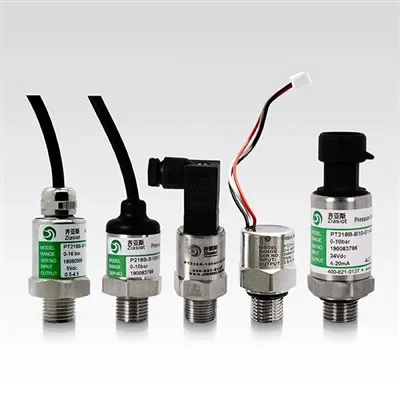
Our company offers a variety of ceramic pressure transmitters, including the Standard Ceramic Pressure Transmitter. This transmitter is designed for general industrial applications and provides reliable pressure measurement with high precision. The Refrigeration Pressure Transmitter is specifically tailored for refrigeration systems, where it can withstand the harsh conditions and provide accurate pressure readings. And the Anti - Crossive Pressure Transmitter is engineered to resist cross - interference, ensuring accurate measurement even in complex environments.
Can Ceramic Pressure Transmitters be Used in Hazardous Areas?
The answer is yes, but with certain conditions. For a ceramic pressure transmitter to be used in a hazardous area, it must meet specific safety standards and requirements.
Intrinsic Safety
One of the most common methods to ensure safety in hazardous areas is through intrinsic safety. An intrinsically safe device is designed in such a way that it cannot produce enough electrical or thermal energy to cause ignition of the surrounding hazardous atmosphere. Our ceramic pressure transmitters can be designed to be intrinsically safe. This involves using low - power components and proper electrical isolation to prevent any potential sparks or excessive heat generation. For example, the electrical circuits within the transmitter are carefully designed to limit the current and voltage to levels below the ignition energy of the hazardous substances.
Explosion - Proof Design
Another approach is an explosion - proof design. An explosion - proof enclosure is used to contain any internal explosion within the device, preventing it from spreading to the surrounding hazardous area. The enclosure is constructed to withstand the pressure generated by an internal explosion and is designed to cool the hot gases and flames before they can escape and ignite the external atmosphere. Our ceramic pressure transmitters can be housed in explosion - proof enclosures that meet international standards such as ATEX (European Union) and UL (United States).
Certification
To ensure the safety and compliance of our ceramic pressure transmitters in hazardous areas, we obtain relevant certifications. These certifications are issued by independent testing laboratories after the transmitters have undergone rigorous testing. For example, an ATEX certification indicates that the transmitter meets the safety requirements for use in explosive atmospheres in the European Union. Similarly, a UL certification is recognized in the United States. When purchasing a ceramic pressure transmitter for a hazardous area, it is crucial to ensure that it has the appropriate certifications for the specific hazardous area classification.
Advantages of Using Ceramic Pressure Transmitters in Hazardous Areas
There are several advantages to using ceramic pressure transmitters in hazardous areas.
High Accuracy
Ceramic sensing elements offer high accuracy, which is crucial in hazardous areas where precise pressure measurement can be a matter of safety. For example, in chemical plants where the pressure of flammable substances needs to be closely monitored, any inaccuracy in the pressure measurement can lead to dangerous situations. Our ceramic pressure transmitters can provide accurate pressure readings, allowing for better process control and safety.
Durability
The ceramic material used in these transmitters is highly durable and resistant to corrosion and mechanical stress. This is important in hazardous areas where the transmitters may be exposed to harsh chemicals, high temperatures, and vibrations. The durability of our ceramic pressure transmitters ensures long - term reliability and reduces the need for frequent replacements, which can be a safety risk in hazardous environments.
Cost - Effectiveness
Compared to some other types of pressure transmitters, ceramic pressure transmitters are relatively cost - effective. This is beneficial for companies operating in hazardous areas, as they can achieve the required safety standards without incurring excessive costs. The cost - effectiveness also extends to maintenance, as the long - lasting nature of the ceramic sensing elements reduces maintenance costs over the life of the transmitter.
Considerations When Using Ceramic Pressure Transmitters in Hazardous Areas
While ceramic pressure transmitters can be used in hazardous areas, there are some considerations that need to be taken into account.
Installation
Proper installation is crucial to ensure the safety and performance of the transmitter in a hazardous area. The installation should follow the manufacturer's instructions and relevant safety standards. For example, the transmitter should be installed in a location where it is protected from physical damage and is easily accessible for maintenance. The electrical wiring should also be installed correctly to prevent any potential short - circuits or other electrical hazards.
Maintenance
Regular maintenance is essential to keep the ceramic pressure transmitter in good working condition. This includes checking the integrity of the enclosure, calibrating the transmitter, and inspecting the electrical connections. In hazardous areas, maintenance procedures should be carried out with extreme caution to avoid any potential ignition sources. It is also important to use trained personnel for maintenance and to follow all safety protocols.
Conclusion
In conclusion, ceramic pressure transmitters can be effectively used in hazardous areas, provided they meet the necessary safety standards and requirements. Our company offers a wide range of ceramic pressure transmitters that can be designed to be intrinsically safe, housed in explosion - proof enclosures, and are certified for use in hazardous areas. With their high accuracy, durability, and cost - effectiveness, these transmitters are an excellent choice for companies operating in challenging environments.
If you are interested in purchasing ceramic pressure transmitters for your hazardous area applications, we encourage you to contact us for a detailed discussion. Our experienced team can help you select the right transmitter for your specific needs and ensure that all safety and performance requirements are met.
References
- "Electrical Equipment for Explosive Gas Atmospheres" - International Electrotechnical Commission (IEC)
- "Safety Standards for Hazardous (Classified) Locations" - Underwriters Laboratories (UL)
- "ATEX Directive 2014/34/EU" - European Union