

Advantages of Ziasiot Level Switches
1. Reliable Point-Level Detection
Accurately detects high/low level limits to trigger alarms, pumps, or valves.
Ideal for overfill prevention, dry-run protection, and leak detection.
2. Multiple Sensing Technologies
Available in different types to suit various applications:
Float Switches (mechanical, simple, cost-effective)
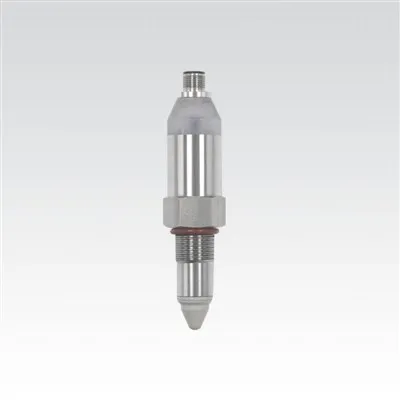
Vibrating Fork/Tuning Fork (for liquids & powders, immune to buildup)
Capacitive (for conductive/non-conductive liquids and solids)
Optical (for clean liquids, high precision)
Conductivity (for water-based liquids)
3. Robust & Durable Construction
Made from stainless steel, PTFE, or other corrosion-resistant materials.
IP65/IP66/IP67/IP68 ratings for dustproof and waterproof operation.
Suitable for high-pressure and high-temperature environments (depending on model).
4. No Moving Parts (in Most Models)
Tuning fork and capacitive switches have no moving parts, reducing wear and maintenance.
Float switches are simple but still highly reliable for basic applications.
5. Easy Installation & Setup
Compact design allows for horizontal, vertical, or side-mounted installation.
Threaded, flanged, or clamp mounting options for flexibility.
6. Wide Application Range
Works with water, wastewater, chemicals, oils, fuels, food, pharmaceuticals, and bulk solids.
Some models are ATEX/IECEx certified for hazardous areas.



Why Choose US
Our Factory:Shanghai Ziasiot Technology Co., Ltd. is an experienced manufacture of pressure and temperature sensors, transmitters.
Products:The main products developed and produced by our company consist of multiple series, including wireless sensors, flow sensors, linears, pressure sensors, liquid level sensors, high temperature melt pressure sensors , melt pressure gauge, high temperature melt pressure transmitter, temperature sensor, fusion index instrument, pressure calibration system, smart digital instrument, blasting switch, smart home system, smart module, smart body scale, laboratory instrument, Internet of Things, and Automated complete control system.
Our Certification:In order to emphasize Our commitment to quality and reputation, the R & D and production process of all zias brands ensure to meet and possess RoHS, ISO, CE, CMC, CPA, ex and other certifications.
Production and Quality:ZiasIOT devotes itself to enhancing manufacturing industry and its productivity. The capability of controlling temperature and pressure in industrial field is vital to promote productivity and produce high-quality products.
Types of Level Switches
Capacitive level switches are designed to measure corrosive liquids, high temperatures, and liquid levels in sealed containers. A capacitive level switch works on the principle of capacitance. It has an electrode that changes when the height of the medium changes and causes its capacitance, the ratio of its electrical charge, to change. The sensing mechanism changes the level or height of the medium into a current signal transmitted to a secondary instrument or computer.
Conductivity level switches have sophisticated and highly sensitive sensors that record slight changes in the level of a liquid. They have conductive probes that are completely insulated electrodes except for their tips to avoid electrical bridging. The probes work by the variations of the electrical resistance between them, with one electrode being the reference electrode and the other being the level control electrode.
The process of conductivity electrodes detects the level of resistance when they are covered in the medium. In some cases, an electrically conductive tank wall can be used in place of one of the electrodes.
A diaphragm level switch measures pressure changes caused by the level of the material rising or falling. As the level rises, air pressure gets higher, and the face of the diaphragm falls under the pressure, which activates a micro switch. When the pressure gets lower, the diaphragm returns to its initial position. Diaphragm level switches have an electrical contact output and have wide industrial use.
Displacer level switches are designed to work where there are high temperatures and pressure. They have a weight, which is its displacer, suspended on a spring that is heavier than the media. When the media makes contact with the displacer, buoyancy force is produced that changes the weight of the displacer and causes the spring to retract. As the spring retracts, it sends a magnet upward that actuates the switching element.
In water treatment, liquid level control is often related to the safety, economy and feasibility of the entire process.
In a water treatment process, there are generally raw water, intermediate water tanks, production water tanks, backwash water tanks, and even waste liquid tanks. There are large and small volumes. Generally, the production water tank and the raw water tank will be relatively large, especially in large production lines. At this time, multiple liquid level switches are often used in the water tank to control multiple liquid levels. Each liquid level corresponds to different actions, such as the start and stop of the pump and the start and stop of the produced water. Some tanks, although large, do not necessarily require multiple level switches.
For example, in an RO pure water production line, RO concentrated water is used as backwash water and stored in the backwash water tank. In the backwash water tank, there is only one liquid level switch, that is, the low liquid level control switch, which is used to detect the amount of water in the water tank during backwashing without detecting whether the water tank is full. Because RO produces pure water continuously, concentrated water cannot be discharged. For the product water tank, you need to set the low level and high level control switches. The high liquid level switch is used to detect whether the water tank is full, and if it is, the water production is stopped; the low liquid level switch is used to monitor whether the water produced in the product water tank is sufficient when the water is used.
Applications of Level Switches
Point Level Detection
A point level detection level switch is programmed with a predefined level and activates when that level is reached. Level switches used for point level detection include capacitance, ultrasonic, rotary paddle, and tuning fork or rod vibration switches. In the point level switch system, there are two switches with one to measure the high level and one to measure the low level.
Continuous Level Measurement
Continuous level measurement level switches monitor the levels of media and provide a constant flow of data regarding the media’s level. They include microwave, ultrasonic, capacitive, and float switches. Continuous level measurement level switches are more complex than point level detectors since they are designed to monitor the whole system. They are programmed to check a range of levels to produce an analog output of a container's level.

Contact Level Switches
Contact level switches come in contact with the measured product or material and include floats, conductive, and vibrating or tuning fork level switches. They are a very cost effective and straightforward tool for measuring process levels. Unlike non-contact level switches, contact level switches have fewer features and a simplistic design. An important concern for contact level switches is the configuration of the material they will measure, such as corrosive, acidic, or highly reactive. Though contact level switches are less expensive, they have to be chosen carefully to match the medium.
Non-Contact Level Switches
There are certain applications where contact with the medium has to be avoided because the product is corrosive or has properties that would taint the function of the level switch or its readings. Non-contact level switches use the time of flight (ToF) principle to measure the level of a material continuously.
Level Switch Vs Level Transmitter
The difference between the level switch and the level transmitter includes the following.
|
Level Switch |
Level Transmitter |
|
A level switch is also called a level sensor. |
Level transmitter is also known as level gauges. |
|
This switch is suitable wherever very high or very low levels need to be calculated. |
A level transmitter is suitable where the precise liquid level needs to be calculated. |
|
These are expensive as compared to transmitters. |
These are inexpensive as compared to switches. |
|
As compared to load transmitters, these are not reliable & robust. |
These transmitters are more reliable & robust. |
|
The information available on the switch is less as compared to a transmitter. |
The information available on this is more as compared to a switch. |
Components of a Level Switch
Sensor Component
The main component of a level switch is its sensor, which can be point level detection or continuous level measurement. Point level sensor indicators include capacitance, optical, conductivity, vibrating or tuning fork, and float switch. Sensors for continuous level measurement are ultrasonic, microwave, and radar.
Point level sensors are very small, inexpensive, make contact with the product, have no moving parts, and are very accurate. To ensure their accuracy, they are calibrated to the proper level and type of product.
Continuous level measurement sensors have no moving parts, are compact, extremely reliable, do not make contact with the product, are unaffected by the properties or characteristics of the product, and are self-cleaning. Since continuous level measurement sensors are more complex, they are more expensive and can be affected by environmental factors such as static electricity.
Output Signal
The output signals for a level switch can be serial or parallel, depending on the type of level switch and its design. Serial output is a method of communication between a computer and its peripherals, which, in this case, is a level switch. The data is sent sequentially with a starting point and stopping point.
The types of communication of a serial output signal can be asynchronous, where the data has a start and stop to delimit it. With synchronous serial output, additional bits are eliminated, and the limiting of the data depends on timing. Serial data communication can be sent over long distances and has simple wiring.
Parallel communication involves sending each bit of data on a separate wire. All of the data is received by the computer all at once and must arrive at exactly the same time. With parallel data communication, more information can be sent all at once, quickly and reliably. Since all the data is received at one time, it takes longer to be processed.
Interface
There are various displays available for level switches, with some types being more precise and accurate than others. The three most common types that are used for industrial processes are analog, digital, and video. In the majority of cases, computers are used to control and accept the data.
Certain variations of level switches have unit displays where settings can be made on the switch.
Analog - As with all analog displays, there is a dial, button, or needle used to set the parameters of the switch.
Digital - Digital displays are the most user friendly and have numerical readings that can be used to set the levels for the level switch. The display is normally lit and has a method for entering or reading data.
Computer - More and more systems are connecting level switches to computers to receive the output data, whether it is serial or parallel. A computer is capable of arranging the data and providing a video display.
How to Choose the Right Level Switch


Level Switch Material
Level switches are made from every type of material conceivable. When determining what level switch to buy, it is important that the level switch be compatible with the material it will be monitoring. Manufacturers make level switches from brass, stainless steel, and various forms of plastic. All of these materials can be used with wet materials that are non corrosive.
The chemical impact from the media being measured can impact the performance of a level switch. This consideration is also a factor in deciding if the level switch will be the immersion type, such as a displacer or float level switch.
Electrical Requirements
For a level switch to work properly, its electrical connection must match its power supply. Insufficient power supply or over supply can lead to poor performance of the level switch or non-activation.
Switch Mounting
As simple as this may seem, the mounting of a level switch has a great to do with its performance and capabilities. Fundamentally, level switches can be mounted horizontally or vertically, which are the most basic descriptions of level switch mounting.
Included in the mounting configurations are the size of hole through which the level switch will be mounted, positioning on the container such as the side, top, or bottom, threaded or unthreaded attachment, hanging or wall mounted, and several other factors each of which must be decided in advance of purchasing a level switch.
Measurement of a Switch
This factor is the reason for purchasing a level switch. It must be decided in advance what type of data required and the method of measurement. All level switches are designed to take accurate readings. The types of readings are determined by how the level switch will be used. Most applications require two level switches, with one to measure the empty level and the other to measure overfill.
It is important to determine what the lowest allowable level will be and how close to the top of the container the contents should be allowed to rise. Some of these factors are decided by the size of the container and its volume.
Material Pressure
All materials produce pressure due to their weight. When choosing a level switch, it is important to understand if the materials being monitored will place pressure on the level switch. If that is the case, there are level switches designed from materials capable of withstanding high pressure conditions.
Temperature Withstanding
In the case of temperature, not all level switches are created equal. The base material of a level switch and its type of wiring will determine the level of temperatures that it can endure. Though all level switches can be used for a variety of applications, only ones that are specially designed are capable of withstanding high temperatures of 1000° C or higher.
Switch Output
Level switches can produce different types of output, which can be a relay, analog, or digital. The type of output has to match the controller that will be receiving the data. The selection includes the type of time delay that can differentiate between using parallel or serial output.
Container Size
All level switches can be easily carried by hand and are small and compact devices. Though this is common to all level switches, some types are easier to fit in certain containers than other types. Of the many factors regarding the selection process, this particular one is the most obvious but is often overlooked due to the general size of level switches. The first step in the selection process is to calculate the size of the container and the number of level switches that will be required.
FAQ
Q: What is a level switch?
Q: What is the difference between a float switch and a level switch?
Q: What is the difference between a level switch and a level transmitter?
Q: What is a point level switch?
Q: Where is level switch used?
Q: What is a Level 1 switch?
Q: How to select level switch?
Accuracy: The accuracy of the switch is important, as it will determine the precision of the measurement.
Q: What is flow and level switches?
Q: What is a level float switch?
Q: What is the output of a level switch?
Q: Is a level switch analog or digital?
Q: What is level switch in instrumentation?
Q: How many types of level switches are there?
Q: What are liquid level switches?
Q: How does tilt level switch work?
Q: What is a level transmitter?
Q: What is the use of level transmitter?
Q: What is a fill level limit switch?
Q: What is the importance of level switch?
Q: What are the advantages of float switches?
As one of the most professional level switches manufacturers and suppliers in China, we're featured by quality products and low price. Welcome to wholesale the best selling level switches for sale here from our factory. Contact us for customized service.
Electronic Pressure Switch, Intelligent Capacitive Level Switch, float type level measurement