

Advantages of Ziasiot Level Sensor And Transmitter
1. High Accuracy & Precision
Utilizes advanced sensing technology to provide real-time, highly accurate level measurements.
Minimal drift over time, ensuring consistent performance in demanding environments.
2. Wide Range of Applications
Suitable for liquids, slurries, and corrosive media (depending on model).
Works in industries like water/wastewater, chemical, oil & gas, food & beverage, and pharmaceuticals.
3. Robust & Durable Construction
Made from high-quality materials (e.g., stainless steel, PTFE) for corrosion resistance.
IP66/IP67/IP68 protection ratings available for dustproof and waterproof operation.
4. Multiple Measurement Technologies
Available in different types:
Ultrasonic (non-contact, ideal for clean liquids)
Radar (for harsh conditions, vapors, and dust)
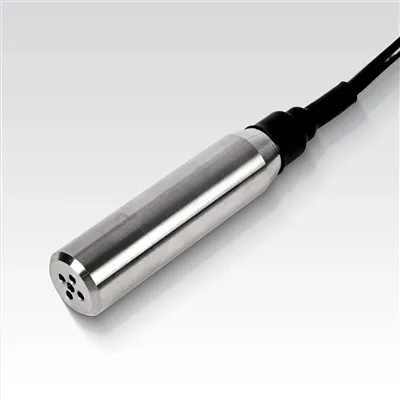
Hydrostatic (submersible, great for deep tanks)
Capacitive (for conductive/non-conductive liquids)
5. Factory with the design team, OEM is available.
Fast delivery, many models in stock, low MOQ and Ex-factory competitive price.




Why Choose US
Our Factory:Shanghai Ziasiot Technology Co., Ltd. is an experienced manufacture of pressure and temperature sensors, transmitters.
Products:The main products developed and produced by our company consist of multiple series, including wireless sensors, flow sensors, linears, pressure sensors, liquid level sensors, high temperature melt pressure sensors , melt pressure gauge, high temperature melt pressure transmitter, temperature sensor, fusion index instrument, pressure calibration system, smart digital instrument, blasting switch, smart home system, smart module, smart body scale, laboratory instrument, Internet of Things, and Automated complete control system.
Our Certification:In order to emphasize Our commitment to quality and reputation, the R & D and production process of all zias brands ensure to meet and possess RoHS, ISO, CE, CMC, CPA, ex and other certifications.
Production and Quality:ZiasIOT devotes itself to enhancing manufacturing industry and its productivity. The capability of controlling temperature and pressure in industrial field is vital to promote productivity and produce high-quality products.
Types of Level Transmitters
Liquid Level Transmitters detect levels of liquids. Liquid level transmitters also detect interfaces between liquids such as oil and water. You will find liquid-level transmitters in storage, transport, and water storage tanks. These transmitters measure the level by measuring the head pressure of the liquid.
Ultrasonic transducers mounted at or near the top of a container use an ultrasonic pulse. The pulse hits the surface of the liquid and reflects. The sensor then calculates the fill level based on the time between the transmitted and received signal.
The principle of capacitive level measurement is based on a change in capacitance. An insulated electrode acts as one capacitor plate, and the tank wall acts as the other plate. The capacitance depends on the fluid level. An empty tank has a lower capacitance, while a filled tank has a higher capacitance.
By measuring the variations in capacitance, the transmitters calculate the fill level of the tank.
A hydrostatic level sensor measures the hydrostatic pressure in a liquid at a pre-determined depth. Hydrostatic level sensors measure fluid levels by the pressure of the resting body of the fluid within the vessel. The greater the force of liquid, the greater the volume of fluid.
These transmitters use a magnetic object suspended in a buoyant float. This transmitter is suitable for continuous measurement due to the rise and sink of the float based on the liquid level. Utilizing a combination of proven buoyancy principles with the benefits of magnetism, magnetic-level transmitters can fit almost any process.
These transmitters work on the principle of radar based on electromagnetic waves at a range of 10GHz under microwave X-band bandwidth. Mounted at the top of a tank filled with a liquid, the transmitter sends a radar signal into the liquid and receives a reflection of the signal. The transmitter then analyzes the current fill level of the tank based on the time the transmitted signal takes to return.
Small containers are often controlled with just a Level Switch, but for medium-sized and large containers, instead of installing multiple Level Switches at the top, middle, and bottom, a Level Transmitter is used to continuously measure the storage level and calculate approximate storage level in real time.
It is often displayed and used.
In some cases, Level Transmitter is also used to check the intermediate storage amount while controlling with a Level Switch.
This also has the advantage of making it easier to notice if there is a problem with a certain sensor.
Since it can be detected early, it can reduce impact on production process and prevent stress on equipment.

How to Calibrate a Level Transmitter
Before using a level transmitter, it needs to be calibrated. This process involves setting the output signal of the device so that it accurately reads the actual fluid level. The calibration procedure will vary depending on the type of level transmitter being used.
Submersibles, for example, should be set up in such a way that they are sitting at least 6 inches below the surface of the liquid they are measuring. The output signal should be adjusted so that it reflects the actual fluid level. Pressure transducers, on the other hand, should have their sensitivity adjusted so that it is consistent with the desired range of measurement. Hammer unions require adjustments for inline pressure to ensure proper readings. Lastly, digital pressure gauges must be calibrated using a calibration device.
With proper calibration, a level transmitter can provide accurate information about fluid levels in open or closed tanks. This data can be used to make sure that processes are working properly and that materials are being handled safely.

Installation of Level Transmitter
1. Install The Transmitter With Proper Support.
2. Use Proper Cable.
3. Keep Corrosive & Hot Process Material away From the Transmitter.
4. Keep Impulse Piping As Short As Possible.
5. Keep Minimum Joints, Bends In Impulse Piping.
6. Keep Liquid Head as always liquid filled up.
7. Avoid Sediment Deposits In The Impulse Piping.
8. Avoid Ambient Temperature Gradient and Fluctuations.
9. Check For Any Leaks in The System.
10. Provide Insulation If Necessary.
Calibration of Level Transmitter
1. Isolate The Transmitter Properly.
2. Drain-All The Legs and Transmitter Properly.
3. Use Valid Calibration / Test Equipment.
4. Check For Any Leakages in The System.
5. Fallow Calibration Procedure Given In Manual.
6. Check The Transmitter Output Repeatability Properly.
7. Please Update The Calibration Records.
8. Please Fill Up The History Card.
9. Take The Transmitter In Line With The Help OF Manifold & Block Valves (for DP Transmitter).
10. Properly Plug All The Drains of Impulse piping.

What are the Precautions for Level Gauge
Precision function check
Accuracy level and function According to the measurement requirements and application occasions, select the instrument accuracy level to achieve economical and cost-effective. For example, for trade settlement, product transfer and energy measurement, you should choose a higher accuracy level, such as 1.0, 0.5, or higher; for process control, choose different accuracy levels according to control requirements; some only It is the occasion to check the process flow without precise control and measurement. You can choose the lower accuracy level, such as 1.5, 2.5, or even 4.0. At this time, you can choose a low-cost plug-in level gauge.
Measurable medium
Measuring medium flow rate, instrument range and caliber When measuring general medium, the full-scale flow of the liquid level gauge can be selected within the range of measuring medium flow rate 0.5-12m/s, and the range is relatively wide. The specifications (caliber) of the selected instrument are not necessarily the same as the process pipeline. It should be determined according to whether the measurement flow range is within the flow rate range, that is, when the pipeline flow rate is too low to meet the requirements of the flow meter or the measurement accuracy cannot be guaranteed at this flow rate, Need to reduce the diameter of the instrument, so as to increase the flow velocity in the tube, and get satisfactory measurement results.
Troubleshooting
Routine inspection of liquid level gauge and troubleshooting method, suitable for magnetic flap liquid level gauge, two-color quartz tube liquid level gauge, glass tube liquid level gauge, etc.
First check whether the power supply is connected correctly. If you find that the connection is incorrect, you should modify it according to the operation manual.
Use a three-voltmeter to measure the voltage between +24V and O/P. The voltage should be between 13V and 36V. If the voltage is abnormal, check whether the circuit or related equipment is abnormal.
Item 2 should be confirmed to be normal first, and then connect a milliampere meter in the 4~20MA circuit to check whether the current is normal. If the current value is abnormal, replace it with a new product or contact customer service staff.
Check the voltage between IN and COM with a voltmeter. The normal voltage should be about 2.5V. If the voltage is too low, the EXC wire should be removed. If the voltage returns to normal, it means that the magnetic yellow module is abnormal. If the power is still low It means the signal converter is damaged. If you find the above phenomenon, you should replace the signal converter according to the actual situation or contact customer service personnel.
Note on the Use of Liquid Level Transmitter
Select the regulated power supply separately. The stability of the power supply affects the performance of the transmitter, and its error is controlled to less than one-fifth of the allowable error of the transmitter. For products with special power requirements, special power supplies must be adopted.
The liquid level transmitter signal line should adopt a shielded cable to prevent electromagnetic interference.
Connect the transmitter according to the correct wiring method. The power-on time should be 15 to 30 minutes.
If the liquid level transmitter is installed in a pool, water tower, etc., it can sink its probe to the bottom of the water, away from the position where the water flow rate is too fast.
In the case of a liquid level transmitter ULB6 used in large fluctuations such as submersible pumps, the method of inserting the steel pipe is adopted. The steel pipe should be fixed firmly and a hole should be opened at every interval on the steel pipe. The position of the steel pipe should be far away from the inlet and outlet.
The junction box should be fixed firmly, or install a fixed bracket to put into dry, shaded places and can not be rained.
Protect the ventilation cable. It should not be bent or blocked, and it should not be damaged. The extra cable can be folded up nearby.
The outdoor installation of the liquid level transmitter should also take lightning protection measures.
How to Maintain Level Transmitters
Check for any visible signs of wear or damage regularly
Regularly inspecting items for any visible signs of wear or damage can save a lot of hassle and even prevent accidents.
Whether it's checking the tires on your car for any unusual bulges or patches of tread wear or examining the cord on your phone charger for any fraying, taking the time to inspect items can be a simple but effective way to catch potential problems before they become major issues.
So, stay vigilant and make sure to give your belongings a quick once-over on a regular basis.
Perform a calibration check every 6 months to ensure accuracy
Performing a calibration check every six months is a crucial step in maintaining the accuracy of the equipment and ensuring that you get reliable results. This simple process involves comparing the instrument's readings to a known value and correcting any discrepancies.
A calibrated instrument is essential in a variety of industries, including healthcare, food processing, and manufacturing, where precision and accuracy are critical.
The calibration check should be performed regularly to avoid errors that can have serious consequences. Ensuring that your equipment is functioning correctly will save you time and money and contribute to your business's overall productivity and success.
Clean and lubricate your level transmitter as necessary
Do you remember the last time you cleaned and lubricated your level transmitter? It may seem like a small task, but neglecting this important maintenance step can lead to costly issues down the line.
Dirt, dust, and debris can build up on the mechanical components of your level transmitter, causing it to function improperly. Additionally, a lack of lubrication can cause excessive wear and tear, shortening the lifespan of your equipment.
Taking the time to clean and lubricate your level transmitter as necessary will help keep it functioning smoothly and extend its overall lifespan. Don't wait until it's too late; make sure your equipment is well-maintained for optimal performance.
Make sure the wiring is in good condition and replace it if needed
Making sure that the wiring in your home or office is in good condition is an essential step in ensuring the safety and functionality of your space. Wires that are old, frayed, or damaged in any way can pose a serious hazard, from electrical shock to fires and other dangers.
Even if everything seems to be working fine, it's important to have your wiring checked regularly by a professional electrician to make sure it's up to code and functioning as it should.
And if any issues are found, don't hesitate to replace the wiring entirely if needed.
Ensure that the mounting brackets are securely attached to your tank
When it comes to keeping your tank in place, using mounting brackets is a must. But simply having them attached isn't enough; they need to be securely fastened to your tank to ensure maximum safety and stability.
A loose bracket can mean disaster if your tank shifts or tips over, potentially causing damage to your property or even endangering lives.
FAQ
Q: What is the difference between level switch and transmitter?
Q: What type of probe is a level transmitter?
Q: What is the difference between level transmitter and indicator?
Q: What size are level transmitters?
Q: What is level transmitter and how it works?
Q: What is the most common type of level transmitter?
Q: What are the types of level transmitters?
Float Level Transmitters.
Buoy Level Transmitter.
Radar Level Transmitters.
Ultrasonic Level Transmitter.
Capacitance Level Transmitters.
Hydrostatic Level Transmitters.
Magnetic Level Meters.
Guided Microwave Level Transmitter.
Q: Is a level transmitter a sensor?
Q: How do I choose a level transmitter?
Temperature.
Pressure or vacuum.
Chemistry.
Dielectric constant of medium • Density (specific gravity) of medium.
Agitation (action)
Acoustical or electrical noise.
Vibration or mechanical shock.
Q: What is the principle of level sensor?
Q: What are the components of a level transmitter?
Q: Is level transmitter analog or digital?
Q: How does a float level transmitter work?
Q: What device is used to measure level?
Q: How does a liquid level transmitter work?
Q: What are the benefits of level sensor?
Q: What are four advantages of a hydrostatic water level?
Q: How do you maintain a pressure transmitter?
Q: What is the calibration range for level transmitter?
Q: How to check a level transmitter?
As one of the most professional level transmitters manufacturers and suppliers in China, we're featured by quality products and low price. Welcome to wholesale the best selling level transmitters for sale here from our factory. Contact us for customized service.
level measurement, Lora Wireless Pressure Transducer