

What is Pressure Switches
A pressure switch is a mechanical or electronic device activated by the pressure of fluids, air, or gas when the fluids, air, or gasses reach a threshold or setpoint. The designs of pressure switches include bourdon tubes, pistons, diaphragms, or membranes that move or deform with the amount of pressure exerted by the system.The components of a pressure switch are connected to one or more contacts in the switch. With enough force, a contact closes or opens the switch depending on its configuration. Although pressure switches have a variety of methods used to detect pressure, they can be primarily categorized as electromechanical or electronic.
Advantages of Pressure Switches
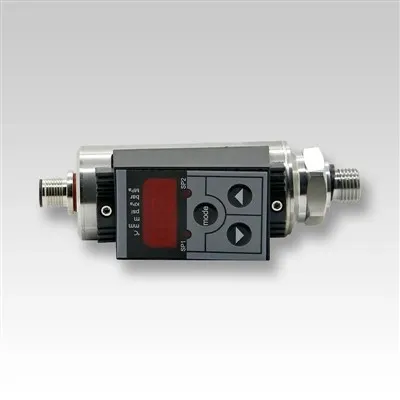
Easily Readable Display:Electronic pressure sensors such as usually have an integrated LCD/LED display in a prominent, forward-facing position. This makes taking readings at the machinery side, quick and easy for engineers. Current pressure within the system can, therefore, be obtained efficiently and without requiring the use of any additional instrumentation, with signals converted to readable output within the single unit.
Simple Operation:Electronic pressure switches are blessed with simple operation and functionality. With its small number of buttons (often two), and a display giving visual feedback of all changes, configuration is easily completed locally. A simple combination of button presses enables switch points to be adjusted, saving time and effort devoted to such tasks by engineers.
Improved Reliability:The lack of moving components in electronic pressure switches makes them more reliable and permits them a longer, trouble-free service life. Fewer small parts within the electronic switches makes them less susceptible to the negative effects of vibration. Contact wear-out is also less of a concern than with traditional, mechanical switches.
Higher Accuracy And Repeatability:Electronic pressure switches are able to handle thousands of repeated pressure cycles without issue. This ability is inherently due to the high levels of accuracy that they provide and their superior reliability, particularly in applications where vibration is a consideration. The set points are maintained throughout the sensors' lifetime with any deviation from the parameters not the issue that it is with mechanical switches.


Why Choose US
Our Factory:Shanghai Ziasiot Technology Co., Ltd. is an experienced manufacture of pressure and temperature sensors, transmitters.
Products:The main products developed and produced by our company consist of multiple series, including wireless sensors, flow sensors, linears, pressure sensors, liquid level sensors, high temperature melt pressure sensors , melt pressure gauge, high temperature melt pressure transmitter, temperature sensor, fusion index instrument, pressure calibration system, smart digital instrument, blasting switch, smart home system, smart module, smart body scale, laboratory instrument, Internet of Things, and Automated complete control system.
Our Certification:In order to emphasize Our commitment to quality and reputation, the R & D and production process of all zias brands ensure to meet and possess RoHS, ISO, CE, CMC, CPA, ex and other certifications.
Production and Quality:ZiasIOT devotes itself to enhancing manufacturing industry and its productivity. The capability of controlling temperature and pressure in industrial field is vital to promote productivity and produce high-quality products.
Types of Pressure Switches
Mechanical pressure switch
Simple and robust, these switches are commonly used for less complex tasks. Mechanical pressure switches are triggered using a spring and a piston to control the pressure at which they are activated. The spring is the force opposing the inlet pressure, and its tension is adjusted via a set screw or knob. In turn, the spring pretension is directly related to the pressure at which an electric contact occurs. In the event of a drop in pressure, the switch resets to its original state. The mechanical pressure switch is better suited to handling high voltages and amperages compared to an electronic pressure switch. You can use them to increase or decrease pressure through a contact change.
Electronic pressure switch
Electronic pressure switches contain a pressure transducer, typically a strain gauge, and additional electronics that convert signals into readable output. An electronic pressure switch offers many advantages over a mechanical pressure switch. Some of the advantages include greater accuracy, less contact wear, excellent long-term stability, simple operation, and the ability to perform thousands of switching cycles.
The preasure switch is mainly composed of power or pressure sensitive elements (feeling external pressure), mechanical linkage (transmitting pressure), microswitch (executed by normally open and normally closed contacts) and other parts.
Switch Protection: Bottom spring retaining pads limit the travel of the action lever. Even if there is strong pressure, it will not break the power steering pressure switch
Pressure receiving part: The low pressure part adopts diaphragm and bellows type, and the high pressure adopts piston type.
Diaphragm type: The durability of the diaphragm is considered.
Piston: O-ring seal.
Bellows: Good adaptability to pressure media. Low temperature, high temperature resistance, good temperature characteristics. The change with time is small. If the medium is not corrosive, the change of time to the pressure switch can be ignored.
Pressure switch adjustment: The minimum pressure value that makes the pressure switch act is called the rated value of the pressure switch, and its size can be adjusted by screws according to the actual use of the controlled object to meet the needs of different requirements and occasions.

How Does a Pressure Switch Work
Pressure switches rely on the pressure generated by the hydraulic fluid to operate. It’s this pressure that will trigger the switch to turn the electrical circuit on or off, therefore activating or deactivating the hydraulic pump.
The change in pressure in the hydraulic system moves up through the diaphragm in the pressure switch. The diaphragm presses against a piston and spring, which open or close the contacts within the switch when the pressure is applied.
Open contacts close when the pressure drops, completing the circuit and activating the pump. When the pressure threshold is reached, the contacts will open again – shutting off the circuit and turning off the pump.
Why pressure switches are important in hydraulic systems
Pressure switches serve two key purposes:
To regulate the pressure in a hydraulic system
To protect and safeguard the equipment and components from operating at a low efficiency or being susceptible to damage
The overarching need for pressure switches is the fact that they allow for the safe and optimal performance of a hydraulic system.
Accuracy: A value indicating the precision of the device, including linearity, tolerance, hysteresis, repeatability, etc.
Maximum pressure (Max.P): The maximum value of the pressure range.
Full Scale (F.S): The difference between the maximum and minimum values of the pressure range.
Connection difference (dead zone): Refers to the difference between the set action value and the reset value of the switch. For example, when the set value is 1MPa and the actual reset value is 0.9MPa, the connection difference is 0.1MPa.
Working temperature: Refers to the temperature range in which the internal mechanism and sensitive components of the instrument will not be continuously deformed when working. Generally, the recommended working temperature range of the pressure switch is -5~400C. If the temperature of the medium is too high, you can consider adding an accessory siphon (filling) to achieve the purpose of cooling.
S.P.D.T (single pole double throw): Consists of a normally open, a normally closed contact and a common terminal.
D.P.D.T (Double Pole Double Throw): It consists of a symmetrical left and right common terminals and two groups of normally open and normally closed terminals.
Upper limit one contact (normally open): When the pressure rises to the set value, the contact will act and the circuit will be turned on.
Lower limit one contact (normally closed): When the pressure drops to the set value, the contact will act and the circuit will be turned on.
Upper and lower limit two-contact HL: It is a combination of upper limit type and lower limit type. It is divided into two types of independent action of two contacts (double setting, double loop) and simultaneous action of two contacts (single setting, double loop).
Upper limit 2 contacts: Combines two upper limit forms, which are divided into two types of independent action of two contacts (double setting, double loop) and two types of simultaneous action of two contacts (single setting, double loop).
Lower limit 2 contacts: Combines two lower limit forms, which are divided into two types of independent action of two contacts (double setting, double loop) and two types of simultaneous action of two contacts (single setting, double loop).
Pressure Resistance: The maximum pressure that a pressure switch can withstand to maintain its normal performance. However, when the pressure switch is used in an overpressure situation, the sensitive element will be continuously deformed, and the pressure setting value will change at this time, and the pressure switch will not be able to perform its normal performance and may even be damaged.
IP (Protection Rating): It is a standard drafted by the International Electrotechnical Institute (IEC) about the dust and moisture resistance of lamps.
Pressure Switch Application
Water Pumping pressure switch Systems: This may be the most common use of pressure switches. Pressure switches are used in water pumps to cut-in power into the motor which drives the pump in case of low level or low line pressure. Well water pressure switch upon reaching the set pressure, power is cut-out.
Compressed Air pressure switch Systems: This is similar to transmission fluid pressure switch. Pressure switches are used to cut-in power to the compressor motor when low pressure is detected. This maintains the pressure of the compressed air system. If for negative pressure, it should used vacuum pressure switch.
Pneumatic and Hydraulic pressure switch Systems: These are control systems that use pneumatic and hydraulic actuators. Pumps and compressors maintain reservoir pressure and level through Hvac pressure switch or oil pressure switches
Air Conditioning and Refrigeration pressure switch system: In a refrigeration system, the thermostat provides the controlling feedback signal. However, in case there is a problem in the system, the thermostat will only sense the temperature in the cooled space but not the state of the equipment. A pressure switch serves as a safeguard that trips the compressor motor in case of overpressure. Another use of a pneumatic pressure switch in a refrigeration system is protection on the low-pressure side which indicates a possible refrigerant leak.
Furnace and Boiler Systems:The pressure switch in a furnace or boiler serves as a safety interlock to prevent the igniter from operating in case there is a problem with the draft system. This prevents the combustion chamber from operating which can result in incomplete combustion.
Filtering and Screening Equipment:A differential pressure switch is used to measure or monitor the pressure drop across filters and screens. The pressure switch triggers an alarm or notification to indicate that the filter is blocked or clogged and is due for maintenance, cleaning, or replacement.

A common misconception about pressure switches and pressure transmitters is that they perform the same roles within any given application. However, there are major differences between the two components.
A pressure transmitter converts pressure into an electrical signal and transfers that to a PLC (Programmable Logic Controller). A pressure switch, however, only triggers at a specific preset pressure, and, depending on the set pressure, a circuit can be engaged or disengaged.
Both devices measure pressure, but transmitters provide continuous feedback that is normally connected to a controller that monitors pressure. In comparison, a pressure switch doesn't provide constant output and feedback and is much more similar to an on/off switch. A pressure switch is designed to open or close a circuit when pressure rises or falls, not transmit messages.
A pressure switch directly controls a fluid system and can operate without a power supply, but pressure transmitters just indicate pressure level with a continuous signal. They do not directly control a circuit and are used for more sophisticated applications like monitoring, predictive analysis, or process control.
Pressure transmitters are also much more expensive than pressure switches.
Mechanical VS Electrical Pressure Switches
Type of media: The type of media should be compatible with the housing and seal material. Nitrile butadiene rubber (NBR) is suitable for use with air and hydraulic/machine oil. Ethylene propylene diene monomer rubber (EPDM) is suitable when water is the medium. Common media used with pressure switches are:
Hydraulic oil
Heating oil
Turpentine
Petrol/gasoline
Air
Water
Pressure: The pressure switch must be able to withstand the maximum working pressure. Low pressure switches typically use a diaphragm as the sensing element, while high pressure switches use a piston design.
Temperature: The pressure switch should work well within its maximum and minimum temperature range.
Repeatability: Accuracy refers to how close the switch's activation point is to the true pressure value, while repeatability is the switch's ability to consistently activate at the same pressure point over multiple cycles. The range of accuracy required determines the selection of the pressure switch for the application. Diaphragm designs generally provide more accuracy than the piston design.
Hysteresis: Hysteresis is the difference between the switch point and the reset point. The switch stays active for a long time if the reset point is too large. If the reset point is too short, the switch will flip between on/off states frequently. Hysteresis is configurable in an electric pressure switch but preset by the manufacturer in a mechanical pressure switch.
Process connection: The size and type of the process connection should match the system's piping or equipment. Common types include NPT, BSP, and flange connections.
Approvals: Choose pressure switches with ATEX certifications for use in a potentially explosive atmosphere.
Electric or mechanical pressure switch: An electric pressure switch is more expensive but comes with more control over the settings, like pressure setpoint and hysteresis, compared to a mechanical pressure switch. Some applications may require the ability to adjust the set point, reset point, or pressure range of the switch. Determine if you need a switch with adjustable settings to accommodate changes in system requirements.
FAQ
Q: How to adjust a pressure switch?
Q: How to test a pressure switch?
Q: What does a pressure switch do?
Q: How to tell if a pressure switch is bad?
Q: How does a mechanical pressure switch work?
Q: What is the difference between a pressure switch and a pressure sensor?
Q: What does a pressure switch do?
Q: How does a mechanical pressure switch work?
Q: How to adjust a pressure switch?
Q: What is the difference between a pressure switch and a pressure sensor?
Q: What is pressure operated switch?
Q: What is the function of a high pressure switch?
Q: What do pressure switches respond to?
Q: Is A pressure switch necessary?
Q: What is the difference between a flow switch and a pressure switch?
Q: What is the difference between a pressure switch and a limit switch?
Q: What is the difference between a pressure switch and a low pressure switch?
Q: How do you choose a pressure switch?
Q: Are high pressure switches normally open or closed?
Q: How does an automatic pressure switch work?
As one of the most professional pressure switches manufacturers and suppliers in China, we're featured by quality products and low price. Welcome to wholesale the best selling pressure switches for sale here from our factory. Contact us for customized service.
Capacitive Level Switch Transmitter, electrical pressure switch, Electronic Pressure Switch