
What is the shock resistance of a Turbine Flow Meter?
Leave a message

As a supplier of Turbine Flow Meters, I often encounter inquiries about the shock resistance of these devices. Shock resistance is a crucial factor, especially in industrial environments where meters may be exposed to various mechanical impacts. In this blog, I'll delve into what shock resistance means for a Turbine Flow Meter, its importance, and how it affects the meter's performance and longevity.
Understanding Shock Resistance in Turbine Flow Meters
Shock resistance refers to a Turbine Flow Meter's ability to withstand sudden, high - magnitude mechanical forces without suffering significant damage or performance degradation. These mechanical shocks can come from a variety of sources, such as vibrations from nearby machinery, sudden starts or stops of pumps, or even accidental impacts during installation or maintenance.
Turbine Flow Meters operate based on the principle that the flow of fluid causes a turbine rotor to spin. The rotational speed of the turbine is proportional to the fluid flow rate. When a shock occurs, it can potentially disrupt the smooth rotation of the turbine, damage the bearings that support the rotor, or even cause misalignment of internal components.
A high - quality Turbine Flow Meter is designed to handle a certain level of shock. Manufacturers test these meters under simulated shock conditions to determine their shock resistance ratings. These ratings are typically specified in terms of the maximum acceleration (in g - forces, where 1 g is equal to the acceleration due to gravity, approximately 9.81 m/s²) that the meter can withstand without failure.
Importance of Shock Resistance
1. Accuracy and Reliability
The accuracy of a Turbine Flow Meter is paramount in many industrial applications. Even a minor shock can cause the turbine to deviate from its normal rotation, leading to inaccurate flow measurements. In industries such as chemical processing, oil and gas, and food and beverage, where precise flow measurements are crucial for product quality and process control, any inaccuracy can result in significant losses. A shock - resistant meter ensures that the measurements remain reliable, even in a challenging environment.
2. Longevity
Shocks can cause wear and tear on the internal components of a Turbine Flow Meter. For example, repeated shocks can damage the bearings, which are essential for the smooth rotation of the turbine. Once the bearings are damaged, the meter's performance will gradually decline, and it may eventually fail. A meter with good shock resistance can withstand these mechanical forces, reducing the risk of premature failure and extending its service life.
3. Cost - effectiveness
Replacing a damaged Turbine Flow Meter can be expensive, not only in terms of the cost of the new meter but also in terms of the downtime associated with the replacement. A shock - resistant meter reduces the frequency of replacements, saving both time and money in the long run. Additionally, accurate measurements provided by a shock - resistant meter can help optimize processes, leading to cost savings in raw materials and energy consumption.
Factors Affecting Shock Resistance
1. Design and Construction
The design of a Turbine Flow Meter plays a significant role in its shock resistance. Meters with a robust and well - engineered structure are more likely to withstand shocks. For example, meters with a reinforced housing and a well - supported turbine rotor are better able to absorb and dissipate the energy from shocks. Some manufacturers use advanced materials, such as high - strength plastics or stainless steel, to enhance the meter's durability.
2. Mounting and Installation
Proper mounting and installation are crucial for maximizing the shock resistance of a Turbine Flow Meter. Incorrect installation can expose the meter to unnecessary stresses and shocks. For example, if the meter is not properly aligned with the piping system, it may experience vibrations and shocks during operation. It is important to follow the manufacturer's installation guidelines carefully to ensure that the meter is installed in a way that minimizes the risk of shocks.
3. Operating Environment
The nature of the operating environment also affects the shock resistance requirements of a Turbine Flow Meter. In industries where there is a high level of mechanical activity, such as mining or heavy manufacturing, the meter needs to have a higher shock resistance rating. On the other hand, in a relatively quiet laboratory environment, the shock resistance requirements may be lower.
Testing Shock Resistance
Manufacturers typically use a variety of methods to test the shock resistance of Turbine Flow Meters. One common method is the drop test, where the meter is dropped from a specified height onto a hard surface. The meter is then inspected for any visible damage and its performance is tested to ensure that it still operates accurately.
Another method is the use of a shock test machine, which can generate controlled shocks of different magnitudes and frequencies. The meter is mounted on the test machine, and the shocks are applied while the meter's performance is monitored. These tests help manufacturers determine the maximum shock levels that the meter can withstand and assign appropriate shock resistance ratings.
Comparing Turbine Flow Meters with Other Types of Flow Meters
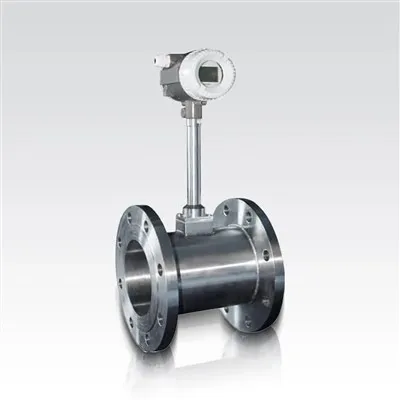
When considering shock resistance, it is also useful to compare Turbine Flow Meters with other types of flow meters, such as the LDG Electromagnetic Flowmeter and the Vortex Flowmeter.
Electromagnetic flowmeters operate based on Faraday's law of electromagnetic induction and have no moving parts. This makes them generally more resistant to mechanical shocks compared to Turbine Flow Meters. However, they are more sensitive to the electrical conductivity of the fluid and may not be suitable for all applications.
Vortex flowmeters measure the flow rate by detecting the vortices shed from a bluff body in the flow stream. They also have relatively few moving parts, which gives them good shock resistance. However, they may be affected by vibrations in the piping system, which can interfere with the detection of vortices.
In contrast, Turbine Flow Meters have a turbine rotor that rotates with the fluid flow. While this design makes them more sensitive to shocks, they are also known for their high accuracy and wide flow range capabilities.


Conclusion
Shock resistance is an important characteristic of Turbine Flow Meters, especially in industrial environments where mechanical shocks are common. A shock - resistant meter ensures accurate and reliable flow measurements, extends the meter's service life, and provides cost - effectiveness in the long run. When selecting a Turbine Flow Meter, it is essential to consider the shock resistance rating, as well as other factors such as the design, mounting requirements, and the operating environment.
If you are in need of a high - quality Turbine Flow Meter with excellent shock resistance, we are here to help. Our Turbine Flow Meter products are designed and tested to meet the highest standards of performance and reliability. Contact us to discuss your specific requirements and start a procurement negotiation.
References
- ISO 11631:1998, “Measurement of fluid flow in closed conduits - Turbine meters”.
- ANSI/ASME MFC - 6M - 2001, “Measurement of Fluid Flow in Closed Conduits Using Turbine Meters”.