
What is the pressure drop across a Vortex Intelligent Flowmeter?
Leave a message

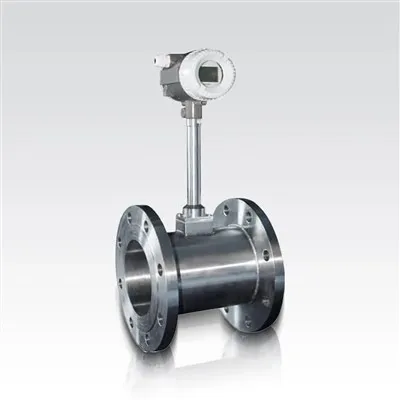
As a provider of Vortex Intelligent Flowmeters, I often encounter inquiries from customers regarding the pressure drop across these devices. Understanding the concept of pressure drop is crucial, as it directly impacts the efficiency and performance of the entire fluid - handling system. In this blog, I'll delve into what pressure drop across a Vortex Intelligent Flowmeter is, its influencing factors, and its significance in practical applications.
What is Pressure Drop?
Pressure drop, in simple terms, refers to the reduction in pressure that occurs as a fluid flows through a component in a piping system. In the context of a Vortex Intelligent Flowmeter, it is the difference in pressure between the upstream and downstream sides of the flowmeter. When fluid passes through the flowmeter, various forces such as friction, turbulence, and the obstruction caused by the flowmeter's internal structure act on the fluid, leading to a decrease in pressure.
Mathematically, pressure drop ($\Delta P$) is calculated as: $\Delta P = P_{upstream}-P_{downstream}$, where $P_{upstream}$ is the pressure of the fluid before entering the flowmeter, and $P_{downstream}$ is the pressure after the fluid has passed through the flowmeter.
Factors Affecting Pressure Drop in Vortex Intelligent Flowmeters
1. Flow Rate
One of the most significant factors influencing pressure drop is the flow rate of the fluid. As the flow rate increases, the velocity of the fluid through the flowmeter also rises. Higher fluid velocities result in increased turbulence and frictional forces within the flowmeter. According to the Bernoulli's principle, as the kinetic energy of the fluid (related to its velocity) increases, the pressure energy decreases. So, a higher flow rate generally leads to a larger pressure drop. For example, in a system where the flow rate doubles, the pressure drop may increase by a factor of four in some cases, depending on the flow characteristics and the design of the flowmeter.
2. Fluid Properties
The properties of the fluid, such as density and viscosity, play a vital role in determining the pressure drop. Denser fluids have more mass per unit volume, which means that more energy is required to move them through the flowmeter. As a result, for a given flow rate, a denser fluid will typically cause a higher pressure drop compared to a less dense one. Viscosity, on the other hand, represents the internal resistance of the fluid to flow. High - viscosity fluids experience more frictional forces as they flow through the flowmeter, leading to a greater pressure drop. For instance, a thick oil with high viscosity will cause a larger pressure drop than water when flowing through the same Vortex Intelligent Flowmeter at the same flow rate.
3. Flowmeter Design
The design of the Vortex Intelligent Flowmeter itself has a substantial impact on pressure drop. The shape and size of the bluff body (the object that creates the vortices) within the flowmeter are critical. A larger or differently shaped bluff body can cause more significant disruptions to the fluid flow, increasing turbulence and thus the pressure drop. Also, the internal diameter of the flowmeter and its overall geometry affect the flow path of the fluid. A flowmeter with a smaller internal diameter will force the fluid to flow at a higher velocity for a given flow rate, which in turn can increase the pressure drop.
Significance of Pressure Drop in Vortex Intelligent Flowmeters
1. Energy Consumption
Pressure drop directly affects the energy consumption of the pumping system. To maintain a desired flow rate in the presence of a pressure drop, the pump needs to work harder. This means that more electrical energy is required to drive the pump, leading to higher operating costs. For industrial applications where large - scale fluid transfer is involved, even a small increase in pressure drop can result in a significant increase in energy consumption over time.
2. System Performance
Excessive pressure drop can also affect the performance of the entire fluid - handling system. In some cases, it may lead to reduced flow rates in downstream components, which can impact the efficiency of processes such as chemical reactions, heat transfer, or filtration. Moreover, if the pressure drop is too large, it can cause cavitation in pumps, which is the formation and collapse of vapor bubbles in the fluid. Cavitation can damage the pump and other components in the system, leading to costly repairs and downtime.


Comparing Pressure Drop with Other Flowmeters
It's interesting to compare the pressure drop characteristics of Vortex Intelligent Flowmeters with other types of flowmeters. For example, a Turbine Flow Meter typically has a relatively low pressure drop at low to moderate flow rates. However, as the flow rate increases, the pressure drop in a turbine flow meter may increase more rapidly compared to a Vortex Intelligent Flowmeter.
On the other hand, an LDG Electromagnetic Flowmeter generally has a very low pressure drop because it has no moving parts or significant obstructions in the flow path. But it has its own limitations, such as being suitable only for conductive fluids.
In contrast, Vortex Intelligent Flowmeters offer a good balance in terms of pressure drop, accuracy, and versatility. They can be used with a wide range of fluids and flow rates, and their pressure drop characteristics can be optimized through proper design and installation.
Minimizing Pressure Drop
As a Vortex Intelligent Flowmeter supplier, we are committed to helping our customers minimize pressure drop in their systems. Here are some strategies:
1. Proper Sizing
Selecting the right - sized flowmeter for the application is crucial. An oversized flowmeter may result in low - velocity flow, which can lead to inaccurate measurements, while an undersized flowmeter will cause a high pressure drop. Our technical team can assist customers in determining the appropriate flowmeter size based on their specific flow rate, fluid properties, and system requirements.
2. Installation
Proper installation of the flowmeter is also essential. Ensuring that there are sufficient straight pipe lengths upstream and downstream of the flowmeter can help to reduce turbulence and minimize pressure drop. The flowmeter should be installed in a location where the fluid flow is as uniform as possible, without any sudden bends or obstructions nearby.
Conclusion
In conclusion, understanding the pressure drop across a Vortex Intelligent Flowmeter is essential for optimizing the performance and efficiency of fluid - handling systems. Factors such as flow rate, fluid properties, and flowmeter design all influence the pressure drop. By being aware of these factors and taking appropriate measures to minimize pressure drop, customers can reduce energy consumption, improve system performance, and extend the lifespan of their equipment.
If you are considering purchasing a Vortex Intelligent Flowmeter or have any questions regarding pressure drop or other aspects of flow measurement, we invite you to visit our Vortex Flowmeter page to learn more about our products. Our team of experts is ready to assist you in finding the best solution for your specific application. Contact us today to start a discussion about your flow measurement needs and explore how our Vortex Intelligent Flowmeters can benefit your operations.
References
- Miller, R. W. (1996). Flow Measurement Engineering Handbook. McGraw - Hill.
- White, F. M. (2003). Fluid Mechanics. McGraw - Hill.
- ISO 5167 - 1:2003, Measurement of fluid flow by means of pressure differential devices inserted in circular cross - section conduits running full.