
What is the effect of flow direction change on a Vortex Flowmeter?
Leave a message

The flow direction of a fluid plays a crucial role in the operation and performance of various flow measurement devices. Among these, the Vortex Flowmeter is a widely used instrument known for its accuracy and reliability in measuring the flow rate of gases, liquids, and steam. As a Vortex Flowmeter supplier, I have witnessed firsthand the impact that changes in flow direction can have on the functionality and accuracy of these devices. In this blog post, I will delve into the effects of flow direction change on a Vortex Flowmeter, exploring the underlying principles, potential challenges, and practical implications for users.
Understanding the Vortex Flowmeter
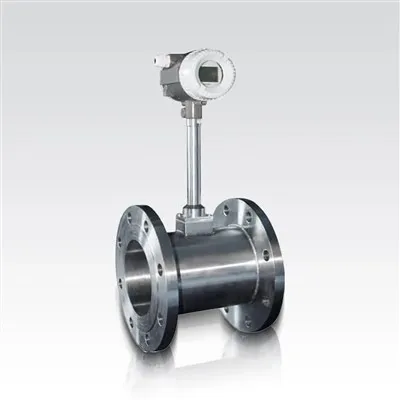
Before discussing the effects of flow direction change, it is essential to understand how a Vortex Flowmeter works. The basic principle behind a Vortex Flowmeter is the von Kármán vortex street phenomenon. When a fluid flows past a bluff body (also known as a shedder bar) placed in the flow path, it creates alternating vortices on either side of the bluff body. These vortices are shed at a frequency that is directly proportional to the flow velocity of the fluid. By detecting the frequency of the vortex shedding, the flowmeter can calculate the flow rate of the fluid.
The Vortex Flowmeter is highly regarded for its several advantages, including its wide turndown ratio, high accuracy, and low maintenance requirements. It is commonly used in various industries, such as oil and gas, chemical, power generation, and water treatment, to measure the flow of different fluids.
Effects of Flow Direction Change on Vortex Flowmeters
1. Impact on Vortex Shedding Pattern
The most significant effect of a flow direction change on a Vortex Flowmeter is on the vortex shedding pattern. When the flow direction is reversed, the vortices are shed in the opposite direction compared to the normal flow. This change in the vortex shedding pattern can lead to several issues.
Firstly, the frequency of vortex shedding may change. The calibration of a Vortex Flowmeter is typically based on a specific flow direction. When the flow direction is reversed, the relationship between the vortex shedding frequency and the flow velocity may no longer hold true. This can result in inaccurate flow rate measurements.
Secondly, the stability of the vortex shedding may be affected. In some cases, a flow direction change can cause the vortex shedding to become unstable, leading to erratic frequency measurements. This instability can be particularly problematic in applications where precise flow rate measurements are required.
2. Influence on Signal Detection
Vortex Flowmeters use various methods to detect the frequency of the vortex shedding, such as piezoelectric sensors, capacitive sensors, or ultrasonic sensors. A change in flow direction can have an impact on the signal detection process.
For example, piezoelectric sensors are sensitive to the mechanical vibrations caused by the vortex shedding. When the flow direction is reversed, the direction of the mechanical vibrations may change, which can affect the output signal of the sensor. Similarly, capacitive sensors rely on changes in capacitance due to the movement of the vortices. A flow direction change can alter the capacitance changes, leading to inaccurate signal detection.
3. Pressure Drop Considerations
Flow direction change can also affect the pressure drop across the Vortex Flowmeter. The pressure drop is an important parameter in flow measurement applications, as it can impact the energy consumption and overall efficiency of the system.
When the flow direction is reversed, the pressure drop characteristics of the flowmeter may change. This can be due to the different flow patterns and turbulence levels created by the reversed flow. In some cases, the pressure drop may increase, which can result in higher energy costs for the system.
Mitigating the Effects of Flow Direction Change
1. Bidirectional Vortex Flowmeters
To address the issues associated with flow direction change, some manufacturers offer bidirectional Vortex Flowmeters. These flowmeters are designed to accurately measure the flow rate regardless of the flow direction. They use advanced signal processing algorithms and sensor designs to ensure reliable operation in both forward and reverse flow conditions.
Bidirectional Vortex Flowmeters are particularly useful in applications where the flow direction may change frequently, such as in some chemical processes or water distribution systems. By using a bidirectional flowmeter, users can avoid the need for additional flow measurement devices or complex piping arrangements to handle reverse flow.
2. Proper Installation and Orientation
Proper installation and orientation of the Vortex Flowmeter are crucial to minimize the effects of flow direction change. The flowmeter should be installed in accordance with the manufacturer's instructions, ensuring that the flow direction is clearly indicated and that the flowmeter is aligned correctly with the pipeline.
In addition, it is important to provide sufficient straight pipe runs upstream and downstream of the flowmeter to ensure a stable and uniform flow profile. This can help to reduce the impact of flow direction change on the vortex shedding pattern and signal detection.
Practical Implications for Users
The effects of flow direction change on Vortex Flowmeters have several practical implications for users. In applications where the flow direction is known to be constant, the impact of flow direction change may be minimal. However, in applications where the flow direction may change, users need to carefully consider the following:
1. Flow Rate Accuracy
If the flow direction changes and the flowmeter is not designed for bidirectional operation, the accuracy of the flow rate measurements may be compromised. This can lead to errors in process control, inventory management, and billing. Users should ensure that the flowmeter they choose is suitable for the specific flow conditions, including the possibility of flow direction change.
2. System Design and Cost
The need to accommodate flow direction change can have an impact on the system design and cost. For example, if a bidirectional Vortex Flowmeter is required, it may be more expensive than a unidirectional flowmeter. In addition, the installation and maintenance requirements of a bidirectional flowmeter may be different, which should be taken into account during the system design phase.
3. Safety and Reliability
In some applications, inaccurate flow rate measurements due to flow direction change can pose safety risks. For example, in a chemical process, incorrect flow rate measurements can lead to over- or under-dosing of chemicals, which can have serious consequences. Users should ensure that the flowmeter they choose provides reliable and accurate measurements to maintain the safety and reliability of the system.
Comparison with Other Flow Measurement Devices
When considering the effects of flow direction change, it is also useful to compare the Vortex Flowmeter with other types of flow measurement devices. For example, the LDG Electromagnetic Flowmeter is another popular flow measurement device that is known for its bidirectional measurement capabilities. Unlike the Vortex Flowmeter, the LDG Electromagnetic Flowmeter measures the flow rate based on the principle of electromagnetic induction, which is not affected by the flow direction in the same way as the Vortex Flowmeter.
Another alternative is the Turbine Flow Meter. Turbine Flow Meters measure the flow rate by detecting the rotation of a turbine wheel in the flow path. While Turbine Flow Meters can be used for bidirectional flow measurement, they may have limitations in terms of accuracy and turndown ratio compared to Vortex Flowmeters.
Conclusion
In conclusion, the flow direction change can have a significant impact on the performance and accuracy of a Vortex Flowmeter. The change in the vortex shedding pattern, signal detection, and pressure drop can lead to inaccurate flow rate measurements and potential operational issues. However, by using bidirectional Vortex Flowmeters and following proper installation and orientation practices, users can mitigate these effects and ensure reliable and accurate flow measurement.
As a Vortex Flowmeter supplier, we understand the importance of providing high-quality flow measurement solutions that meet the specific needs of our customers. Whether you are looking for a unidirectional or bidirectional Vortex Flowmeter, our team of experts can help you choose the right product for your application. If you have any questions or need further information about our Vortex Flowmeter products, please do not hesitate to contact us for procurement and negotiation.


References
- ISO 10790:2007, “Measurement of fluid flow in closed conduits - Vortex flowmeters - Requirements for installation and use”.
- Miller, R. W., “Flow Measurement Engineering Handbook”, McGraw-Hill, 3rd Edition, 1996.
- Spitzer, D. W., “Flow Measurement: Practical Guides for Measurement and Control”, ISA, 2nd Edition, 2001.