
What is the noise level of a Vortex Intelligent Flowmeter?
Leave a message

Hey there! As a supplier of Vortex Intelligent Flowmeters, I often get asked about the noise level of these nifty devices. So, let's dive right in and explore what the noise level of a Vortex Intelligent Flowmeter is all about.


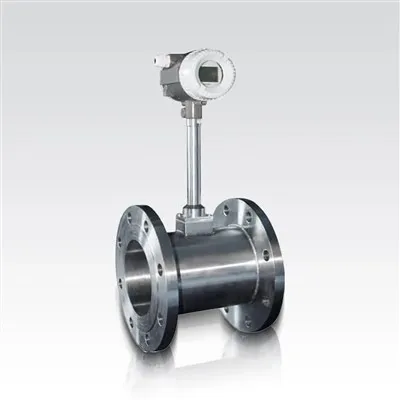
First off, let's understand what a Vortex Intelligent Flowmeter is. A Vortex Flowmeter is a type of flow measurement device that uses the principle of vortex shedding to measure the flow rate of a fluid. When a fluid flows past a bluff body (a non - streamlined object), it creates vortices on the downstream side of the body. The frequency of these vortices is directly proportional to the flow velocity of the fluid.
Now, onto the noise. The noise level of a Vortex Intelligent Flowmeter is a crucial factor, especially in industrial settings where multiple machines are running, and background noise can already be high. The noise generated by a Vortex Flowmeter mainly comes from two sources: the mechanical vibrations due to the vortex shedding process and the electrical noise from the sensor and signal processing electronics.
The mechanical noise is related to the physical interaction between the fluid and the bluff body. As the vortices are shed, they cause small - scale vibrations in the flowmeter structure. However, modern Vortex Intelligent Flowmeters are designed to minimize these vibrations. The materials used in the construction of the flowmeter body are carefully selected to dampen the vibrations and reduce the noise. For example, some flowmeters use high - quality stainless steel or other alloys that have good vibration - damping properties.
The electrical noise, on the other hand, is generated within the sensor and the signal processing circuitry. The sensor detects the changes in pressure or vibration caused by the vortices and converts them into an electrical signal. During this process, electrical noise can be introduced due to factors like electromagnetic interference (EMI) from nearby electrical equipment, thermal noise in the electronic components, and poor grounding.
To combat electrical noise, Vortex Intelligent Flowmeters are equipped with advanced signal processing algorithms. These algorithms can filter out the unwanted noise and extract the true flow - related signal. Additionally, the flowmeters are often shielded to protect them from external EMI sources. This shielding can be in the form of metal enclosures or special coatings that block electromagnetic waves.
In terms of actual noise levels, it's hard to give a one - size - fits - all number. The noise level of a Vortex Flowmeter can vary depending on several factors such as the flow rate, the type of fluid being measured, the pipe size, and the installation environment. Generally, at normal operating flow rates, the noise generated by a Vortex Intelligent Flowmeter is relatively low and can be easily drowned out by the background noise in most industrial environments.
For instance, in a typical chemical processing plant where there are pumps, compressors, and other machinery running, the background noise level can be around 80 - 90 decibels (dB). The noise from a well - designed Vortex Flowmeter might be in the range of 20 - 30 dB above the ambient noise level, but this is highly dependent on the specific circumstances.
Let's compare the noise level of a Vortex Flowmeter with other types of flowmeters. The LDG Electromagnetic Flowmeter is another popular type of flowmeter. It works on the principle of Faraday's law of electromagnetic induction. Electromagnetic flowmeters generally produce very little mechanical noise because there are no moving parts in contact with the fluid. However, they can be more susceptible to electrical noise, especially if the fluid has a low conductivity or if there are strong magnetic fields in the vicinity.
The Turbine Flow Meter uses a turbine wheel that rotates as the fluid flows through it. The rotation of the turbine generates mechanical noise, and the level of noise can be relatively high, especially at high flow rates. In comparison, the Vortex Flowmeter offers a good balance between noise reduction and accurate flow measurement.
So, why should you choose a Vortex Intelligent Flowmeter considering its noise level? Well, despite the potential for some noise, Vortex Flowmeters have several advantages. They are highly accurate over a wide range of flow rates, have a long service life, and are suitable for measuring a variety of fluids, including gases and liquids. The noise can be effectively managed through proper installation and design, making them a reliable choice for many industrial applications.
If you're in the market for a flowmeter and are concerned about noise levels, our Vortex Intelligent Flowmeters are definitely worth considering. We have a team of experts who can help you select the right flowmeter for your specific application and ensure that it is installed correctly to minimize noise. Whether you're in the oil and gas industry, chemical processing, or water treatment, our flowmeters can provide accurate and reliable flow measurement.
If you're interested in learning more about our Vortex Intelligent Flowmeters or want to discuss your flow measurement needs, feel free to reach out. We're here to answer any questions you might have and guide you through the purchasing process. Let's work together to find the best flow measurement solution for your business.
References
- "Flow Measurement Handbook: Industrial Designs and Applications" by Richard W. Miller
- "Instrumentation, Measurement, and Analysis" by Robert T. O'Connor