
What are the main types of Indicators and Controllers?
Leave a message

In the industrial automation and control field, indicators and controllers play a pivotal role in monitoring and regulating various processes. As a well - established supplier of indicators and controllers, I have in - depth knowledge of the main types available in the market and their applications. This blog aims to provide a comprehensive overview of these types to help businesses make informed decisions when it comes to choosing the right indicators and controllers for their specific needs.
1. Pressure Indicators
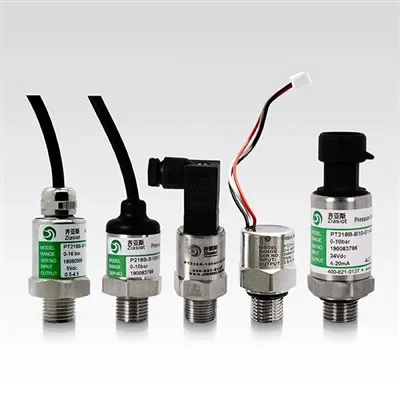
Pressure is a crucial parameter in many industrial processes, including manufacturing, chemical processing, and oil and gas. Pressure indicators are devices used to measure and display the pressure of a fluid or gas within a system.
One of the most common types is the mechanical pressure indicator. These indicators typically use a Bourdon tube, which is a curved, hollow tube that straightens when pressure is applied. As the tube straightens, it moves a pointer on a calibrated scale, providing a visual indication of the pressure. Mechanical pressure indicators are reliable, durable, and do not require an external power source, making them suitable for applications where power is limited or unreliable. You can find more information about our Pressure Indicator.
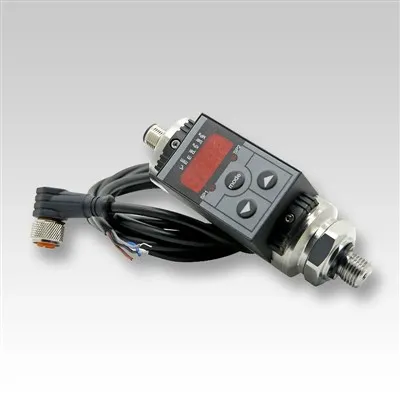
Another type is the digital pressure indicator. Digital pressure indicators use electronic sensors, such as strain - gauge sensors or piezoelectric sensors, to measure pressure. The measured pressure is then converted into a digital signal and displayed on a digital screen. Digital pressure indicators offer high accuracy, better resolution, and can often provide additional features such as data logging and communication interfaces. They are ideal for applications that require precise pressure monitoring and data analysis.
2. Temperature Indicators
Temperature is another critical parameter in industrial processes, affecting the quality, efficiency, and safety of operations. Temperature indicators are used to measure and display the temperature of a substance or environment.
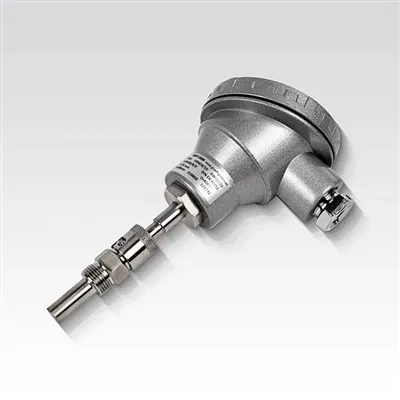
Thermocouples are a widely used type of temperature indicator. A thermocouple consists of two different metals joined at one end. When there is a temperature difference between the junction and the other ends of the metals, a voltage is generated. This voltage is proportional to the temperature difference, and by measuring the voltage, the temperature can be determined. Thermocouples are rugged, can measure a wide range of temperatures, and are suitable for harsh environments.
Resistance Temperature Detectors (RTDs) are also popular temperature indicators. RTDs work based on the principle that the electrical resistance of a metal changes with temperature. The most common type of RTD uses platinum as the sensing element due to its high stability and accuracy. RTDs offer better accuracy and repeatability compared to thermocouples, especially in lower - temperature ranges.
3. Flow Indicators
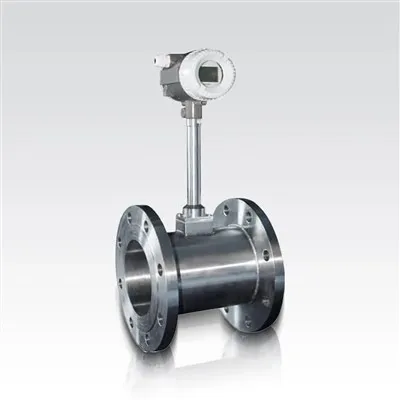
Flow indicators are used to measure and display the flow rate of a fluid (liquid or gas) in a pipeline or system. They are essential in applications such as water treatment, chemical dosing, and HVAC systems.
Variable area flow meters, also known as rotameters, are a simple and widely used type of flow indicator. A rotameter consists of a tapered tube and a float. As the fluid flows through the tube, it lifts the float to a position where the upward force exerted by the fluid is balanced by the weight of the float. The position of the float on a calibrated scale indicates the flow rate. Rotameters are easy to install, require no external power, and can provide a direct visual indication of flow.
Magnetic flow meters, on the other hand, use the principle of electromagnetic induction to measure flow. When a conductive fluid flows through a magnetic field generated by the flow meter, a voltage is induced across the fluid. This voltage is proportional to the flow rate of the fluid. Magnetic flow meters are suitable for measuring the flow of conductive liquids and offer high accuracy, no moving parts, and low pressure drop.
4. Level Indicators
Level indicators are used to measure and display the level of a liquid or solid in a tank, silo, or other container. They are important in industries such as food and beverage, pharmaceuticals, and wastewater treatment.
Float - type level indicators are one of the simplest and most common types. A float is placed on the surface of the liquid, and as the liquid level changes, the float moves up or down. This movement is then translated into a visual indication, such as a pointer on a scale or a switch signal. Float - type level indicators are cost - effective and suitable for a wide range of applications.
Ultrasonic level indicators use ultrasonic waves to measure the distance between the sensor and the surface of the liquid or solid. The sensor emits an ultrasonic pulse, and the time it takes for the pulse to bounce back from the surface is measured. Based on the speed of sound in the medium, the distance and thus the level can be calculated. Ultrasonic level indicators are non - contact, can measure through non - metallic materials, and are suitable for applications where contact with the medium is not desirable.


5. Pressure Controllers
Pressure controllers are used to maintain a desired pressure in a system by adjusting the flow of fluid or gas. They are widely used in applications such as pneumatic systems, hydraulic systems, and process control.
One type is the analog pressure controller. Analog pressure controllers use mechanical or electromechanical components to compare the actual pressure with the setpoint pressure. If there is a difference between the two, the controller adjusts the output, such as opening or closing a valve, to bring the pressure back to the setpoint. Analog pressure controllers are simple, reliable, and suitable for basic pressure control applications.
Digital PID (Proportional - Integral - Derivative) pressure controllers are more advanced. PID controllers use a mathematical algorithm to calculate the control output based on the error between the setpoint and the actual pressure, the integral of the error over time, and the derivative of the error. Digital PID pressure controllers offer better control performance, can adapt to changing process conditions, and can be easily configured and tuned. You can explore our Digital PID Pressure Controller for more details.
6. Temperature Controllers
Temperature controllers are used to maintain a desired temperature in a system by controlling the heating or cooling elements. They are essential in applications such as ovens, furnaces, and refrigeration systems.
On - off temperature controllers are the simplest type. An on - off controller turns the heating or cooling element on when the temperature is below the setpoint and off when the temperature reaches the setpoint. While on - off controllers are simple and inexpensive, they can cause temperature fluctuations around the setpoint.
PID temperature controllers, similar to PID pressure controllers, are more sophisticated. PID temperature controllers continuously adjust the power supplied to the heating or cooling element based on the error between the setpoint and the actual temperature, the integral of the error, and the derivative of the error. This results in more precise temperature control and less temperature variation.
7. Flow Controllers
Flow controllers are used to maintain a desired flow rate in a system by adjusting the flow of fluid or gas. They are used in applications such as chemical injection, water distribution, and gas mixing.
Mass flow controllers are a common type of flow controller. Mass flow controllers measure and control the mass flow rate of a gas. They use a thermal sensor to measure the mass flow and a control valve to adjust the flow. Mass flow controllers offer high accuracy, fast response times, and can operate over a wide range of flow rates and pressures.
Volume flow controllers are used to control the volume flow rate of a fluid. They can use various control methods, such as throttle valves or variable - speed pumps, to maintain the desired flow rate. Volume flow controllers are suitable for applications where the volume of fluid flow is the critical parameter.
8. Melt Pressure Indicators
In the plastics and rubber industries, melt pressure is a crucial parameter. Melt pressure indicators are specifically designed to measure and monitor the pressure of molten plastics or rubber during the extrusion, injection molding, or blow - molding processes.
Our Melt Pressure Indicator is an example of a high - performance melt pressure indicator. It uses advanced sensor technology to accurately measure the high - pressure and high - temperature melt. The indicator provides real - time pressure readings, which are essential for ensuring the quality and consistency of the final products. Melt pressure indicators can also be integrated with controllers to maintain the optimal pressure during the manufacturing process.
Conclusion
As an indicator and controller supplier, we understand the diverse needs of different industries and applications. The types of indicators and controllers mentioned above are just some of the most common ones, and there are many other specialized types available to meet specific requirements.
When choosing indicators and controllers, it is important to consider factors such as the accuracy required, the operating environment, the range of measurement, and the additional features needed. Our team of experts is always ready to assist you in selecting the most suitable indicators and controllers for your application.
If you are interested in our products or have any questions about indicators and controllers, please feel free to contact us for a detailed discussion. We look forward to the opportunity to work with you and provide you with high - quality products and excellent service.
References
- Doebelin, E. O. (2003). Measurement Systems: Application and Design. McGraw - Hill.
- Liptak, B. G. (2005). Instrument Engineers' Handbook, Volume 1: Process Measurement and Analysis. CRC Press.
- Shinskey, F. G. (1996). Process Control Systems: Application, Design, and Tuning. McGraw - Hill.