What is the difference between a direct - reading and an indirect - reading pressure gauge?
Leave a message

As a seasoned supplier in the field of pressure gauges, I've encountered numerous inquiries regarding the differences between direct - reading and indirect - reading pressure gauges. This blog aims to shed light on this topic, providing a comprehensive understanding of these two types of pressure gauges, their applications, advantages, and limitations.
Understanding Direct - Reading Pressure Gauges
Direct - reading pressure gauges are designed to directly measure the pressure of a fluid or gas. They provide an immediate and straightforward indication of the pressure value. One of the most common types of direct - reading pressure gauges is the mechanical pressure gauge.
Mechanical pressure gauges operate based on the principle of mechanical deformation. For example, a Bourdon tube pressure gauge consists of a curved, hollow tube that straightens when pressure is applied. This mechanical movement is then translated into a rotation of the pointer on the gauge face, directly indicating the pressure. Mechanical Presssure Gauge
The main advantage of direct - reading pressure gauges is their simplicity and reliability. They do not require external power sources, which makes them suitable for use in various environments, including those where electrical power is not available or where there are concerns about electrical safety. Additionally, they are relatively easy to install and maintain.
However, direct - reading pressure gauges also have some limitations. They typically have a limited measurement range and may not provide highly accurate readings, especially at very low or very high pressures. Also, mechanical components can wear out over time, which may affect the accuracy of the gauge.
Exploring Indirect - Reading Pressure Gauges
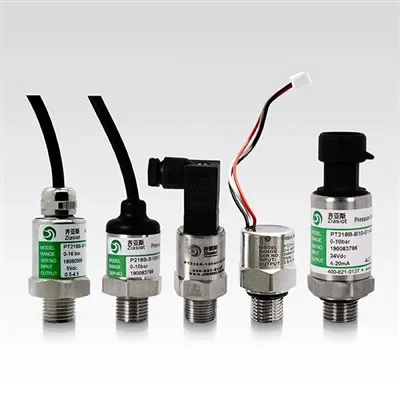
Indirect - reading pressure gauges, on the other hand, measure pressure indirectly by measuring other physical quantities related to pressure. These gauges often rely on electrical or electronic sensors to convert pressure into an electrical signal, which is then processed and displayed as a pressure value.
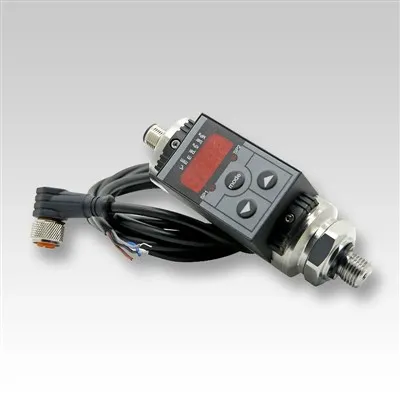
Digital pressure gauges are a common type of indirect - reading pressure gauge. They use sensors such as strain gauges or piezoelectric sensors to detect pressure changes and convert them into electrical signals. These signals are then amplified, digitized, and displayed on a digital screen. Digital Melt Presssure Gauges and Vacuum Digital Pressure Gauge are examples of digital pressure gauges.
The key advantage of indirect - reading pressure gauges is their high accuracy and wide measurement range. They can provide precise readings even at very low or very high pressures. Moreover, they can be easily integrated with other systems, such as control systems or data acquisition systems, allowing for remote monitoring and control.
However, indirect - reading pressure gauges also have some drawbacks. They usually require external power sources, which may limit their use in certain environments. Additionally, they are generally more complex and expensive than direct - reading pressure gauges, and they may require more technical expertise for installation and maintenance.
Applications of Direct - Reading and Indirect - Reading Pressure Gauges
The choice between direct - reading and indirect - reading pressure gauges depends on the specific application requirements.
Direct - reading pressure gauges are commonly used in industrial applications where simplicity and reliability are crucial. For example, in hydraulic systems, mechanical pressure gauges are often used to monitor the pressure of hydraulic fluids. They are also widely used in the oil and gas industry, water treatment plants, and HVAC systems.
Indirect - reading pressure gauges are preferred in applications where high accuracy and wide measurement range are required. In the aerospace industry, digital pressure gauges are used to measure the pressure of aircraft hydraulic systems, fuel systems, and cabin pressure. They are also commonly used in laboratory settings, where precise pressure measurements are necessary for research and experimentation.


Comparison of Direct - Reading and Indirect - Reading Pressure Gauges
| Aspect | Direct - Reading Pressure Gauges | Indirect - Reading Pressure Gauges |
|---|---|---|
| Measurement Principle | Direct measurement of pressure through mechanical deformation | Indirect measurement by converting pressure into an electrical signal |
| Power Requirement | No external power source needed | Requires external power source |
| Accuracy | Generally lower accuracy, especially at extreme pressures | High accuracy, suitable for a wide range of pressures |
| Measurement Range | Limited measurement range | Wide measurement range |
| Installation and Maintenance | Relatively simple | More complex, may require technical expertise |
| Cost | Generally lower cost | Higher cost |
| Integration with Other Systems | Difficult to integrate | Easy to integrate with control and data acquisition systems |
Conclusion
In conclusion, both direct - reading and indirect - reading pressure gauges have their own unique features, advantages, and limitations. The choice between them depends on the specific requirements of the application, such as accuracy, measurement range, power availability, and cost.
As a pressure gauges supplier, we offer a wide range of direct - reading and indirect - reading pressure gauges to meet the diverse needs of our customers. Whether you need a simple and reliable mechanical pressure gauge for your industrial application or a high - accuracy digital pressure gauge for a precision measurement task, we have the right solution for you.
If you are interested in our pressure gauges or have any questions about the selection and application of pressure gauges, please feel free to contact us. We are committed to providing you with high - quality products and professional technical support.
References
- "Pressure Measurement Handbook" by John W. Rose
- "Instrumentation and Control Systems" by Alan Morris