
What are the signs of a faulty Homogenizer Pressure Gauge?
Leave a message

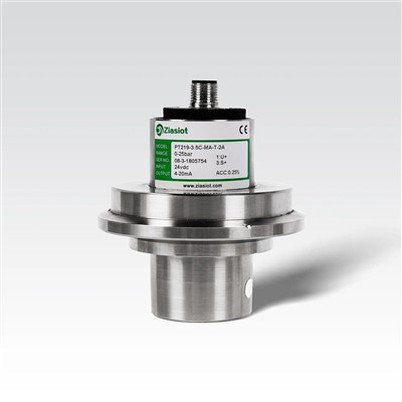
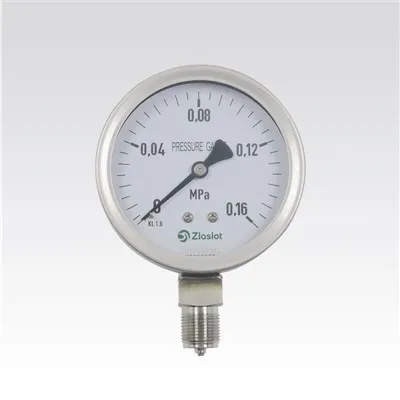
Hey there! As a supplier of Homogenizer Pressure Gauges, I've seen my fair share of issues with these important devices. A homogenizer pressure gauge is a critical component in many industrial processes, especially in the food, pharmaceutical, and cosmetic industries. It helps to ensure that the homogenization process is carried out at the right pressure, which is essential for product quality and consistency. But how do you know when your homogenizer pressure gauge is faulty? Let's take a look at some of the signs.
Inconsistent Readings
One of the most obvious signs of a faulty homogenizer pressure gauge is inconsistent readings. You might notice that the gauge shows different pressure values even when the operating conditions remain the same. For example, if you're running the homogenizer at a constant speed and with a consistent product flow, the pressure reading should stay relatively stable. But if you see the needle jumping around or fluctuating widely, that's a red flag.
This inconsistency could be due to several reasons. It might be a problem with the internal components of the gauge, such as a loose or damaged spring. A worn-out diaphragm can also cause inaccurate readings. When the diaphragm gets damaged, it can't accurately sense the pressure changes, leading to inconsistent values on the gauge.
Slow Response Time
Another sign to watch out for is a slow response time. A properly functioning homogenizer pressure gauge should quickly respond to changes in pressure. If you make an adjustment to the homogenizer settings, like increasing the speed or changing the flow rate, the gauge should show the corresponding pressure change almost immediately.
But if there's a delay in the gauge's response, it could indicate a problem. This slow response might be caused by a blockage in the pressure sensing line. Debris or sediment can build up over time, preventing the pressure from reaching the gauge quickly. A malfunctioning sensor can also lead to a slow response. If the sensor isn't working properly, it won't be able to detect the pressure changes in a timely manner.
Stuck Needle
A stuck needle is a clear indication that something is wrong with your homogenizer pressure gauge. If the needle on the gauge doesn't move at all, even when there are obvious changes in the pressure, it's a major issue. This could be due to a mechanical problem inside the gauge. For instance, the needle might be physically stuck to the gauge face or the movement mechanism could be jammed.
Sometimes, a stuck needle can be caused by a build-up of dirt or corrosion. Over time, the internal parts of the gauge can get dirty, especially if it's operating in a harsh environment. Corrosion can also occur if the gauge is exposed to moisture or certain chemicals. This build-up can prevent the needle from moving freely.
Leaking Gauge
If you notice any signs of leakage around the homogenizer pressure gauge, that's a serious problem. A leak can be a sign of a damaged seal or a cracked housing. When there's a leak, the pressure inside the gauge can't be accurately measured because some of the pressure is escaping.
Leakage can also pose a safety risk, especially if the homogenizer is handling hazardous materials. The leaking substance could be harmful to the operators and the environment. So, if you see any liquid or gas seeping out from the gauge, it's important to take immediate action.
Incorrect Zero Reading
A properly calibrated homogenizer pressure gauge should read zero when there's no pressure applied. If the gauge shows a non-zero reading when the system is at rest, it means the gauge is not calibrated correctly. This could be due to a miscalibration during the manufacturing process or it could have been knocked out of calibration during transportation or installation.
An incorrect zero reading can lead to inaccurate pressure measurements throughout the operation. If the starting point is wrong, all the subsequent readings will be off. You might think you're operating at a certain pressure when in reality, the actual pressure is different. This can affect the quality of your products and even damage the homogenizer equipment.
Damaged Gauge Face
The gauge face is the part of the pressure gauge that you look at to read the pressure values. If the gauge face is damaged, it can be difficult to get an accurate reading. Scratches, cracks, or faded markings on the gauge face can make it hard to see the numbers clearly.
A damaged gauge face might also indicate that the gauge has been subjected to physical abuse. It could have been bumped or dropped, which could have also damaged the internal components of the gauge. So, if you notice any damage to the gauge face, it's a good idea to inspect the gauge more closely to see if there are any other issues.
How to Deal with a Faulty Homogenizer Pressure Gauge
If you suspect that your homogenizer pressure gauge is faulty, the first thing you should do is to stop using the homogenizer immediately. Continuing to operate with a faulty gauge can lead to inaccurate pressure control, which can affect the quality of your products and even cause damage to the equipment.
Next, you can try to troubleshoot the problem. Check for any obvious signs of damage, such as leaks or a stuck needle. If you're familiar with the internal components of the gauge, you can try to open it up and inspect the parts. However, be careful when doing this as it can be dangerous and might void the warranty.


If you're not confident in your ability to troubleshoot the issue, it's best to contact a professional. A qualified technician can diagnose the problem accurately and make the necessary repairs or replacements. They have the tools and expertise to handle gauge problems safely and effectively.
Our Range of Pressure Gauges
At our company, we offer a wide range of high-quality pressure gauges, including High Temperature Mechanical Melt Presssure Gauges, Vacuum Digital Pressure Gauge, and Digital Melt Presssure Gauges. These gauges are designed to provide accurate and reliable pressure measurements in various industrial applications.
Our high-temperature mechanical melt pressure gauges are suitable for use in environments where high temperatures are involved. They are built to withstand extreme conditions and provide accurate readings even in harsh environments. The vacuum digital pressure gauges are great for applications that require precise vacuum pressure measurements. They offer digital displays for easy reading and accurate data. And our digital melt pressure gauges are perfect for monitoring the pressure in melt processes, ensuring consistent product quality.
Contact Us for Purchasing
If you're experiencing any problems with your homogenizer pressure gauge or if you're looking to purchase a new one, don't hesitate to contact us. We have a team of experts who can help you choose the right pressure gauge for your specific needs. We offer competitive prices, high-quality products, and excellent customer service.
Whether you're a small business or a large industrial operation, we can provide you with the pressure gauges you need. So, get in touch with us today and let's start a conversation about how we can help you with your pressure measurement requirements.
References
- ASME B40.100 - Pressure Gauges and Gauge Attachments
- ISO 22810 - Mechanical pressure gauges - General requirements and test methods