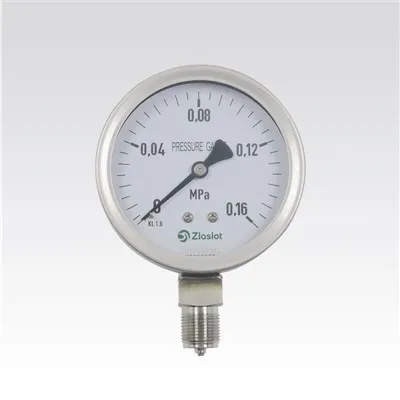

How to install a Homogenizer Pressure Gauge?
Leave a message

Hey there! As a supplier of Homogenizer Pressure Gauges, I'm super stoked to walk you through the process of installing one. Whether you're a newbie in the industry or just looking to refresh your skills, this guide is for you.
First things first, let's talk about why you need a Homogenizer Pressure Gauge. These little gadgets are crucial for monitoring the pressure inside your homogenizer. They help ensure that your equipment is running at the right pressure, which is essential for getting consistent results in your homogenization process. Whether you're working in a food processing plant, a pharmaceutical lab, or any other industry that uses homogenizers, a reliable pressure gauge is a must-have.
Now, let's get into the nitty-gritty of the installation process. Before you start, make sure you have all the necessary tools and equipment. You'll typically need a wrench, some Teflon tape, and of course, your Homogenizer Pressure Gauge. It's also a good idea to have a safety manual handy, just in case you run into any issues.
Step 1: Prepare the Installation Site
The first step is to prepare the site where you'll be installing the pressure gauge. Start by turning off the homogenizer and letting it cool down completely. This is important for your safety and to prevent any damage to the equipment. Once the homogenizer is off and cool, locate the pressure port where you'll be attaching the gauge. This port is usually marked on the homogenizer, but if you're not sure, refer to the user manual.
Clean the pressure port thoroughly to remove any dirt, debris, or old sealant. You can use a clean cloth and some mild detergent to do this. Make sure the port is completely dry before proceeding.
Step 2: Wrap the Threads with Teflon Tape
Next, take your Teflon tape and wrap it around the threads of the pressure gauge. Start at the end of the threads and wrap the tape in a clockwise direction, making sure to cover all the threads evenly. You should wrap the tape about 3 - 4 times to create a good seal. This will prevent any leaks from occurring once the gauge is installed.
Step 3: Install the Pressure Gauge
Now it's time to install the pressure gauge. Carefully insert the gauge into the pressure port and hand-tighten it as much as you can. Then, use a wrench to tighten the gauge a little more, but be careful not to over-tighten it. Over-tightening can damage the threads and cause leaks. A good rule of thumb is to tighten the gauge until it's snug, but you should still be able to feel a little resistance when you try to turn it.
Step 4: Check for Leaks
Once the gauge is installed, it's important to check for leaks. Turn on the homogenizer and let it run for a few minutes. Keep an eye on the pressure gauge and look for any signs of leakage around the connection. If you see any drops of fluid or notice a hissing sound, there may be a leak. In this case, turn off the homogenizer and tighten the gauge a little more. If the leak persists, you may need to remove the gauge, re-wrap the threads with Teflon tape, and try again.
Step 5: Calibrate the Pressure Gauge
After you've confirmed that there are no leaks, it's time to calibrate the pressure gauge. Calibration is important to ensure that the gauge is providing accurate readings. You can use a calibration tool or send the gauge to a professional calibration service. Follow the instructions provided with the calibration tool or service to calibrate the gauge correctly.
Types of Homogenizer Pressure Gauges
There are different types of Homogenizer Pressure Gauges available in the market, each with its own advantages. For example, High Temperature Mechanical Melt Presssure Gauges are great for applications where high temperatures are involved. These gauges are designed to withstand extreme heat and still provide accurate pressure readings.
Mechanical Presssure Gauge are a popular choice for many users. They are simple, reliable, and easy to install. These gauges use a mechanical mechanism to measure pressure and are often more affordable than other types.


If you're looking for more advanced features, Digital Melt Presssure Gauges might be the right choice for you. These gauges offer digital displays, which can be easier to read and provide more precise readings. They also often come with additional features like data logging and remote monitoring.
Troubleshooting Tips
Even if you follow all the steps correctly, you may still run into some issues with your pressure gauge. Here are some common problems and how to fix them:
- Inaccurate Readings: If the pressure gauge is giving inaccurate readings, it may need to be calibrated. Try calibrating the gauge again, following the steps mentioned earlier. If the problem persists, the gauge may be damaged and need to be replaced.
- Leakage: As mentioned before, leakage can occur if the gauge is not installed correctly or if the Teflon tape is not wrapped properly. Check the connection and tighten the gauge if necessary. If the leak still continues, remove the gauge, re-wrap the threads, and reinstall it.
- Gauge Not Working: If the pressure gauge is not working at all, check the power supply (if it's a digital gauge) or make sure there are no blockages in the pressure port. If the problem persists, contact a professional technician for further assistance.
Conclusion
Installing a Homogenizer Pressure Gauge may seem like a daunting task, but if you follow these steps, it can be a relatively straightforward process. Remember to always prioritize safety and take your time to ensure that the gauge is installed correctly.
If you're in the market for a high-quality Homogenizer Pressure Gauge, we've got you covered. We offer a wide range of gauges to suit different needs and budgets. Whether you're looking for a High Temperature Mechanical Melt Presssure Gauges, a Mechanical Presssure Gauge, or a Digital Melt Presssure Gauges, we have the perfect solution for you.
If you have any questions or would like to discuss your specific requirements, don't hesitate to reach out. We're here to help you find the best pressure gauge for your application and guide you through the installation process. Let's start a conversation and see how we can work together to meet your needs.
References
- Homogenizer User Manuals
- Pressure Gauge Manufacturer's Guides
- Industry Standards for Pressure Gauge Installation