
How does the viscosity of the fluid affect Turbine Flow Meter measurement?
Leave a message

Fluid viscosity is a critical physical property that describes a fluid's resistance to flow. In the realm of flow measurement, especially when using a Turbine Flow Meter, viscosity can have a profound impact on measurement accuracy and performance. As a leading Turbine Flow Meter supplier, we understand the importance of comprehending how viscosity affects these meters, and we're here to share our insights.
Understanding Turbine Flow Meters
Before delving into the effects of viscosity, it's essential to understand how Turbine Flow Meters work. A Turbine Flow Meter Turbine Flow Meter consists of a rotor with blades that are set in the path of the flowing fluid. As the fluid passes through the meter, it causes the rotor to spin. The rotational speed of the rotor is directly proportional to the flow rate of the fluid. Sensors detect the rotation of the rotor and convert it into an electrical signal, which can then be used to calculate the flow rate.
Viscosity and Its Basics
Viscosity is a measure of a fluid's internal friction or resistance to deformation. High - viscosity fluids, such as honey or motor oil, flow slowly because their molecules have strong intermolecular forces that resist movement relative to one another. In contrast, low - viscosity fluids like water or gasoline flow more easily.
Impact of Low - Viscosity Fluids on Turbine Flow Meters
When dealing with low - viscosity fluids, Turbine Flow Meters generally perform very well. The low internal friction of these fluids allows them to flow smoothly through the meter, causing the rotor to spin freely. The relationship between the flow rate and the rotor's rotational speed remains linear over a wide range of flow rates. This linearity is crucial for accurate flow measurement.
For low - viscosity fluids, the meter's calibration is relatively stable. The fluid's ability to flow without significant resistance means that the meter can accurately measure the flow rate with high precision. The repeatability of measurements is also excellent, making Turbine Flow Meters a popular choice for applications involving low - viscosity fluids, such as in the water treatment industry or in the distribution of gasoline.
Impact of High - Viscosity Fluids on Turbine Flow Meters
However, when high - viscosity fluids are introduced, the situation becomes more complex. High - viscosity fluids create more resistance as they flow through the Turbine Flow Meter. This increased resistance can cause several issues.
Non - linearity
One of the most significant problems is the loss of linearity between the flow rate and the rotor's rotational speed. As the viscosity increases, the fluid's resistance to flow becomes more pronounced. At low flow rates, the high - viscosity fluid may not have enough energy to overcome the frictional forces within the meter, resulting in a slower - than - expected rotation of the rotor. As the flow rate increases, the relationship between the flow rate and the rotational speed may deviate from the linear calibration curve established for low - viscosity fluids.
Increased Pressure Drop
High - viscosity fluids also cause a higher pressure drop across the Turbine Flow Meter. The fluid has to work harder to push through the meter, which requires more energy. This increased pressure drop can be a significant concern in systems where pressure is a critical parameter. For example, in a pipeline system, a large pressure drop can lead to increased pumping costs and reduced efficiency.
Wear and Tear
The increased resistance from high - viscosity fluids can also lead to more wear and tear on the Turbine Flow Meter's components. The rotor has to work harder to rotate, which can cause increased friction on the bearings and other moving parts. Over time, this can lead to premature failure of the meter and require more frequent maintenance and replacement of parts.
Mitigating the Effects of Viscosity
As a Turbine Flow Meter supplier, we offer several solutions to mitigate the effects of viscosity on our meters.
Custom Calibration
For applications involving high - viscosity fluids, we can provide custom - calibrated Turbine Flow Meters. By testing the meter with the specific high - viscosity fluid at different flow rates, we can establish a new calibration curve that accounts for the non - linear relationship between the flow rate and the rotor's rotational speed. This custom calibration ensures more accurate flow measurement.


Meter Design Modifications
We also offer Turbine Flow Meters with design modifications to better handle high - viscosity fluids. For example, we can use larger - diameter rotors or rotors with different blade geometries. These modifications can reduce the resistance to flow and improve the meter's performance in high - viscosity applications.
Comparison with Other Flow Meters
It's also worth comparing Turbine Flow Meters with other types of flow meters when considering the effects of viscosity.
Vortex Flowmeter
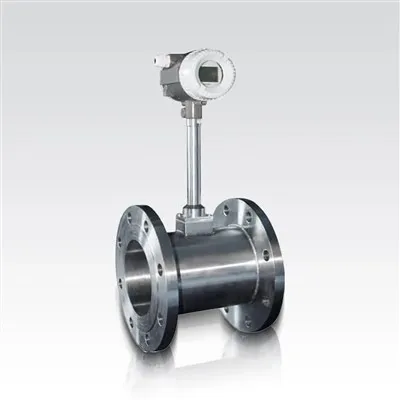
Vortex Flowmeter operate based on the principle of vortex shedding. They are less affected by viscosity compared to Turbine Flow Meters. Vortex Flowmeters can measure the flow rate of both low - and high - viscosity fluids with relatively good accuracy. However, they may have limitations in measuring very low flow rates and are more sensitive to changes in fluid density.
LDG Electromagnetic Flowmeter
LDG Electromagnetic Flowmeter work based on Faraday's law of electromagnetic induction. They are virtually unaffected by viscosity as long as the fluid is conductive. This makes them an excellent choice for measuring the flow rate of high - viscosity conductive fluids, such as slurries or some chemical solutions.
Conclusion
In conclusion, the viscosity of a fluid has a significant impact on the performance of Turbine Flow Meters. While these meters are highly accurate for low - viscosity fluids, high - viscosity fluids can cause non - linearity, increased pressure drop, and more wear and tear. However, through custom calibration and design modifications, we can mitigate these effects and ensure accurate flow measurement.
If you're in the market for a Turbine Flow Meter or need more information on how to handle viscosity - related issues in your flow measurement applications, we're here to help. Our team of experts can provide you with the best solutions tailored to your specific needs. Contact us to start a discussion about your flow measurement requirements and explore how our Turbine Flow Meters can meet your expectations.
References
- ISO 9951:2019, “Measurement of fluid flow in closed conduits - Turbine meters”.
- Miller, R. W. (1996). Flow Measurement Engineering Handbook. McGraw - Hill.