How do Indicators and Controllers manage system alarms?
Leave a message

In the realm of industrial systems, the effective management of system alarms is crucial for maintaining operational efficiency, ensuring safety, and preventing costly downtime. As a leading supplier of Indicators and Controllers, I have witnessed firsthand the transformative impact that our products can have on alarm management. In this blog, I will delve into how Indicators and Controllers play a pivotal role in managing system alarms, offering insights and real - world perspectives.
Understanding System Alarms
System alarms are notifications that signal abnormal conditions within an industrial system. These can range from minor deviations in process variables to critical failures that pose a threat to equipment, personnel, and the environment. Alarms can be triggered by various factors such as temperature fluctuations, pressure changes, flow rate irregularities, or equipment malfunctions.
The challenge lies not only in detecting these abnormal conditions but also in presenting the information in a clear, timely, and actionable manner. This is where Indicators and Controllers come into play.
The Role of Indicators in Alarm Management
Indicators are the front - line tools that provide visual or audible signals to operators about the status of a system. They are designed to display real - time data and highlight any deviations from normal operating conditions.
Visual Indicators
Visual indicators, such as LED lights, digital displays, and gauges, offer a quick and intuitive way for operators to assess the state of a system. For example, a Pressure Temperature Indicator can simultaneously display pressure and temperature readings. If the pressure exceeds a pre - set limit, the indicator can change color or flash to alert the operator. This immediate visual feedback allows operators to take prompt action, whether it's adjusting a valve, shutting down a process, or calling for maintenance.
Audible Indicators
Audible indicators, like buzzers and sirens, are used to grab the operator's attention, especially in noisy industrial environments or when the operator is not directly in front of the indicator. They can be programmed to emit different tones or volumes depending on the severity of the alarm. For instance, a low - level alarm might produce a gentle beep, while a critical alarm could trigger a loud, continuous siren.
The Function of Controllers in Alarm Management
Controllers are the brains behind the alarm management system. They are responsible for monitoring process variables, comparing them to setpoints, and initiating appropriate actions when alarms are triggered.
PID Controllers
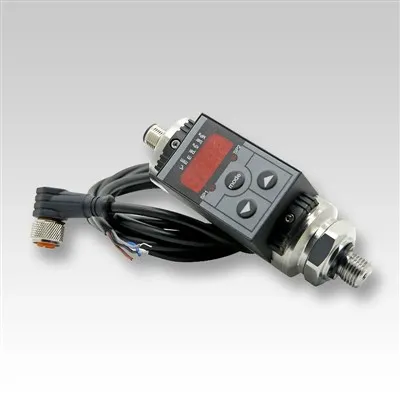
One of the most commonly used types of controllers in industrial applications is the PID (Proportional - Integral - Derivative) controller. A Digital PID Pressure Controller can precisely regulate pressure by continuously adjusting the output based on the difference between the actual pressure and the desired setpoint. When the pressure deviates beyond an acceptable range, the controller can activate an alarm and take corrective actions, such as adjusting the flow rate or opening a relief valve.
Temperature Controllers
Temperature Controllers are another essential component in alarm management. They ensure that the temperature in a process remains within a specified range. If the temperature rises or falls outside the set limits, the controller can send an alarm signal and adjust the heating or cooling elements accordingly. This helps prevent damage to equipment, maintain product quality, and ensure the safety of the process.
Alarm Configuration and Customization
One of the key advantages of our Indicators and Controllers is the ability to configure and customize alarms according to the specific needs of each application.
Setpoint Adjustment
Operators can easily set the alarm thresholds for different process variables. For example, in a chemical manufacturing process, the temperature setpoint for an alarm might be different depending on the type of reaction being carried out. Our controllers allow for precise adjustment of these setpoints, ensuring that alarms are triggered only when necessary.
Alarm Prioritization
Not all alarms are created equal. Some alarms may be more critical than others, and it's important to prioritize them accordingly. Our Indicators and Controllers support alarm prioritization, allowing operators to focus on the most urgent issues first. For example, a critical alarm indicating a potential explosion might be given the highest priority, while a minor alarm about a low - level fluid level might be given a lower priority.
Alarm History and Logging
Our products also offer the functionality of alarm history and logging. This feature records all alarm events, including the time of occurrence, the type of alarm, and the actions taken. This information can be invaluable for troubleshooting, root - cause analysis, and compliance reporting. Operators can review the alarm history to identify patterns and trends, which can help prevent future alarm events.
Integration with Other Systems
In modern industrial environments, Indicators and Controllers are often integrated with other systems, such as SCADA (Supervisory Control and Data Acquisition) systems and PLC (Programmable Logic Controller) systems.
SCADA Integration
When integrated with a SCADA system, our Indicators and Controllers can transmit alarm data to a central control room. This allows operators to monitor multiple systems from a single location and take coordinated actions. For example, if an alarm is triggered in a remote pumping station, the SCADA system can receive the alarm signal and display it on a large - screen monitor in the control room. Operators can then analyze the situation and issue commands to the local controllers to resolve the issue.
PLC Integration
Integration with PLC systems enables seamless communication between the Indicators and Controllers and other industrial equipment. The PLC can receive alarm signals from our controllers and execute pre - programmed sequences of actions. For example, if a temperature alarm is triggered in a manufacturing process, the PLC can automatically shut down the relevant machinery to prevent damage.


Real - World Examples of Alarm Management
Let's take a look at some real - world examples of how our Indicators and Controllers have helped manage system alarms effectively.
Oil and Gas Industry
In an oil refinery, our Pressure Temperature Indicators are used to monitor the pressure and temperature in various pipelines and vessels. If the pressure in a pipeline exceeds the safe limit, the indicator triggers an alarm, and the Digital PID Pressure Controller adjusts the flow rate to bring the pressure back to normal. This helps prevent pipeline ruptures and ensures the safety of the refinery operations.
Food and Beverage Industry
In a food processing plant, Temperature Controllers are used to maintain the correct temperature in ovens, freezers, and storage areas. If the temperature in a freezer rises above the setpoint, the controller sends an alarm to the operator. The operator can then check the refrigeration system and take corrective action to prevent spoilage of the food products.
Conclusion
In conclusion, Indicators and Controllers are essential tools for managing system alarms in industrial applications. They provide real - time monitoring, clear visual and audible signals, precise control, and customizable alarm configurations. By integrating with other systems, they enable centralized monitoring and coordinated actions.
If you are looking for reliable Indicators and Controllers to enhance your system alarm management, we are here to help. Our products are designed to meet the highest standards of quality and performance, and our team of experts can provide you with the support and guidance you need. Contact us today to start a discussion about your specific requirements and explore how our solutions can benefit your operations.
References
- "Industrial Automation Handbook", John Wiley & Sons
- "Process Control and Instrumentation", McGraw - Hill Education
- Technical documentation of our Indicators and Controllers products