
Are turbine flowmeters suitable for high - pressure applications?
Leave a message

Are turbine flowmeters suitable for high - pressure applications?
As a supplier of turbine flowmeters, I often encounter inquiries from customers regarding the suitability of our products for high - pressure applications. In this blog, I will delve into the characteristics of turbine flowmeters and analyze their viability in high - pressure scenarios.


Understanding Turbine Flowmeters
Turbine flowmeters operate on a relatively straightforward principle. When a fluid passes through the flowmeter, it causes a turbine rotor to spin. The rotational speed of the turbine is directly proportional to the flow rate of the fluid. Sensors detect the rotation of the turbine and convert it into an electrical signal, which can then be used to measure the flow.
One of the key advantages of turbine flowmeters is their high accuracy. They can provide precise measurements over a wide range of flow rates, typically with an accuracy of ±0.25% to ±1.0% of the reading. This makes them suitable for applications where accurate flow measurement is crucial, such as in the oil and gas industry, chemical processing, and water treatment.
Another benefit is their wide turndown ratio. Turndown ratio refers to the ratio between the maximum and minimum flow rates that a flowmeter can accurately measure. Turbine flowmeters can often achieve turndown ratios of 10:1 or even higher, allowing them to handle a large variation in flow rates without sacrificing accuracy.
Turbine Flow Meter is a product that embodies these features, offering reliable and accurate flow measurement for various industrial applications.
High - Pressure Environments and Their Challenges
High - pressure applications present unique challenges for flowmeters. In these environments, the pressure can reach several hundred or even thousands of pounds per square inch (psi). Such high pressures can cause mechanical stress on the flowmeter components, leading to potential damage or failure.
For example, the seals in a flowmeter may be subjected to extreme forces, which can cause them to leak. The internal components, such as the turbine rotor, may also experience increased wear and tear due to the high - pressure fluid flow. Additionally, high - pressure fluids can sometimes have different physical properties compared to low - pressure fluids, such as higher density and viscosity, which can affect the accuracy of the flow measurement.
Suitability of Turbine Flowmeters for High - Pressure Applications
When it comes to high - pressure applications, turbine flowmeters have both advantages and limitations.
Advantages
- Robust Construction: Turbine flowmeters can be designed with a robust construction to withstand high pressures. The materials used for the housing and internal components are carefully selected to resist the mechanical stress caused by high - pressure fluids. For example, stainless steel is a commonly used material due to its high strength and corrosion resistance.
- Accuracy at High Pressures: Turbine flowmeters can maintain their accuracy even in high - pressure environments. As long as the flowmeter is properly calibrated and installed, it can provide reliable flow measurements despite the high - pressure conditions. This is particularly important in applications where precise flow control is required, such as in the injection of chemicals in high - pressure pipelines.
- Proven Performance: Turbine flowmeters have a long history of use in high - pressure applications, especially in the oil and gas industry. Their performance in these environments has been well - documented, and they have proven to be a reliable choice for measuring the flow of high - pressure fluids such as natural gas and crude oil.
Limitations
- Wear and Maintenance: The high - pressure fluid flow can cause increased wear on the turbine rotor and bearings. Over time, this can lead to a decrease in the accuracy of the flow measurement and may require more frequent maintenance. Regular inspection and replacement of worn components are necessary to ensure the continued performance of the flowmeter.
- Viscosity Effects: High - pressure fluids often have higher viscosities, which can affect the rotation of the turbine rotor. Viscous fluids can cause additional drag on the rotor, leading to a slower rotation speed and potentially inaccurate flow measurements. In such cases, special considerations may need to be taken, such as using a different type of turbine design or applying a viscosity correction factor.
Comparison with Other Flowmeters
To better understand the suitability of turbine flowmeters for high - pressure applications, it is useful to compare them with other types of flowmeters.
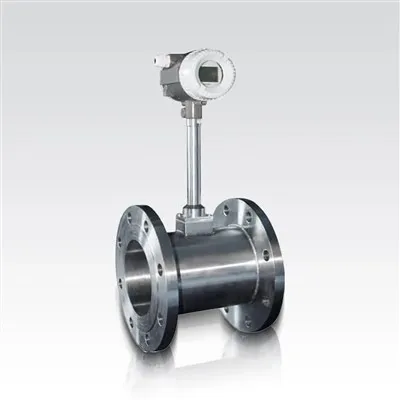
Vortex Flowmeter is another popular type of flowmeter. Vortex flowmeters operate based on the principle of vortex shedding. When a fluid flows past a bluff body, it creates vortices, and the frequency of these vortices is proportional to the flow rate. Vortex flowmeters are generally more resistant to wear and have fewer moving parts compared to turbine flowmeters. However, they may be less accurate in high - pressure applications, especially at low flow rates.
LDG Electromagnetic Flowmeter measures the flow of conductive fluids based on Faraday's law of electromagnetic induction. Electromagnetic flowmeters are suitable for a wide range of flow rates and are relatively unaffected by pressure changes. However, they can only be used for conductive fluids, which limits their application in some high - pressure scenarios where non - conductive fluids are involved.
Conclusion
In conclusion, turbine flowmeters can be a suitable choice for high - pressure applications, especially when accurate flow measurement and a wide turndown ratio are required. Their robust construction, proven performance, and ability to maintain accuracy at high pressures make them a reliable option for many industries. However, it is important to be aware of their limitations, such as increased wear and the potential effects of viscosity on accuracy.
If you are considering using turbine flowmeters for your high - pressure applications, I encourage you to contact us for more information. Our team of experts can provide you with detailed technical advice and help you select the most suitable flowmeter for your specific needs. We are committed to providing high - quality products and excellent customer service, and we look forward to the opportunity to work with you on your flow measurement projects.
References
- ISO 9951:2019, “Measurement of fluid flow in closed conduits - Turbine meters”.
- Miller, R. W. (2010). Flow measurement engineering handbook. McGraw - Hill.