
What are the differences between single - loop and multi - loop Controllers and their associated Indicators?
Leave a message

Hey there! As a supplier of Indicators and Controllers, I've had my fair share of dealing with different types of controllers and their associated indicators. One of the most common questions I get asked is about the differences between single - loop and multi - loop controllers and the indicators that go with them. So, let's dive right in and explore these differences.
Single - loop Controllers
A single - loop controller is a pretty straightforward piece of equipment. It's designed to control one variable, like temperature, pressure, or flow, in a single process loop. Think of it as a specialist; it does one job, and it does it well.
For example, in a simple heating system, a single - loop controller will focus solely on maintaining the temperature at a set point. It takes an input from a sensor (like a thermocouple for temperature), compares it to the desired set point, and then adjusts the output (such as a heater or a cooler) to keep the temperature stable.
The associated indicators for single - loop controllers are usually simple and easy to understand. They typically display the current value of the controlled variable, the set point, and maybe some basic status information like whether the output is on or off. These indicators are often digital, and they provide a clear, real - time view of what's going on in the process.
One of the big advantages of single - loop controllers is their simplicity. They're easy to install, configure, and operate. If you have a small - scale process with a single variable that needs controlling, a single - loop controller is a great choice. It's cost - effective and doesn't require a lot of technical know - how to get up and running.
However, single - loop controllers do have their limitations. They can only handle one process loop at a time. So, if you have a more complex system where multiple variables need to be controlled simultaneously, a single - loop controller won't cut it.
Multi - loop Controllers
On the other hand, multi - loop controllers are like the all - rounders of the control world. They're designed to handle multiple process loops at the same time. This means they can control several variables, such as temperature, pressure, and flow, all in one go.


For instance, in a chemical manufacturing process, there might be a need to control the temperature of a reactor vessel, the pressure in a pipeline, and the flow rate of a liquid all simultaneously. A multi - loop controller can manage all these tasks efficiently and effectively.
The indicators associated with multi - loop controllers are a bit more sophisticated. They need to display information for multiple variables, so they often have more advanced interfaces. They can show the current values and set points for each loop, as well as provide detailed status information and alarms. Some multi - loop controllers even come with touch - screen interfaces that make it easy to navigate through the different loop settings and monitor the overall system performance.
The main advantage of multi - loop controllers is their ability to handle complex processes. They can save space, reduce wiring, and simplify the overall control system design. They also offer better coordination between different process variables, which can lead to improved process efficiency and product quality.
But, multi - loop controllers aren't without their downsides. They're more expensive than single - loop controllers, both in terms of purchase price and installation cost. They also require more technical expertise to set up and maintain. If you're not familiar with the intricacies of multi - loop control systems, you might need to hire a professional to help you get things up and running.
Comparing the Associated Indicators
Now, let's take a closer look at the differences between the indicators for single - loop and multi - loop controllers.
Display Capability
Single - loop indicator typically has a simple display that shows only the information relevant to the single variable being controlled. It's easy to read at a glance, and the layout is usually straightforward. On the other hand, multi - loop indicators need to display data for multiple variables. This means they often have more complex displays, with multiple screens or sections to show different loop information.
Functionality
Single - loop indicators usually have basic functionality. They can display the current value and set point, and maybe provide some simple alarms. Multi - loop indicators, however, offer more advanced functionality. They can perform calculations based on the data from multiple loops, provide trend analysis, and allow for more in - depth system monitoring.
Interface
The interface of a single - loop indicator is often very user - friendly and intuitive. It's designed for easy operation by someone with basic technical knowledge. The interface of a multi - loop indicator, due to its more complex nature, can be a bit more challenging to navigate. But many modern multi - loop indicators come with graphical user interfaces (GUIs) that make it easier to access and control the different loop settings.
Real - World Applications
Let's talk about some real - world applications where single - loop and multi - loop controllers and their associated indicators are used.
Single - loop Controller Applications
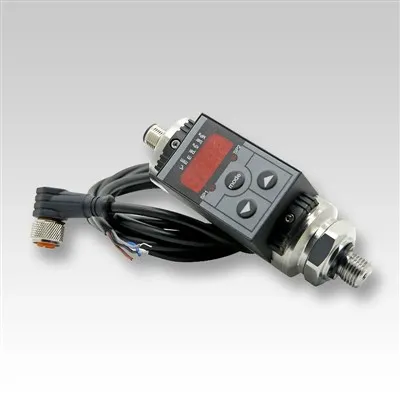
- Small - scale Food Processing: In a small bakery, a single - loop controller can be used to control the temperature of an oven. The associated Digital Hydraulic Pressure Gauge can display the oven temperature, allowing the baker to easily monitor and adjust the baking conditions.
- Home Heating Systems: Most home thermostats are essentially single - loop controllers. They maintain the temperature in a room or a building at a set point, and the associated indicator shows the current temperature and the set temperature.
Multi - loop Controller Applications
- Industrial Chemical Processes: In a large chemical plant, a multi - loop controller can be used to control the temperature, pressure, and flow rate in different parts of the production line. The Pressure Temperature Indicator can display all the relevant data for each loop, helping the operators to manage the process effectively.
- HVAC Systems in Large Buildings: Multi - loop controllers are used to regulate the heating, ventilation, and air - conditioning systems in large commercial buildings. They can control the temperature, humidity, and air flow in different zones of the building, and the associated indicators provide comprehensive information about the system status.
Conclusion
In conclusion, both single - loop and multi - loop controllers have their own unique advantages and disadvantages. The choice between them depends on the complexity of your process. If you have a simple, single - variable process, a single - loop controller with its associated basic indicator is likely the best option. But if you're dealing with a complex, multi - variable system, a multi - loop controller and its more advanced indicator can offer better performance and control.
As a supplier of Indicators and Controllers, we offer a wide range of products to suit different needs. Whether you're looking for a reliable single - loop Melt Pressure Controller or a powerful multi - loop solution, we've got you covered.
If you're interested in learning more about our products or have a specific application in mind, feel free to reach out. We're always here to help you find the right Indicator and Controller for your project. Let's have a chat about your requirements and see how we can make your process more efficient and effective.
References
- Control System Handbook
- Industrial Automation and Control Technology textbooks