What is the output signal of a melt temperature transmitter?
Leave a message

A melt temperature transmitter is a crucial instrument in various industrial applications, especially in the plastic processing and extrusion industries. It plays a vital role in accurately measuring and transmitting the temperature of molten materials. Understanding the output signal of a melt temperature transmitter is essential for ensuring the quality and efficiency of industrial processes. In this blog post, we, as a melt temperature transmitter supplier, will delve into the details of the output signal of a melt temperature transmitter.
Types of Output Signals
Melt temperature transmitters typically offer several types of output signals, each with its own characteristics and applications. The most common output signals include analog signals and digital signals.
Analog Signals
Analog signals are continuous electrical signals that vary in proportion to the measured temperature. The two most widely used analog output signals for melt temperature transmitters are 4 - 20 mA and 0 - 10 V.
-
4 - 20 mA: This is the most popular analog output signal in industrial applications. The main advantage of the 4 - 20 mA signal is its immunity to electrical noise. The 4 mA current represents the lower end of the temperature range (usually the minimum temperature the transmitter can measure), while 20 mA represents the upper end of the range (the maximum temperature). For example, if a melt temperature transmitter has a temperature range of 0°C - 400°C and a 4 - 20 mA output, a current of 4 mA would correspond to 0°C, and 20 mA would correspond to 400°C. Intermediate temperatures would be represented by currents proportionally between 4 mA and 20 mA. This signal is easy to transmit over long distances and is compatible with many industrial control systems.
-
0 - 10 V: The 0 - 10 V output signal is also commonly used. Similar to the 4 - 20 mA signal, the voltage varies linearly with the temperature. A voltage of 0 V represents the minimum temperature, and 10 V represents the maximum temperature. However, the 0 - 10 V signal is more susceptible to electrical interference compared to the 4 - 20 mA signal, especially over long cable runs.
Digital Signals
With the development of technology, digital output signals are becoming increasingly popular in melt temperature transmitters. Digital signals offer higher accuracy, better noise immunity, and the ability to transmit additional information such as status and diagnostic data.
-
Modbus: Modbus is a widely used digital communication protocol in the industrial automation field. Melt temperature transmitters with Modbus output can communicate with other devices, such as programmable logic controllers (PLCs) and human - machine interfaces (HMIs), over a serial or Ethernet network. Modbus allows for efficient and reliable data transfer, enabling the central control system to read and process the temperature data quickly.
-
Profibus and Ethernet/IP: These are also industrial communication protocols that are commonly used in modern industrial settings. They offer high - speed data transfer and advanced diagnostic capabilities. Profibus is a fieldbus system that provides a reliable means of communication between different devices in a distributed control system. Ethernet/IP, on the other hand, is based on Ethernet technology and is widely used in industrial Ethernet networks.
Importance of Output Signal Compatibility
The compatibility of the output signal of a melt temperature transmitter with the control system is of utmost importance. In industrial processes, the melt temperature data needs to be accurately transmitted to the control system to enable proper regulation of the process.
For example, if a control system is designed to accept 4 - 20 mA input signals, using a melt temperature transmitter with a 0 - 10 V output would require additional signal conversion, which can introduce errors and increase the complexity of the system. On the other hand, if the transmitter has a digital output (such as Modbus) and the control system does not support this protocol, the two devices will not be able to communicate effectively.
As a melt temperature transmitter supplier, we understand the importance of output signal compatibility. We offer a wide range of melt temperature transmitters with different output signals to meet the diverse needs of our customers. Whether you need a transmitter with a standard analog output or a digital output for more advanced applications, we have the right solution for you.
Applications of Melt Temperature Transmitter Output Signals
The output signals of melt temperature transmitters are used in various applications in the plastic processing and extrusion industries.
-
Extrusion Processes: In plastic extrusion, maintaining the correct melt temperature is crucial for producing high - quality products. The output signal of the melt temperature transmitter is sent to the extrusion control system, which adjusts the heating and cooling elements to keep the melt temperature within the desired range. For more information on melt temperature sensors suitable for extrusion, you can visit our website Melt Temperature Sensor for Extrusion.
-
Injection Molding: In injection molding, the melt temperature affects the flowability and properties of the plastic. The temperature data from the melt temperature transmitter is used to optimize the injection process, ensuring consistent product quality and reducing the number of defective products.
-
Blow Molding: Blow molding also relies on accurate melt temperature control. The output signal of the melt temperature transmitter helps in regulating the temperature of the molten plastic, which is essential for producing uniform and high - quality blow - molded products.
Factors Affecting the Output Signal
Several factors can affect the accuracy and reliability of the output signal of a melt temperature transmitter.
-
Sensor Accuracy: The accuracy of the temperature sensor inside the transmitter is a key factor. A high - quality sensor will provide more accurate temperature measurements, which in turn will result in a more accurate output signal.


-
Signal Interference: Electrical noise in the environment can interfere with the output signal, especially in the case of analog signals. Shielded cables and proper grounding can help minimize the effects of signal interference.
-
Installation Conditions: Incorrect installation of the melt temperature transmitter, such as improper immersion depth in the molten material or poor contact with the mounting surface, can lead to inaccurate temperature measurements and inconsistent output signals.
Selection of the Right Melt Temperature Transmitter Based on Output Signal
When selecting a melt temperature transmitter, the choice of output signal should be based on the specific requirements of your application.
-
For Simple Control Systems: If you have a relatively simple control system that only requires basic temperature monitoring and control, an analog output signal such as 4 - 20 mA or 0 - 10 V may be sufficient. These signals are easy to understand and integrate into existing control systems.
-
For Advanced Applications: In more advanced applications where high - speed data transfer, diagnostic capabilities, and communication with other devices are required, a digital output signal such as Modbus, Profibus, or Ethernet/IP would be a better choice.
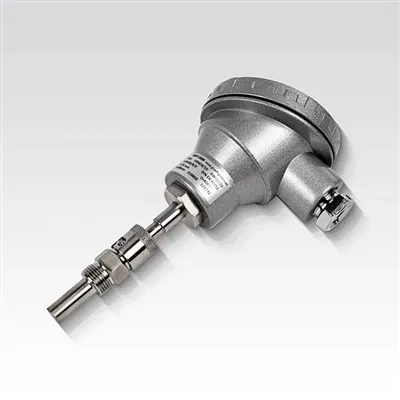
We offer different types of melt temperature transmitters to meet your specific needs. Our Extruder Melt Temperature Transmitter is designed for extrusion processes, while our Integrated Melt Temperature Transmitter provides a compact and efficient solution for various applications.
Contact Us for Your Melt Temperature Transmitter Needs
If you are in the market for a high - quality melt temperature transmitter, we are here to help. Our team of experts can assist you in selecting the right transmitter with the appropriate output signal for your specific application. We offer reliable products at competitive prices and provide excellent after - sales service. Contact us today to discuss your requirements and start a successful partnership.
References
- "Industrial Temperature Measurement Handbook"
- "Plastic Processing Technology and Applications"