
What is the settling time of ceramic pressure transmitters?
Leave a message

What is the Settling Time of Ceramic Pressure Transmitters?
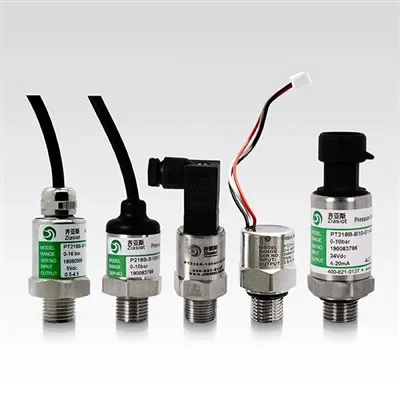
As a supplier of Ceramic Pressure Transmitters, I often encounter inquiries from customers about various technical aspects of our products. One question that frequently comes up is about the settling time of ceramic pressure transmitters. In this blog, I'll delve into what settling time means, its significance, and how it relates to our range of ceramic pressure transmitters, including the Anti-Crossive Pressure Transmitter, Standard Ceramic Pressure Transmitter, and Refrigeration Pressure Transmitter.
Understanding Settling Time
Settling time is a crucial parameter in the performance evaluation of pressure transmitters. It refers to the time required for the output of a pressure transmitter to reach and remain within a specified error band after a step change in the input pressure. In simpler terms, when there is a sudden change in the pressure being measured, the transmitter needs some time to adjust its output signal accurately to reflect the new pressure value. This adjustment period is the settling time.
For example, if a ceramic pressure transmitter is initially measuring a pressure of 100 psi and there is a sudden increase to 200 psi, the output signal of the transmitter will not immediately jump to the value corresponding to 200 psi. Instead, it will gradually change until it reaches a value that is within an acceptable error range (e.g., ±0.1% of the full-scale output) of the true value for 200 psi. The time it takes to reach this stable state is the settling time.
Significance of Settling Time
The settling time of a pressure transmitter has significant implications for its practical applications. In many industrial processes, real - time and accurate pressure measurements are essential for ensuring the safety, efficiency, and quality of operations.
In high - speed processes, such as in the automotive or aerospace industries, a long settling time can lead to inaccurate pressure readings during rapid pressure changes. This can result in improper control of systems, potentially causing malfunctions or even safety hazards. For instance, in an automotive engine's fuel injection system, if the pressure transmitter has a long settling time, it may not accurately measure the rapid pressure changes in the fuel line, leading to incorrect fuel injection amounts and reduced engine performance.
On the other hand, in applications where slow and steady pressure changes are the norm, a longer settling time may be more tolerable. However, even in these cases, a shorter settling time can still improve the overall responsiveness and accuracy of the measurement system.
Factors Affecting Settling Time in Ceramic Pressure Transmitters
Several factors can influence the settling time of ceramic pressure transmitters.
Sensor Design
The design of the ceramic pressure sensor itself plays a major role. The structure and material properties of the ceramic diaphragm, which is the key sensing element in these transmitters, affect how quickly it can respond to pressure changes. A well - designed diaphragm with optimized thickness and elasticity can deform more rapidly in response to pressure variations, reducing the settling time.
Signal Processing Circuitry
The signal processing circuitry in the pressure transmitter also impacts the settling time. Advanced signal processing algorithms and high - speed electronics can quickly convert the mechanical deformation of the ceramic diaphragm into an accurate electrical output signal. If the circuitry is slow or poorly designed, it can introduce delays in the signal processing, increasing the settling time.
Environmental Conditions
Environmental factors such as temperature and humidity can affect the settling time. Temperature changes can cause the ceramic material to expand or contract, which may alter its mechanical properties and the way it responds to pressure. High humidity can also introduce electrical interference or affect the performance of the electronic components in the transmitter, potentially increasing the settling time.
Settling Time in Our Ceramic Pressure Transmitters
At our company, we understand the importance of settling time in different applications. That's why we have engineered our ceramic pressure transmitters, including the Anti-Crossive Pressure Transmitter, Standard Ceramic Pressure Transmitter, and Refrigeration Pressure Transmitter, to have short settling times.
Our Anti-Crossive Pressure Transmitter is designed for applications where accurate pressure measurement in the presence of cross - talk or interference is crucial. Through advanced sensor design and signal processing techniques, it can quickly settle to the correct pressure value even in challenging environments.
The Standard Ceramic Pressure Transmitter offers a balance between performance and cost. It has been optimized to provide a relatively short settling time, making it suitable for a wide range of industrial applications where rapid and accurate pressure measurement is required.
Our Refrigeration Pressure Transmitter is specifically designed for the refrigeration industry. In refrigeration systems, pressure changes can occur rapidly during start - up, shutdown, or normal operation. Our transmitter can quickly settle to the new pressure values, ensuring accurate control of the refrigeration cycle and efficient operation of the system.
Measuring Settling Time
Measuring the settling time of a ceramic pressure transmitter typically involves applying a step change in pressure and recording the output signal over time. A high - speed data acquisition system is used to capture the output signal with high precision. The settling time is then determined by analyzing the time it takes for the output to reach and stay within the specified error band.
In our manufacturing process, we conduct rigorous testing of each pressure transmitter to ensure that it meets our specified settling time requirements. This helps us to guarantee the quality and performance of our products for our customers.
Conclusion
The settling time of ceramic pressure transmitters is a critical parameter that affects their performance in various industrial applications. As a supplier, we are committed to providing high - quality ceramic pressure transmitters with short settling times. Our Anti-Crossive Pressure Transmitter, Standard Ceramic Pressure Transmitter, and Refrigeration Pressure Transmitter are designed to meet the diverse needs of our customers, whether they require rapid response in high - speed processes or accurate measurement in specific industries like refrigeration.
If you are in need of ceramic pressure transmitters for your application and want to learn more about our products' settling time and other performance characteristics, we encourage you to contact us for a detailed discussion and to explore how our products can meet your specific requirements. We look forward to the opportunity to work with you and provide you with the best pressure measurement solutions.

References
- "Industrial Pressure Transmitter Handbook", [Publisher Name], [Year of Publication]
- "Ceramic Materials for Pressure Sensing Applications", [Author Name], [Journal Name], [Volume], [Year]
- "Signal Processing Techniques for Pressure Transmitters", [Research Group], [Conference Proceedings], [Year]