
What is the response time of a temperature indicator?
Leave a message

Hey there! As a supplier of temperature indicators, I often get asked about the response time of these nifty devices. So, let's dig into what the response time of a temperature indicator actually is, why it matters, and how it can impact your operations.
First off, what's the response time? Simply put, the response time of a temperature indicator is the time it takes for the indicator to show a change in temperature after the actual temperature around it has changed. It's like how quickly your body reacts to a sudden change in the weather. If you step outside on a cold day, your body starts to feel the chill right away - that's a fast response. But if it takes a while for you to notice the temperature drop, that's a slower response.
Now, you might be wondering why the response time of a temperature indicator is such a big deal. Well, in many industries, accurate and timely temperature measurement is crucial. For example, in the food and beverage industry, maintaining the right temperature is essential to keep products fresh and safe to consume. If the temperature indicator has a slow response time, it might not detect a sudden temperature increase in time, which could lead to spoilage. In the pharmaceutical industry, where drugs need to be stored at specific temperatures, a slow - responding temperature indicator could put the efficacy of the medications at risk.
There are a few factors that can affect the response time of a temperature indicator. One of the main factors is the type of sensor used. Different sensors have different response characteristics. For instance, thermocouples are known for their relatively fast response times. They can quickly detect changes in temperature because of the way they work - they generate a small voltage that changes with temperature. On the other hand, resistance temperature detectors (RTDs) might have a slightly slower response time, but they are more accurate over a wide range of temperatures.
The environment in which the temperature indicator is used also plays a role. If the indicator is placed in a well - ventilated area, heat transfer will be faster, and the indicator will likely have a quicker response. However, if it's in a cramped or insulated space, it might take longer for the temperature change to reach the sensor, resulting in a slower response.
Another factor is the mass of the sensor. A smaller, lighter sensor will generally have a faster response time compared to a larger, heavier one. This is because it takes less energy to change the temperature of a smaller mass.
As a supplier of temperature indicators, we understand the importance of providing products with appropriate response times for different applications. That's why we offer a wide range of temperature indicators with various sensors and designs. Whether you need a fast - responding thermocouple - based indicator for a high - speed manufacturing process or a more accurate RTD - based one for a laboratory setting, we've got you covered.
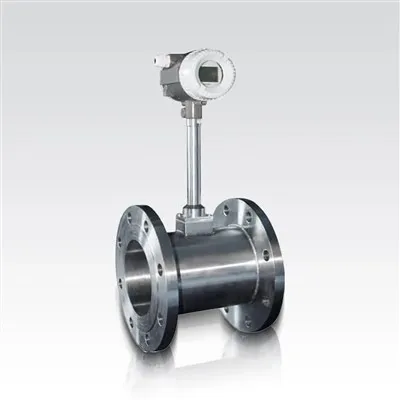
Now, let's talk about how the response time of a temperature indicator relates to other measurement devices. For example, flow meters are often used in conjunction with temperature indicators in many industrial processes. You might want to check out our Vortex Flowmeter, LDG Electromagnetic Flowmeter, and Turbine Flow Meter. These flow meters can help you measure the flow rate of fluids in a system, and knowing the temperature is crucial for accurate flow measurement. If the temperature changes rapidly and the temperature indicator has a slow response, it could lead to inaccurate flow measurements.
When choosing a temperature indicator, it's important to consider your specific needs. You need to think about how quickly the temperature might change in your application. If it's a dynamic environment where temperatures can fluctuate rapidly, you'll want an indicator with a fast response time. But if the temperature changes slowly and accuracy is your main concern, a slower - responding but more accurate indicator might be the better choice.
We also offer customization options for our temperature indicators. If you have unique requirements for response time or other features, our team of experts can work with you to develop a solution that meets your exact needs. We use the latest technology and high - quality materials to ensure that our temperature indicators are reliable and perform well in any situation.
In addition to providing high - quality temperature indicators, we offer excellent customer support. Our team is always available to answer your questions, provide technical advice, and help you with any issues you might encounter. We know that choosing the right temperature indicator can be a complex decision, and we're here to make the process as easy as possible for you.
If you're in the market for a temperature indicator, don't hesitate to reach out to us. Whether you're a small business or a large industrial operation, we can provide you with the right product at a competitive price. We're confident that our temperature indicators will meet your expectations and help you achieve accurate temperature measurement in your processes.
In conclusion, the response time of a temperature indicator is a critical factor that can have a big impact on the performance of your operations. By understanding the factors that affect response time and choosing the right indicator for your needs, you can ensure accurate temperature measurement and improve the efficiency and safety of your processes. So, if you're looking for a reliable temperature indicator supplier, look no further. Contact us today to discuss your requirements and let's find the perfect solution together.


References
- Temperature Measurement Handbook: A Guide to Temperature Sensors and Their Applications
- Industrial Instrumentation and Control Handbook