
What is the pressure drop across a turbine flowmeter?
Leave a message

Hey there! As a supplier of Turbine Flowmeters, I often get asked about the pressure drop across these nifty devices. So, let's dive right in and break it down in a way that's easy to understand.
First off, what's a turbine flowmeter? Well, it's a type of flowmeter that measures the flow rate of a fluid by making use of a rotor that spins as the fluid passes through it. The speed of the rotor is directly proportional to the flow rate of the fluid. Turbine flowmeters are super popular in a bunch of industries, like oil and gas, chemical processing, and water treatment, just to name a few.
Now, let's talk about pressure drop. Pressure drop is basically the difference in pressure between the inlet and the outlet of a flowmeter. When fluid flows through a turbine flowmeter, it has to push against the rotor and other internal components. This resistance causes a decrease in pressure, and that's what we call the pressure drop.
Why does pressure drop matter? Well, it can have a significant impact on the overall performance of your system. A high pressure drop means that your pump has to work harder to maintain the desired flow rate. This can lead to increased energy consumption and higher operating costs. On top of that, excessive pressure drop can also cause issues like cavitation, which can damage your equipment over time.
So, what factors affect the pressure drop across a turbine flowmeter? There are quite a few, actually. One of the main factors is the flow rate. Generally speaking, the higher the flow rate, the higher the pressure drop. This is because at higher flow rates, the fluid has more kinetic energy, and it takes more energy to push it through the flowmeter.
The viscosity of the fluid also plays a role. Viscous fluids, like oil, have more internal friction, which means they require more energy to flow. As a result, the pressure drop across a turbine flowmeter will be higher for viscous fluids compared to less viscous ones, like water.
The size and design of the flowmeter are also important. A smaller flowmeter will typically have a higher pressure drop than a larger one, as the fluid has to pass through a more restricted area. Additionally, the design of the rotor and other internal components can affect the pressure drop. Some flowmeters are designed to minimize pressure drop, while others may have a higher pressure drop but offer better accuracy or other performance benefits.
Another factor to consider is the Reynolds number. The Reynolds number is a dimensionless quantity that describes the flow regime of the fluid. In laminar flow, the fluid moves in smooth layers, while in turbulent flow, the fluid has a more chaotic motion. Turbine flowmeters are typically designed to operate in the turbulent flow regime, as this provides more accurate measurements. However, the transition from laminar to turbulent flow can also affect the pressure drop.
Now, let's take a look at how you can calculate the pressure drop across a turbine flowmeter. There are a few different methods, but one of the most common is to use the manufacturer's data. Most turbine flowmeter manufacturers provide pressure drop curves or equations that show the relationship between the flow rate and the pressure drop for their specific flowmeters. These curves are usually based on laboratory tests and can give you a good estimate of the pressure drop in your system.
If you don't have access to the manufacturer's data, you can also use some general equations to calculate the pressure drop. One such equation is the Darcy-Weisbach equation, which is commonly used to calculate the pressure drop in pipes. While this equation is not specifically designed for turbine flowmeters, it can still provide a rough estimate.
So, how can you minimize the pressure drop across a turbine flowmeter? One option is to choose a flowmeter that is designed to have a low pressure drop. There are many different models available on the market, and some are specifically optimized for low pressure drop applications. You can check out our Turbine Flow Meter for more information on our low-pressure-drop options.


Another way to reduce the pressure drop is to ensure that the flowmeter is properly sized for your application. If the flowmeter is too small, it will cause a higher pressure drop. On the other hand, if it's too large, it may not provide accurate measurements. So, it's important to choose the right size based on your flow rate requirements.
You can also consider using a bypass line or a flow conditioner. A bypass line allows some of the fluid to flow around the flowmeter, reducing the overall flow rate through the flowmeter and thus the pressure drop. A flow conditioner, on the other hand, helps to straighten the flow of the fluid before it enters the flowmeter, which can improve the accuracy of the measurements and reduce the pressure drop.
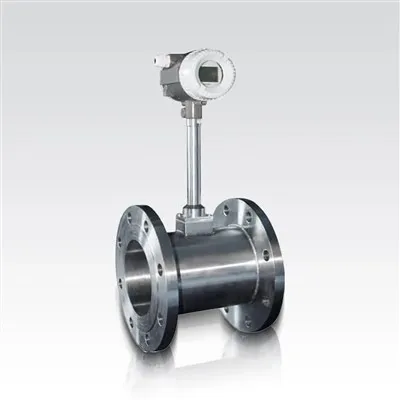
In addition to turbine flowmeters, there are other types of flowmeters available that may have different pressure drop characteristics. For example, Vortex Flowmeter and LDG Electromagnetic Flowmeter are two popular alternatives. Vortex flowmeters work by measuring the frequency of vortices shed from a bluff body in the flow, while electromagnetic flowmeters use the principle of electromagnetic induction to measure the flow rate. Each type of flowmeter has its own advantages and disadvantages, and the pressure drop can vary depending on the specific model and application.
If you're in the market for a flowmeter and you're concerned about pressure drop, it's a good idea to consult with an expert. As a supplier of turbine flowmeters, we have a team of experienced engineers who can help you choose the right flowmeter for your application and provide you with detailed information about the pressure drop and other performance characteristics.
We understand that every application is unique, and we're committed to providing you with the best possible solution. Whether you need a turbine flowmeter for a small-scale laboratory experiment or a large industrial process, we have the expertise and the products to meet your needs.
So, if you're interested in learning more about our turbine flowmeters or if you have any questions about pressure drop or other flow measurement issues, don't hesitate to get in touch. We'd be happy to have a chat with you and discuss your requirements. You can reach out to us to start the conversation about finding the perfect flowmeter for your project.
References
- Miller, R. W. (1996). Flow measurement engineering handbook. McGraw-Hill.
- Spitzer, D. W. (2001). Flow measurement: practical guides for measurement and control. ISA - The Instrumentation, Systems, and Automation Society.