Can flowmeters be used in wastewater treatment plants?
Leave a message

In the realm of wastewater treatment plants, the accurate measurement of fluid flow is of paramount importance. As a seasoned flowmeters supplier, I've witnessed firsthand the transformative impact that reliable flow measurement can have on the efficiency and effectiveness of wastewater treatment processes. In this blog post, I'll delve into the question of whether flowmeters can be used in wastewater treatment plants, exploring the types of flowmeters suitable for this environment, their benefits, and considerations for implementation.
The Role of Flow Measurement in Wastewater Treatment
Wastewater treatment is a complex process that involves multiple stages, from the initial collection of sewage to the final discharge of treated water back into the environment. At each stage, the flow rate of wastewater needs to be carefully monitored and controlled to ensure optimal treatment performance. Flow measurement plays a crucial role in several key aspects of wastewater treatment:


- Process Control: Accurate flow measurement allows operators to adjust the flow rate of wastewater through different treatment processes, such as aeration, sedimentation, and filtration. This ensures that each treatment stage receives the appropriate amount of wastewater, maximizing the efficiency of the treatment process and minimizing the risk of overloading or underutilizing equipment.
- Chemical Dosing: Many wastewater treatment processes rely on the addition of chemicals, such as coagulants, flocculants, and disinfectants, to remove contaminants from the water. Flow measurement is essential for determining the correct dosage of these chemicals, ensuring that they are added in the right proportion to the flow rate of wastewater. This helps to optimize the chemical treatment process and reduce the consumption of chemicals, resulting in cost savings and environmental benefits.
- Effluent Monitoring: Flow measurement is also used to monitor the flow rate of treated wastewater before it is discharged into the environment. This helps to ensure that the discharge meets the regulatory requirements for flow rate and water quality, protecting the environment and public health.
Types of Flowmeters Suitable for Wastewater Treatment
There are several types of flowmeters that are suitable for use in wastewater treatment plants, each with its own advantages and limitations. The choice of flowmeter depends on a variety of factors, including the type of wastewater, the flow rate range, the accuracy requirements, and the installation conditions. Here are some of the most commonly used flowmeters in wastewater treatment:
- Electromagnetic Flowmeters: Electromagnetic flowmeters, such as the LDG Electromagnetic Flowmeter, are widely used in wastewater treatment plants due to their high accuracy, reliability, and ability to measure the flow of conductive fluids. These flowmeters work on the principle of Faraday's law of electromagnetic induction, which states that a voltage is induced in a conductor when it moves through a magnetic field. In an electromagnetic flowmeter, the wastewater acts as the conductor, and the magnetic field is generated by a pair of coils. The induced voltage is proportional to the flow rate of the wastewater, allowing for accurate measurement.
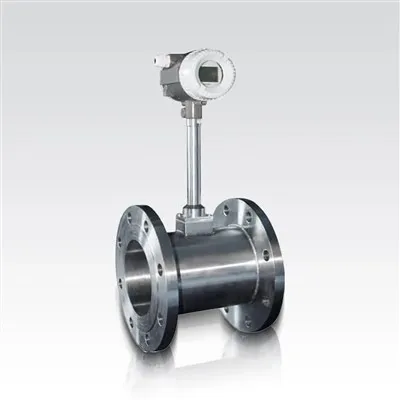
- Vortex Flowmeters: Vortex flowmeters, such as the Vortex Flowmeter, are another popular choice for wastewater treatment applications. These flowmeters work on the principle of the von Kármán vortex street, which is a series of vortices that are shed behind a bluff body placed in the flow path. The frequency of the vortices is proportional to the flow rate of the wastewater, allowing for accurate measurement. Vortex flowmeters are known for their high accuracy, wide flow range, and low maintenance requirements.
- Turbine Flowmeters: Turbine flowmeters, such as the Turbine Flow Meter, are commonly used in wastewater treatment plants to measure the flow of clean or slightly contaminated liquids. These flowmeters work on the principle of a turbine rotor that is placed in the flow path of the wastewater. The rotation speed of the turbine is proportional to the flow rate of the wastewater, allowing for accurate measurement. Turbine flowmeters are known for their high accuracy, fast response time, and ability to measure a wide range of flow rates.
Benefits of Using Flowmeters in Wastewater Treatment Plants
The use of flowmeters in wastewater treatment plants offers several benefits, including:
- Improved Process Efficiency: Accurate flow measurement allows operators to optimize the flow rate of wastewater through different treatment processes, ensuring that each stage receives the appropriate amount of wastewater. This helps to improve the efficiency of the treatment process, reduce the energy consumption, and minimize the risk of equipment failure.
- Enhanced Chemical Dosing: Flow measurement is essential for determining the correct dosage of chemicals in wastewater treatment processes. By accurately measuring the flow rate of wastewater, operators can ensure that the chemicals are added in the right proportion, optimizing the chemical treatment process and reducing the consumption of chemicals.
- Compliance with Regulatory Requirements: Flow measurement is used to monitor the flow rate of treated wastewater before it is discharged into the environment. This helps to ensure that the discharge meets the regulatory requirements for flow rate and water quality, protecting the environment and public health.
- Cost Savings: The use of flowmeters in wastewater treatment plants can result in significant cost savings. By optimizing the treatment process, reducing the energy consumption, and minimizing the consumption of chemicals, operators can lower the operating costs of the treatment plant.
Considerations for Implementing Flowmeters in Wastewater Treatment Plants
When implementing flowmeters in wastewater treatment plants, there are several considerations that need to be taken into account:
- Wastewater Characteristics: The type of wastewater being treated can have a significant impact on the performance of the flowmeter. For example, wastewater that contains high levels of solids or debris can cause clogging or damage to the flowmeter. It is important to choose a flowmeter that is suitable for the specific characteristics of the wastewater being treated.
- Flow Rate Range: The flow rate range of the wastewater being treated needs to be considered when selecting a flowmeter. Different flowmeters have different flow rate ranges, and it is important to choose a flowmeter that can accurately measure the flow rate of the wastewater within the expected range.
- Accuracy Requirements: The accuracy requirements of the flow measurement depend on the specific application. For example, in some applications, such as chemical dosing, high accuracy is required to ensure that the chemicals are added in the right proportion. In other applications, such as effluent monitoring, lower accuracy may be acceptable.
- Installation Conditions: The installation conditions of the flowmeter need to be considered to ensure accurate and reliable measurement. For example, the flowmeter needs to be installed in a location where the flow is fully developed and free of disturbances, such as bends, valves, or pumps.
Conclusion
In conclusion, flowmeters can be effectively used in wastewater treatment plants to improve the efficiency and effectiveness of the treatment process. By accurately measuring the flow rate of wastewater at different stages of the treatment process, operators can optimize the treatment process, reduce the energy consumption, minimize the consumption of chemicals, and ensure compliance with regulatory requirements. As a flowmeters supplier, I'm committed to providing high-quality flowmeters that are suitable for the specific needs of wastewater treatment plants. If you're interested in learning more about our flowmeters or discussing your specific requirements, please don't hesitate to contact us for a procurement discussion.
References
- "Wastewater Treatment: Principles and Design" by Metcalf & Eddy
- "Flow Measurement Handbook: Industrial Designs and Applications" by Richard W. Miller
- "Electromagnetic Flowmeters: Principles, Design, and Applications" by George A. Mabbett