
What is the precision class of a Compact Pressure Transmitter?
Leave a message

In the realm of industrial instrumentation, compact pressure transmitters play a crucial role in accurately measuring and transmitting pressure data. As a trusted supplier of compact pressure transmitters, we understand the significance of precision in these devices. In this blog post, we will delve into the concept of precision class in compact pressure transmitters, exploring what it means, why it matters, and how it impacts various applications.
Understanding Precision Class
The precision class of a compact pressure transmitter refers to its level of accuracy in measuring pressure. It is a measure of how closely the transmitter's output corresponds to the actual pressure being measured. Precision class is typically expressed as a percentage of the full-scale output (FSO) of the transmitter. For example, a transmitter with a precision class of ±0.1% means that its output can deviate by a maximum of 0.1% from the true pressure value across its entire measurement range.
The precision class is determined by several factors, including the quality of the sensor, the signal processing electronics, and the calibration process. High-quality sensors with low noise and excellent linearity are essential for achieving a high precision class. Signal processing electronics must be designed to minimize errors and interference, while accurate calibration ensures that the transmitter's output is correctly aligned with the actual pressure.


Importance of Precision Class
The precision class of a compact pressure transmitter is of utmost importance in many industrial applications. In some industries, such as aerospace, automotive, and pharmaceuticals, even small errors in pressure measurement can have significant consequences. For example, in aerospace applications, precise pressure measurement is critical for ensuring the safety and performance of aircraft systems. In automotive manufacturing, accurate pressure measurement is necessary for optimizing engine performance and reducing emissions. In the pharmaceutical industry, precise pressure control is essential for maintaining the quality and consistency of drug production.
In addition to safety and performance, the precision class of a pressure transmitter also affects the efficiency and productivity of industrial processes. In many manufacturing processes, pressure is used to control the flow of fluids, gases, and materials. Accurate pressure measurement ensures that these processes operate within the desired parameters, reducing waste, improving quality, and increasing throughput.
Applications of Compact Pressure Transmitters with Different Precision Classes
Compact pressure transmitters are used in a wide range of applications, each with its own specific requirements for precision. Here are some examples of applications and the typical precision classes required:
- General Industrial Applications: In many general industrial applications, such as HVAC systems, water treatment plants, and pneumatic systems, a precision class of ±0.25% to ±0.5% is usually sufficient. These applications do not require extremely high accuracy but still need reliable and consistent pressure measurement.
- Process Control Applications: In process control applications, such as chemical processing, food and beverage production, and oil and gas refining, a higher precision class of ±0.1% to ±0.25% is often required. These applications involve critical processes where precise pressure control is essential for maintaining product quality and safety.
- Test and Measurement Applications: In test and measurement applications, such as laboratory testing, calibration, and research, the highest precision class of ±0.05% or better is typically required. These applications demand the most accurate and reliable pressure measurement possible, as even small errors can invalidate test results.
Our Compact Pressure Transmitters and Their Precision Classes
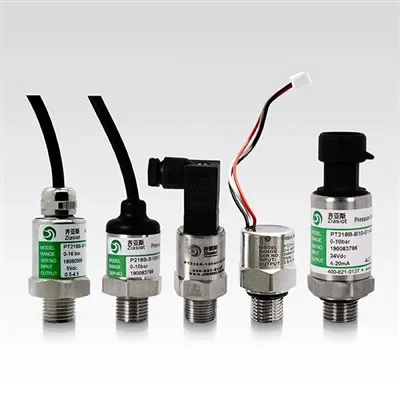
As a leading supplier of compact pressure transmitters, we offer a wide range of products with different precision classes to meet the diverse needs of our customers. Our transmitters are designed and manufactured using the latest technology and high-quality components to ensure exceptional accuracy and reliability.
- Standard Precision Class: Our standard precision class transmitters offer a precision class of ±0.25% to ±0.5%, making them suitable for general industrial applications. These transmitters are cost-effective and provide reliable pressure measurement for a wide range of applications.
- High Precision Class: Our high precision class transmitters offer a precision class of ±0.1% to ±0.25%, making them ideal for process control applications. These transmitters feature advanced signal processing electronics and high-quality sensors to ensure accurate and consistent pressure measurement.
- Ultra-High Precision Class: Our ultra-high precision class transmitters offer a precision class of ±0.05% or better, making them suitable for test and measurement applications. These transmitters are designed for the most demanding applications where the highest level of accuracy is required.
How to Choose the Right Precision Class for Your Application
Choosing the right precision class for your application is crucial to ensure accurate and reliable pressure measurement. Here are some factors to consider when selecting a compact pressure transmitter:
- Application Requirements: Consider the specific requirements of your application, such as the required level of accuracy, the operating range, and the environmental conditions. If your application requires high precision, such as in aerospace or pharmaceutical applications, you may need to choose a transmitter with a higher precision class.
- Cost vs. Precision: Higher precision classes generally come at a higher cost. Consider your budget and the cost-benefit ratio when choosing a transmitter. In some cases, a lower precision class may be sufficient for your application, while in other cases, the added cost of a higher precision class may be justified by the benefits.
- Compatibility: Ensure that the transmitter you choose is compatible with your existing system, including the electrical interface, the mounting options, and the process connection. Compatibility issues can lead to installation problems and inaccurate measurement.
Conclusion
The precision class of a compact pressure transmitter is a critical factor in determining its accuracy and suitability for different applications. As a supplier of compact pressure transmitters, we understand the importance of providing our customers with high-quality products that meet their specific requirements. Whether you need a standard precision class transmitter for general industrial applications or an ultra-high precision class transmitter for test and measurement applications, we have the right solution for you.
If you are interested in learning more about our compact pressure transmitters or have any questions about precision class or other technical specifications, please feel free to contact us. Our team of experts is ready to assist you in choosing the right transmitter for your application and providing you with the support you need to ensure its successful installation and operation.
References
- "Pressure Measurement Handbook", by Peter Schoeffel
- "Industrial Instrumentation and Control Systems", by B.C. Nakra and K.K. Chaudhry
- "Aerospace Instrumentation", by Saeed Moaveni