
What is the power consumption of a Turbine Flow Meter?
Leave a message

Hey there! As a supplier of Turbine Flow Meters, I often get asked about the power consumption of these nifty devices. So, let's dive right in and talk about what the power consumption of a Turbine Flow Meter is all about.
First off, what's a Turbine Flow Meter? Well, it's a type of flow meter that measures the flow rate of a fluid by using a turbine. When the fluid passes through the meter, it makes the turbine spin. The speed of the turbine is directly related to the flow rate of the fluid. This is a really common and reliable way to measure flow in all sorts of industries, from oil and gas to water treatment.
Now, let's get to the main topic: power consumption. The power consumption of a Turbine Flow Meter can vary quite a bit, and it depends on several factors. One of the biggest factors is the type of sensor used in the meter. There are different kinds of sensors, like magnetic sensors and Hall effect sensors, and each has its own power requirements.
Magnetic sensors are pretty common in Turbine Flow Meters. They work by detecting the changes in the magnetic field as the turbine spins. These sensors usually don't consume a whole lot of power. They can operate on low-voltage DC power, typically in the range of 5 to 24 volts. The current draw is also relatively low, often in the milliamp range. This means that in terms of power consumption, magnetic sensors are quite efficient.
On the other hand, Hall effect sensors are another option. These sensors detect the magnetic field changes too, but they work a bit differently. Hall effect sensors can be a bit more power-hungry compared to magnetic sensors. They might require a bit more voltage and current to operate properly. However, they also offer some advantages, like better accuracy and reliability in certain applications.
Another factor that affects power consumption is the output signal of the Turbine Flow Meter. Most Turbine Flow Meters have an output signal that can be used to transmit the flow rate data to a control system or a display. There are different types of output signals, such as analog signals (like 4 - 20 mA) and digital signals (like pulse output).
Analog output signals usually require a bit more power to generate and transmit. The 4 - 20 mA signal, for example, needs a power supply to drive the current through the loop. The power consumption associated with this type of output depends on the load resistance in the loop and the length of the cable. Longer cables and higher load resistances can increase the power requirements.
Digital output signals, like pulse output, are generally more power-efficient. They only send out pulses at a certain frequency, and the power consumption is mainly related to the electronics that generate and shape these pulses. Pulse output is often used when you just need to count the number of pulses to determine the flow rate, and it's a great option if you're looking to save on power.
The environment in which the Turbine Flow Meter is installed can also have an impact on power consumption. For instance, if the meter is installed in a harsh environment with high temperatures or vibrations, it might need to use more power to maintain its accuracy and reliability. The electronics inside the meter might need to work harder to compensate for these environmental factors.


Now, let's compare the power consumption of Turbine Flow Meters with other types of flow meters. For example, the LDG Electromagnetic Flowmeter and the Vortex Flowmeter.
The LDG Electromagnetic Flowmeter works on the principle of electromagnetic induction. It measures the flow rate of conductive fluids. These meters usually have a relatively high power consumption because they need to generate a magnetic field and measure the induced voltage. The power supply requirements can be in the range of 24 volts AC or DC, and the current draw can be higher compared to Turbine Flow Meters.
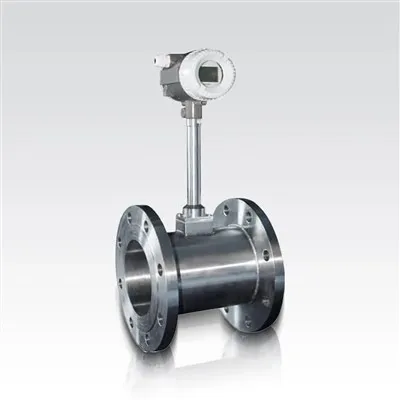
The Vortex Flowmeter, on the other hand, measures the flow rate by detecting the vortices shed from a bluff body in the flow path. The power consumption of Vortex Flowmeters can vary depending on the design and the output signal. Some Vortex Flowmeters might have similar power consumption to Turbine Flow Meters, while others could be a bit more power-hungry, especially if they have advanced features like temperature and pressure compensation.
So, why is it important to know about the power consumption of a Turbine Flow Meter? Well, for one thing, it can have a big impact on your operating costs. If you have multiple Turbine Flow Meters installed in your facility, the cumulative power consumption can add up over time. By choosing a meter with lower power consumption, you can save on electricity bills and reduce your overall operating expenses.
It's also important for applications where power is limited. For example, in remote locations where there's no access to a reliable power grid, you might need to use batteries or solar panels to power the flow meters. In these cases, a Turbine Flow Meter with low power consumption is essential to ensure long-term operation without frequent battery replacements.
As a supplier of Turbine Flow Meters, we understand the importance of power consumption. That's why we offer a range of Turbine Flow Meters with different power requirements to suit your specific needs. Whether you're looking for a meter with ultra-low power consumption for a remote application or a more robust meter with higher accuracy and a bit more power consumption for an industrial setting, we've got you covered.
If you're interested in learning more about our Turbine Flow Meters or have any questions about power consumption or other features, don't hesitate to get in touch. We're here to help you choose the right flow meter for your application and ensure that you get the best performance at the lowest possible cost. Contact us today to start a discussion about your flow measurement needs and let's see how we can work together to find the perfect solution.
References
- Flow Measurement Handbook: Principles and Techniques, Edited by Richard W. Miller
- Instrumentation Reference Book, Third Edition, Edited by W. Bolton