What is the influence of pipe diameter on the performance of a Vortex Flowmeter?
Leave a message

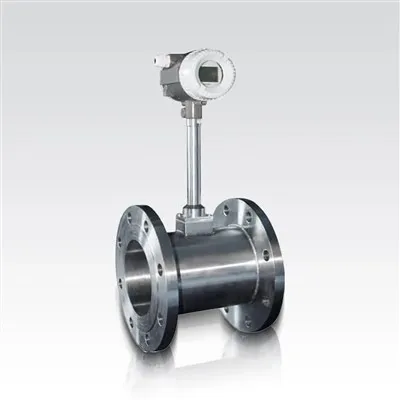
The pipe diameter plays a crucial role in determining the performance of a Vortex Flowmeter. As a Vortex Flowmeter supplier, I have witnessed firsthand the significant impact that pipe diameter can have on the accuracy, reliability, and overall effectiveness of these devices. In this blog post, I will delve into the various aspects of how pipe diameter influences the performance of a Vortex Flowmeter, providing in - depth analysis to help you make informed decisions when choosing the right flowmeter for your specific requirements.
1. Fluid Flow Characteristics and Pipe Diameter
The behavior of fluid flowing through a pipe is highly dependent on the pipe diameter. According to the principles of fluid mechanics, the velocity profile of the fluid varies with different pipe diameters. In smaller - diameter pipes, the fluid velocity is generally higher due to the reduced cross - sectional area. This high - velocity flow can cause the vortices generated by the Vortex Flowmeter to be more distinct and easier to detect.
On the other hand, in larger - diameter pipes, the fluid velocity is lower. The reduced velocity may lead to weaker vortices. If the vortices are too weak, it can be challenging for the flowmeter to accurately measure the frequency of the vortices, which is directly related to the flow rate. This can result in reduced measurement accuracy, especially at lower flow rates.
2. Reynolds Number and Pipe Diameter
The Reynolds number ($Re$) is a dimensionless quantity that is used to estimate the flow regime (laminar or turbulent) of a fluid. It is calculated using the formula $Re=\frac{\rho vd}{\mu}$, where $\rho$ is the fluid density, $v$ is the fluid velocity, $d$ is the pipe diameter, and $\mu$ is the dynamic viscosity of the fluid.
The pipe diameter is a key factor in this equation. A change in pipe diameter can significantly alter the Reynolds number. For a Vortex Flowmeter, a certain range of Reynolds numbers is required to ensure proper operation. In general, Vortex Flowmeters work best in the turbulent flow regime, which typically occurs at higher Reynolds numbers.
In smaller pipes, it is easier to achieve the required Reynolds number for turbulent flow, even at relatively low flow rates. However, in larger pipes, a much higher flow rate is needed to reach the same Reynolds number. If the flow rate in a large - diameter pipe is not sufficient to maintain a turbulent flow, the Vortex Flowmeter may not function accurately.
3. Installation and Pipe Diameter
The installation of a Vortex Flowmeter is also affected by the pipe diameter. In smaller - diameter pipes, the flowmeter can be installed more easily and may require less straight - run piping before and after the flowmeter. This is because the flow in smaller pipes is more uniform, and the vortices generated by the flowmeter are less likely to be disrupted by upstream or downstream disturbances.
For larger - diameter pipes, proper installation becomes more critical. A longer straight - run of piping is usually required to ensure that the fluid flow is fully developed and uniform before it reaches the flowmeter. Without sufficient straight - run, the vortices generated by the flowmeter can be distorted, leading to inaccurate measurements. Additionally, the larger size of the pipe may present challenges in terms of weight and support requirements for the flowmeter.


4. Pressure Drop and Pipe Diameter
Pressure drop is an important consideration in flow measurement applications. The pressure drop across a Vortex Flowmeter is influenced by the pipe diameter. In smaller pipes, the pressure drop is generally higher due to the higher fluid velocity. This can increase the energy consumption of the system, as more power is required to maintain the flow.
In larger pipes, the pressure drop is lower because of the lower fluid velocity. A lower pressure drop can be beneficial in applications where energy efficiency is a priority. However, as mentioned earlier, the lower velocity in large pipes can also lead to measurement challenges for the Vortex Flowmeter.
5. Comparison with Other Flowmeters in Different Pipe Diameters
When considering the influence of pipe diameter, it is also useful to compare the Vortex Flowmeter with other types of flowmeters. For example, the Turbine Flow Meter can also be used for flow measurement. Turbine flow meters generally have better performance in smaller - diameter pipes where the fluid velocity is high, similar to the Vortex Flowmeter. However, turbine flow meters can be more sensitive to fluid contaminants and may require more maintenance.
The LDG Electromagnetic Flowmeter is another option. Electromagnetic flowmeters are less affected by the pipe diameter compared to Vortex Flowmeters. They can work well in a wide range of pipe diameters and flow rates, as long as the fluid is conductive. However, they are more expensive and may not be suitable for non - conductive fluids.
6. Selecting the Right Vortex Flowmeter Based on Pipe Diameter
As a Vortex Flowmeter supplier, I often assist customers in selecting the appropriate flowmeter based on their pipe diameter. For applications with smaller pipe diameters (e.g., less than 50 mm), a Vortex Flowmeter can provide accurate and reliable measurements, especially at relatively high flow rates. It is important to ensure that the flowmeter is properly sized to match the pipe diameter and the expected flow rate.
For larger pipe diameters (e.g., greater than 200 mm), careful consideration must be given to the flow characteristics and the installation requirements. In some cases, it may be necessary to use a flow conditioner to improve the flow uniformity and enhance the performance of the Vortex Flowmeter.
Conclusion and Call to Action
In conclusion, the pipe diameter has a profound influence on the performance of a Vortex Flowmeter. It affects the fluid flow characteristics, the Reynolds number, the installation requirements, and the pressure drop. Understanding these relationships is essential for choosing the right Vortex Flowmeter for your specific application.
If you are in the market for a high - quality Vortex Flowmeter and need assistance in selecting the appropriate model based on your pipe diameter and other requirements, I encourage you to reach out to our team. We have extensive experience in providing customized flow measurement solutions and can help you make an informed decision. Whether you are dealing with small - diameter or large - diameter pipes, we have the expertise to ensure that your flow measurement needs are met accurately and efficiently.
References
- White, F. M. (2006). Fluid Mechanics. McGraw - Hill.
- Miller, R. W. (1996). Flow Measurement Engineering Handbook. McGraw - Hill.
- ISO 5167 - 1:2003. Measurement of fluid flow by means of pressure differential devices inserted in circular cross - section conduits running full.