
What is the difference between a conductive level switch and a non - conductive level switch?
Leave a message

Hey there! As a supplier of level switches, I often get asked about the difference between conductive and non - conductive level switches. So, let's dive right in and break it down.
Conductive Level Switches
First off, let's talk about conductive level switches. These are switches that rely on the electrical conductivity of the liquid or material they're monitoring. When the liquid comes into contact with the electrodes of the switch, it forms an electrical circuit, and that's how the switch detects the level.
One of the big advantages of conductive level switches is their simplicity. They're relatively easy to install and operate. For example, in a water tank, where water is a conductive medium, a conductive level switch can quickly and accurately detect when the water reaches a certain level. It's like having a little electrical detective that tells you when the liquid is where it should be.
Conductive level switches are also quite cost - effective. Since they don't require complex technology, they're often more affordable than some other types of level switches. This makes them a popular choice for many industrial and commercial applications, such as in water treatment plants, chemical processing, and even in some home - based applications like sump pumps.
However, conductive level switches do have their limitations. They can only be used with conductive liquids. If you're dealing with a non - conductive liquid like oil or some types of chemicals, a conductive level switch won't work. Also, they can be affected by the presence of impurities in the liquid. If there are a lot of minerals or other contaminants in the water, it can change the conductivity and potentially lead to inaccurate readings.
Non - Conductive Level Switches
Now, let's move on to non - conductive level switches. These switches are designed to work with liquids or materials that don't conduct electricity. There are several types of non - conductive level switches, and each has its own unique way of detecting the level.
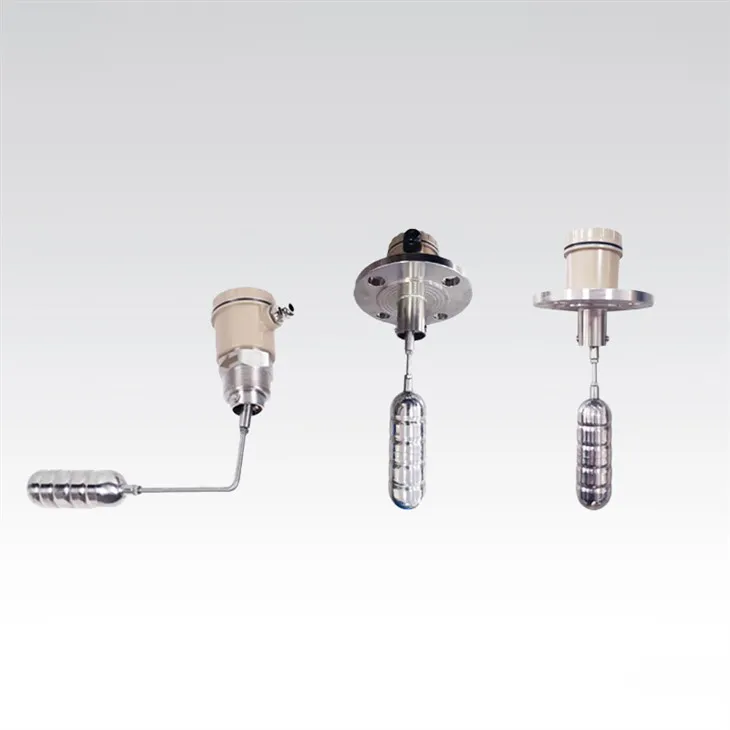
One common type of non - conductive level switch is the Float Level Switch. It uses a float that rises and falls with the liquid level. When the float reaches a certain position, it activates a switch. Float level switches are very reliable and can be used in a wide range of applications, from small household tanks to large industrial storage vessels. They're also relatively inexpensive and easy to maintain.
Another type is the Intelligent Liquid Capacitive Level Switch. This switch works by measuring the capacitance between two electrodes. When the liquid level changes, the capacitance also changes, and the switch can detect this change. Capacitive level switches are very sensitive and can be used to detect the level of both conductive and non - conductive liquids. They're often used in applications where high accuracy is required, such as in the food and beverage industry or in pharmaceutical manufacturing.
The Rotary Paddle Level Switch is also a popular non - conductive level switch. It has a paddle that rotates freely in the air. When the material (either a solid or a liquid) reaches the paddle, it stops the rotation, and the switch is activated. Rotary paddle level switches are commonly used in applications where you need to detect the level of granular materials, such as in grain silos or powder storage bins.
Non - conductive level switches offer more flexibility compared to conductive level switches. They can be used with a wider range of liquids and materials, regardless of their conductivity. However, they can be more complex and expensive. Some non - conductive level switches require more precise calibration and maintenance to ensure accurate readings.
Key Differences
Let's summarize the key differences between conductive and non - conductive level switches:
- Medium Compatibility: Conductive level switches are limited to conductive liquids, while non - conductive level switches can be used with both conductive and non - conductive liquids, as well as some solids.
- Operating Principle: Conductive level switches rely on electrical conductivity to detect the level, while non - conductive level switches use various methods such as float movement, capacitance change, or paddle rotation.
- Cost and Complexity: Conductive level switches are generally simpler and more cost - effective, while non - conductive level switches can be more complex and expensive, especially those that require high precision.
- Accuracy and Maintenance: Conductive level switches can be affected by impurities in the liquid, which may lead to inaccurate readings. Non - conductive level switches often offer higher accuracy but may require more maintenance and calibration.
Choosing the Right Level Switch
When it comes to choosing between a conductive and a non - conductive level switch, there are a few things you need to consider. First, think about the type of liquid or material you're dealing with. If it's conductive, a conductive level switch might be a good option. But if it's non - conductive or you're not sure about its conductivity, a non - conductive level switch is probably the way to go.
You also need to consider the accuracy requirements of your application. If you need very precise level detection, a more advanced non - conductive level switch like an intelligent capacitive level switch might be necessary. On the other hand, if you just need a basic on/off level detection, a simple conductive or float level switch could be sufficient.

Cost is another important factor. If you're on a tight budget, a conductive level switch or a basic float level switch might be more suitable. But if you're willing to invest in a more reliable and accurate solution, a non - conductive level switch with advanced features could be worth the extra cost.
Contact Us for Your Level Switch Needs
If you're still not sure which type of level switch is right for your application, don't worry! We're here to help. As a leading supplier of level switches, we have a wide range of products to meet your specific requirements. Whether you need a conductive level switch for your water treatment plant or a non - conductive float level switch for your oil storage tank, we've got you covered.
Contact us today to discuss your level switch needs and get a free quote. Our team of experts will work with you to find the best solution for your application. Let's make sure your level detection is accurate, reliable, and cost - effective.
References
- "Level Switch Handbook" - A comprehensive guide on different types of level switches and their applications.
- Industry research reports on level switch technology and market trends.