What is the resolution of a melt temperature transmitter?
Leave a message

As a supplier of Melt Temperature Transmitters, I often encounter inquiries about the resolution of these essential devices. Understanding the resolution of a melt temperature transmitter is crucial for ensuring accurate and reliable temperature measurement in various industrial applications. In this blog post, I will delve into the concept of resolution, its significance, and how it relates to the performance of melt temperature transmitters.
What is Resolution?
Resolution refers to the smallest change in the measured variable that a sensor or transmitter can detect and represent. In the context of a melt temperature transmitter, resolution is the smallest temperature change that the device can accurately measure and report. It is typically expressed in degrees Celsius (°C) or degrees Fahrenheit (°F).
For example, if a melt temperature transmitter has a resolution of 0.1°C, it means that the device can detect and report temperature changes as small as 0.1°C. A higher resolution indicates a more precise measurement, as the transmitter can distinguish between smaller temperature differences.
Significance of Resolution in Melt Temperature Measurement
Accurate temperature measurement is critical in many industrial processes, especially those involving the melting and processing of materials such as plastics, metals, and rubber. In these applications, even small temperature variations can have a significant impact on the quality and consistency of the final product.
A melt temperature transmitter with a high resolution allows for more precise control of the melting process, ensuring that the material is heated to the correct temperature and maintained within a narrow tolerance range. This can help to improve product quality, reduce waste, and increase production efficiency.
In addition, a high-resolution melt temperature transmitter can provide more detailed temperature data, which can be used for process optimization, troubleshooting, and quality control. By monitoring the temperature with a high degree of accuracy, operators can detect and address any issues or deviations in the process before they cause significant problems.
Factors Affecting the Resolution of a Melt Temperature Transmitter
Several factors can affect the resolution of a melt temperature transmitter, including the sensor technology, the signal processing circuitry, and the output resolution of the transmitter.
-
Sensor Technology: The type of sensor used in the melt temperature transmitter plays a crucial role in determining its resolution. Different sensor technologies, such as thermocouples, resistance temperature detectors (RTDs), and infrared sensors, have different levels of sensitivity and accuracy.
- Thermocouples are widely used in melt temperature measurement due to their simplicity, durability, and wide temperature range. However, they typically have a lower resolution compared to RTDs, as they are less sensitive to small temperature changes.
- RTDs are known for their high accuracy and stability, making them suitable for applications that require precise temperature measurement. They have a higher resolution than thermocouples, as they can detect smaller temperature changes.
- Infrared sensors are non-contact temperature sensors that can measure the temperature of a material without physically touching it. They are often used in applications where contact measurement is not possible or practical. Infrared sensors can have a high resolution, but their accuracy can be affected by factors such as emissivity, distance, and ambient temperature.
-
Signal Processing Circuitry: The signal processing circuitry in the melt temperature transmitter is responsible for amplifying, filtering, and converting the sensor signal into a digital or analog output. The quality and design of the signal processing circuitry can have a significant impact on the resolution of the transmitter.
- A high-quality signal processing circuit can reduce noise and interference, improve the signal-to-noise ratio, and enhance the accuracy and resolution of the measurement.
- Some melt temperature transmitters use advanced signal processing techniques, such as digital filtering and calibration, to improve the resolution and accuracy of the measurement.
-
Output Resolution: The output resolution of the melt temperature transmitter refers to the number of bits or digits that the transmitter can output to represent the measured temperature. A higher output resolution indicates a more precise measurement, as the transmitter can represent the temperature with a greater degree of accuracy.
- Most modern melt temperature transmitters have a digital output, which can provide a higher output resolution compared to analog outputs. Digital outputs can be easily interfaced with other digital devices, such as programmable logic controllers (PLCs) and data loggers, for further processing and analysis.
Choosing the Right Resolution for Your Application
When choosing a melt temperature transmitter, it is important to consider the specific requirements of your application and select a transmitter with an appropriate resolution. Here are some factors to consider:
- Temperature Range: The temperature range of your application will determine the type of sensor and transmitter that you need. Make sure to choose a transmitter that can operate within the temperature range of your process and provide accurate and reliable measurement.
- Accuracy Requirements: The accuracy requirements of your application will depend on the specific process and the quality standards that you need to meet. Consider the tolerance range that you need to maintain and choose a transmitter with a resolution that can provide the required level of accuracy.
- Cost: The cost of a melt temperature transmitter can vary depending on its resolution, accuracy, and features. Consider your budget and choose a transmitter that provides the best value for your money.
Our Melt Temperature Transmitters
At our company, we offer a wide range of melt temperature transmitters with different resolutions, accuracies, and features to meet the needs of various industrial applications. Our transmitters are designed and manufactured using the latest sensor technology and signal processing techniques to provide accurate and reliable temperature measurement.
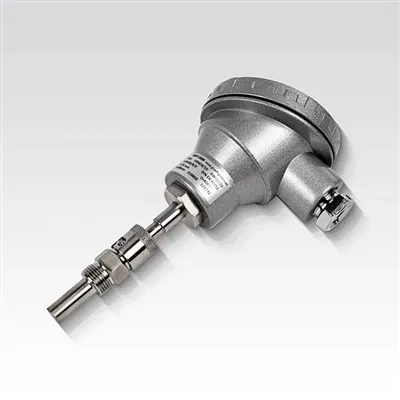
- Extruder Melt Temperature Transmitter: Our extruder melt temperature transmitters are specifically designed for use in plastic extrusion processes. They feature a high-resolution sensor and advanced signal processing circuitry to provide accurate and reliable temperature measurement in harsh industrial environments.
- Melt Temperature Sensor for Extrusion: Our melt temperature sensors for extrusion are available in a variety of configurations and sizes to fit different extrusion machines and applications. They are designed to provide high-resolution temperature measurement and can be easily integrated with our melt temperature transmitters.
- Integrated Melt Temperature Transmitter: Our integrated melt temperature transmitters combine the sensor and the transmitter into a single unit, providing a compact and cost-effective solution for temperature measurement. They feature a high-resolution sensor and advanced signal processing circuitry to provide accurate and reliable temperature measurement.
Contact Us for Purchase and Consultation
If you are interested in learning more about our melt temperature transmitters or need help choosing the right transmitter for your application, please contact us. Our team of experts will be happy to assist you and provide you with the information and support that you need.


We also offer custom solutions and can work with you to develop a melt temperature transmitter that meets your specific requirements. Whether you need a high-resolution transmitter for a critical application or a cost-effective solution for a standard process, we have the expertise and experience to deliver the right product for you.
References
- "Temperature Measurement Handbook," Omega Engineering Inc.
- "Industrial Temperature Measurement," ASME Press.
- "Thermocouples: Theory and Practice," John Wiley & Sons, Inc.