
What are the challenges of using flowmeters in marine environments?
Leave a message

Hey there! I'm a supplier of flowmeters, and today I want to chat about the challenges of using flowmeters in marine environments. As someone who's been in the flowmeter game for a while, I've seen firsthand the unique issues that come up when these devices are used out at sea.
Corrosion and Erosion
One of the biggest challenges in marine environments is corrosion. The saltwater out there is like a never - ending bath of corrosion - causing agents. Saltwater is highly conductive and contains a variety of ions that can react with the materials of flowmeters. For example, metals like iron and steel can rust pretty quickly when exposed to saltwater. This corrosion can damage the internal components of the flowmeter, such as the electrodes in an LDG Electromagnetic Flowmeter. If the electrodes corrode, it can lead to inaccurate readings because the electrical conductivity measurements that the flowmeter relies on will be affected.
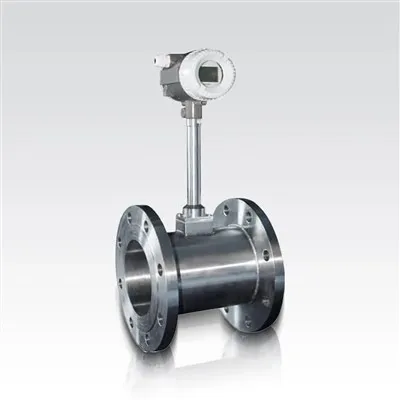
Erosion is another related problem. The constant movement of water, especially in high - flow areas like near ship propellers or in fast - moving ocean currents, can wear down the surfaces of the flowmeter. Particles suspended in the water, such as sand or small rocks, act like tiny abrasives. Over time, this erosion can change the shape of the flowmeter's internal channels. For a Vortex Flowmeter, which measures flow based on the frequency of vortices formed around a bluff body, any change in the shape of the bluff body or the flow channel due to erosion can disrupt the vortex formation and lead to incorrect flow measurements.
Biofouling
Biofouling is a real headache in marine environments. It's the process where marine organisms like barnacles, algae, and mussels attach themselves to the surface of the flowmeter. These organisms can grow quickly and form thick layers on the flowmeter. In the case of a Turbine Flow Meter, biofouling can cause a significant problem. The turbine blades need to rotate freely to measure the flow accurately. But when barnacles or other organisms attach to the blades, it adds extra weight and drag, making the turbine rotate slower than it should. This results in an underestimation of the actual flow rate.
Biofouling can also block the flow channels of the flowmeter. For electromagnetic flowmeters, if the electrodes get covered with biofilm, it can interfere with the electrical signals used to measure the flow. Cleaning the biofouling off the flowmeters is not only time - consuming but also expensive. And in some cases, if the biofouling is left untreated for too long, it can cause permanent damage to the flowmeter.
Temperature and Pressure Variations
Marine environments have a wide range of temperature and pressure variations. The temperature can vary from the cold depths of the ocean to the warm surface waters. Flowmeters are designed to work within a certain temperature range. Extreme temperature changes can affect the physical properties of the materials used in the flowmeter. For example, the expansion and contraction of materials due to temperature changes can cause misalignments in the internal components. This is particularly true for flowmeters with moving parts, like turbine flow meters.
Pressure variations are also a concern. As you go deeper into the ocean, the pressure increases significantly. Flowmeters need to be able to withstand these high pressures without getting damaged. If a flowmeter is not properly rated for the pressure in a particular marine application, it can lead to leaks or even complete failure. Some flowmeters may also have their calibration affected by pressure changes, which means the readings they provide may no longer be accurate.
Vibration and Shock
Ships and other marine vessels are constantly moving, which means flowmeters installed on them are subject to vibration and shock. Vibration can cause mechanical components of the flowmeter to loosen over time. For instance, in a turbine flow meter, the bearings that support the turbine shaft can wear out faster due to vibration. This can lead to inaccurate rotation of the turbine and thus incorrect flow measurements.
Shock can be even more damaging. Sudden impacts, such as when a ship hits a wave or an object, can cause physical damage to the flowmeter. The internal electronics of the flowmeter can be particularly vulnerable to shock. If the circuit boards get damaged, the flowmeter may stop working altogether or provide erratic readings.


Electromagnetic Interference
Marine environments are full of electromagnetic interference (EMI). There are a lot of electrical systems on ships, such as engines, navigation equipment, and communication devices. These systems generate electromagnetic fields that can interfere with the operation of flowmeters, especially those that rely on electrical signals for measurement, like electromagnetic flowmeters.
The EMI can cause noise in the electrical signals, making it difficult for the flowmeter to accurately measure the flow. This can result in fluctuations in the readings or even false readings. To combat EMI, flowmeters need to be properly shielded. But designing effective shielding that can withstand the harsh marine environment is a challenge in itself.
Calibration and Maintenance
Calibration is crucial for accurate flow measurement. However, in marine environments, it's not always easy to perform regular calibration. The flowmeters are often installed in hard - to - reach locations on ships or offshore platforms. And the harsh conditions make it difficult to transport calibration equipment to the site.
Maintenance is also a challenge. As mentioned earlier, corrosion, biofouling, and mechanical wear all require regular maintenance. But scheduling maintenance in a marine environment can be difficult due to the operational requirements of ships and offshore facilities. Sometimes, maintenance has to be done during short windows of opportunity, which may not be sufficient to properly service the flowmeters.
Despite all these challenges, flowmeters are essential in marine applications. They are used for measuring fuel consumption on ships, monitoring the flow of cooling water in engines, and many other important functions. At our company, we're constantly working on developing flowmeters that can better withstand the challenges of marine environments. We use advanced materials that are more resistant to corrosion and erosion, and we're also exploring new ways to prevent biofouling.
If you're in the market for flowmeters for your marine applications, don't hesitate to reach out. We can provide you with high - quality flowmeters that are designed to perform well in the toughest marine conditions. Whether you need an LDG Electromagnetic Flowmeter, a Vortex Flowmeter, or a Turbine Flow Meter, we've got you covered. Let's have a chat about your specific requirements and see how we can help you get accurate and reliable flow measurements in your marine operations.
References
- "Marine Corrosion: An Introduction" by S. K. Chatterjee
- "Flow Measurement Handbook" by Richard W. Miller
- "Biofouling in Marine Environments: Causes and Solutions" by Marine Biology Research Institute