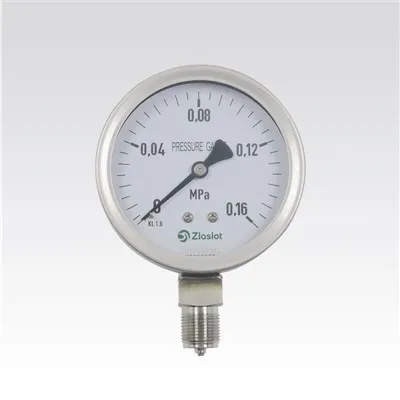

How to prevent the homogenizer pressure gauge from being affected by electromagnetic interference?
Leave a message

Electromagnetic interference (EMI) is a common and troublesome issue that can significantly affect the accuracy and reliability of homogenizer pressure gauges. As a trusted supplier of Homogenizer Pressure Gauges, we understand the importance of preventing such interference to ensure the optimal performance of these critical instruments. In this blog, we will explore various strategies and techniques to safeguard your homogenizer pressure gauge from the adverse effects of electromagnetic interference.
Understanding Electromagnetic Interference
Before delving into prevention methods, it's crucial to understand what electromagnetic interference is. EMI refers to the disruption of an electrical circuit by electromagnetic radiation emitted from an external source. This radiation can come from a wide range of sources, including radio frequency (RF) transmitters, power lines, electric motors, and even natural phenomena like lightning. When this interference reaches a homogenizer pressure gauge, it can cause inaccurate readings, erratic behavior, or even permanent damage to the gauge's internal components.
Sources of Electromagnetic Interference in Homogenizer Environments
Homogenizer pressure gauges are often used in industrial settings where multiple electrical and electronic devices are in operation. These devices can be significant sources of EMI. For example, high - power motors used in the homogenization process generate strong electromagnetic fields. Additionally, nearby RF communication systems, such as Wi - Fi routers, cell phones, and radio stations, can also emit radiation that may interfere with the pressure gauge. Even the electrical wiring within the facility can be a source of EMI if it is not properly shielded.
Importance of Preventing Electromagnetic Interference
Accurate pressure measurement is essential in the operation of homogenizers. Inaccurate readings due to EMI can lead to improper homogenization, which may result in product quality issues, increased production costs, and potential safety hazards. For example, if the pressure gauge indicates an incorrect pressure, the homogenizer may not operate at the optimal pressure, leading to uneven particle size distribution in the product. Therefore, preventing EMI is crucial for maintaining the efficiency and reliability of the homogenization process.


Strategies to Prevent Electromagnetic Interference
Shielding
One of the most effective ways to prevent EMI is through shielding. The pressure gauge can be enclosed in a metallic shield that acts as a Faraday cage. A Faraday cage is a conductive enclosure that blocks external electromagnetic fields. The shield should be made of a material with high electrical conductivity, such as copper or aluminum. When properly grounded, the shield redirects the electromagnetic radiation away from the pressure gauge, protecting its internal components.
As a supplier, we offer Homogenizer Pressure Gauges with built - in shielding options. Our gauges are designed to provide maximum protection against EMI, ensuring accurate and reliable pressure measurements. For more information on our mechanical gauges, you can visit our Mechanical Presssure Gauge page.
Filtering
Filtering is another important technique for preventing EMI. Filters can be installed in the electrical circuit of the pressure gauge to block unwanted electromagnetic frequencies. There are different types of filters available, such as low - pass filters, high - pass filters, and band - pass filters. Low - pass filters allow low - frequency signals to pass through while blocking high - frequency interference. High - pass filters, on the other hand, allow high - frequency signals and block low - frequency interference. Band - pass filters allow only a specific range of frequencies to pass through.
By carefully selecting and installing the appropriate filter, the impact of EMI on the pressure gauge can be significantly reduced. Our technical team can assist you in choosing the right filter for your specific application, ensuring that your pressure gauge operates smoothly in an EMI - prone environment.
Grounding
Proper grounding is essential for preventing EMI. Grounding provides a path for the electrical current generated by the electromagnetic interference to flow safely to the ground, rather than through the pressure gauge. The pressure gauge should be grounded using a low - resistance conductor, and the grounding system should be connected to a reliable earth ground.
In addition to grounding the pressure gauge itself, the entire homogenizer system should be properly grounded. This includes all electrical components, such as motors, controllers, and wiring. By ensuring a comprehensive grounding system, the risk of EMI can be minimized.
Distance and Placement
The physical distance between the pressure gauge and potential sources of EMI can also have a significant impact on its performance. Placing the pressure gauge as far away as possible from high - power electrical devices, RF transmitters, and other sources of interference can reduce the amount of electromagnetic radiation it is exposed to.
Furthermore, the orientation of the pressure gauge can also matter. The gauge should be positioned in such a way that it is less likely to be affected by the electromagnetic fields. For example, it should be placed perpendicular to the direction of the magnetic field lines if possible.
Specialized Pressure Gauges for EMI - Prone Environments
In addition to the above prevention methods, we also offer specialized pressure gauges that are designed to be more resistant to EMI. Our High Temperature Mechanical Melt Presssure Gauges are built with robust construction and advanced shielding techniques to withstand high - temperature and high - EMI environments. These gauges are ideal for applications where the homogenization process involves high - temperature melts.
We also have Digital Melt Presssure Gauges, which are equipped with advanced digital signal processing technology. This technology helps to filter out EMI and provides more accurate and stable pressure readings. These digital gauges can be easily integrated into modern automation systems, allowing for real - time monitoring and control.
Regular Maintenance and Testing
Even with all the preventive measures in place, it is important to regularly maintain and test the pressure gauge to ensure its continued performance. Regular maintenance includes checking the integrity of the shielding, filters, and grounding system. Any signs of damage or wear should be addressed immediately.
Testing the pressure gauge's accuracy under real - world conditions can also help to identify any potential EMI issues. Our team can provide calibration and testing services to ensure that your pressure gauge is operating within the specified accuracy limits.
Conclusion
Preventing electromagnetic interference is crucial for the accurate and reliable operation of homogenizer pressure gauges. By implementing shielding, filtering, proper grounding, and considering the distance and placement of the gauge, the impact of EMI can be significantly reduced. As a trusted supplier of Homogenizer Pressure Gauges, we offer a range of products and solutions to meet your specific needs. Our specialized gauges, combined with our technical expertise, can help you ensure the optimal performance of your homogenization process.
If you are interested in learning more about our Homogenizer Pressure Gauges or need assistance in preventing EMI in your application, we invite you to contact us. We look forward to the opportunity to discuss your requirements and work with you to find the best solution for your pressure measurement needs.
References
- "Electromagnetic Interference in Industrial Environments" - IEEE Transactions on Electromagnetic Compatibility
- "Handbook of Pressure Gauge Design and Applications" - John Wiley & Sons
- "Principles of Shielding and Filtering in Electrical Systems" - McGraw - Hill Education