
How does the flow direction affect Turbine Flow Meter accuracy?
Leave a message

When it comes to measuring fluid flow accurately, turbine flow meters are a popular choice in various industries. As a reliable Turbine Flow Meter supplier, I've witnessed firsthand the importance of understanding how different factors can influence the accuracy of these devices. One such crucial factor is the flow direction of the fluid passing through the turbine flow meter. In this blog, we'll explore in depth how the flow direction affects the accuracy of turbine flow meters and why it's essential to consider this aspect in your flow measurement applications.
How Turbine Flow Meters Work
Before delving into the impact of flow direction, let's briefly review how turbine flow meters operate. A turbine flow meter consists of a rotor with blades placed inside a pipe through which the fluid flows. As the fluid passes through the meter, it causes the rotor to spin. The rotational speed of the rotor is directly proportional to the flow rate of the fluid. Sensors detect the rotations and convert them into electrical pulses, which are then processed to determine the flow rate.
Ideal Conditions and Unidirectional Flow
Under ideal circumstances, turbine flow meters are designed to operate with unidirectional flow. In a unidirectional setup, the fluid flows consistently in one direction through the meter, ensuring smooth rotations of the rotor. The blades of the turbine are engineered to work optimally in this specific flow direction. When the flow is unidirectional, the forces acting on the rotor are predictable, allowing for accurate measurement of the flow rate.
In a well - designed system with unidirectional flow, the relationship between the rotational speed of the rotor and the fluid flow rate remains relatively linear. This linearity is crucial for accurate measurements, as it simplifies the calibration process and allows for reliable interpretation of the signals generated by the meter.
Impact of Reverse Flow
Reverse flow occurs when the fluid moves in the opposite direction of the intended flow. For a turbine flow meter, reverse flow can have a significant negative impact on accuracy. The blades of the turbine are shaped to interact efficiently with fluid flowing in the forward direction. When the flow reverses, the blades experience unfamiliar hydrodynamic forces.
The rotor may not spin as freely or predictably as it does during forward flow. In some cases, the rotor may slow down, stop, or even rotate in an irregular manner. This erratic behavior leads to inaccurate measurement of the flow rate. The meter may under - report or over - report the flow, depending on the severity of the disruption caused by the reverse flow.
Moreover, repeated exposure to reverse flow can cause mechanical wear on the turbine blades and other moving parts. This wear can further degrade the performance of the meter over time, leading to increased measurement errors and potentially reducing the lifespan of the device.


Bifurcated or Bi - directional Flow Situations
In some industrial applications, the flow may not be strictly unidirectional but instead experience bifurcated or bi - directional flow. This can occur in branching pipe systems or in processes where the flow direction can change periodically.
When dealing with bifurcated flow, the fluid may split into multiple paths, with different flow rates and directions in each branch. If a turbine flow meter is placed in such a system, the complex flow patterns can make it challenging to obtain accurate measurements. The rotor may be affected by the combined forces of the different flow streams, leading to inconsistent rotations and inaccurate readings.
Bi - directional flow situations, where the flow alternates between forward and reverse directions, are equally problematic. The turbine flow meter may struggle to adapt quickly to the changing flow directions, resulting in measurement errors during the transition periods. Additionally, the meter's calibration, which is typically based on unidirectional flow, may not be suitable for bi - directional flow, further compromising accuracy.
Mitigation Strategies
As a Turbine Flow Meter supplier, I understand the importance of providing solutions to overcome the challenges posed by non - ideal flow directions. Here are some strategies that can be employed to improve the accuracy of turbine flow meters in various flow scenarios:
Flow Conditioning
Flow conditioning devices can be installed upstream of the turbine flow meter. These devices, such as straightening vanes or flow conditioners, help to streamline the flow and reduce turbulence. By creating a more uniform flow profile, flow conditioning can minimize the impact of complex flow patterns and improve the accuracy of the measurement.
Bi - Directional Turbine Flow Meters
For applications with bi - directional flow, specialized bi - directional turbine flow meters are available. These meters are designed to accurately measure flow in both directions. They typically have symmetrical blade designs and advanced signal processing algorithms to handle the changing flow directions effectively.
Installation and Orientation
Proper installation and orientation of the turbine flow meter are crucial. The meter should be installed in a section of the pipe where the flow is as close to unidirectional as possible. Additionally, following the manufacturer's guidelines regarding the orientation of the meter can help ensure optimal performance.
Comparison with Other Flow Meters
In the market, there are other types of flow meters available, such as Vortex Flowmeter and LDG Electromagnetic Flowmeter. While turbine flow meters are known for their high accuracy and wide rangeability in unidirectional flow applications, other flow meters may have different advantages when it comes to handling non - ideal flow directions.
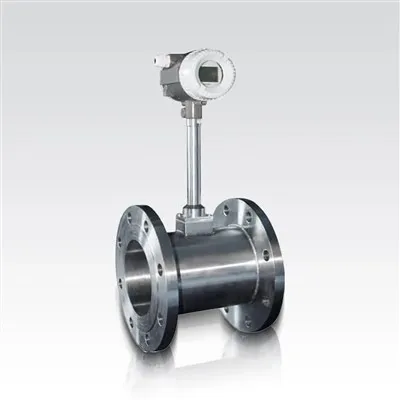
Vortex flow meters, for example, are less affected by flow direction changes as they operate based on the principle of vortex shedding. They can be a good alternative in applications with bi - directional or turbulent flow. LDG Electromagnetic Flowmeters are also suitable for a variety of flow conditions and can provide accurate measurements regardless of the flow direction, as they rely on the electromagnetic properties of the fluid.
Conclusion
In conclusion, the flow direction has a significant impact on the accuracy of turbine flow meters. Unidirectional flow is the ideal condition for these meters, as it allows for predictable rotor rotations and accurate flow rate measurement. Reverse flow, bifurcated flow, and bi - directional flow can all lead to measurement errors and mechanical wear. However, with the right mitigation strategies and proper selection of the flow meter, it is possible to achieve accurate flow measurements even in challenging flow scenarios.
If you are in need of a reliable Turbine Flow Meter for your application, or if you have any questions about how flow direction may affect the performance of your flow measurement system, I encourage you to reach out. Our team of experts is ready to assist you in selecting the most suitable flow meter and providing guidance on installation and operation to ensure accurate and reliable flow measurement.
References
- Miller, R. W. (1983). Flow Measurement Engineering Handbook. McGraw - Hill.
- Spitzer, D. W. (2001). Flow Measurement: Practical Guides for Measurement and Control. ISA Press.
- ISO 9951:2019. Gas meters - Turbine meters.