
How does a Vortex Intelligent Flowmeter measure low - flow rates?
Leave a message

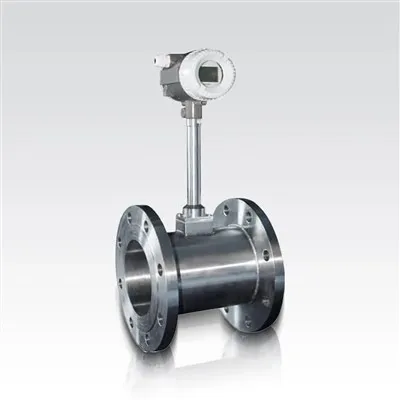
In the realm of fluid measurement, accurately gauging low - flow rates is a critical yet challenging task. As a reliable Vortex Intelligent Flowmeter supplier, I am well - versed in the intricacies of how these devices operate, especially when it comes to measuring low - flow conditions. In this blog, I will delve into the principles, features, and advantages of Vortex Intelligent Flowmeters in measuring low - flow rates.
Principles of Vortex Intelligent Flowmeters
Vortex Intelligent Flowmeters operate based on the principle of the von Kármán vortex street. When a fluid flows around a bluff body (also known as a shedder bar) placed in the flow path, alternating vortices are shed on either side of the bluff body. The frequency of these vortex shedding is directly proportional to the flow velocity of the fluid.
The basic formula that relates the vortex shedding frequency (f), the flow velocity (v), and the characteristic dimension (d) of the bluff body is given by the Strouhal number (St):
[St=\frac{f\times d}{v}]
where the Strouhal number is a dimensionless constant for a given bluff - body shape and Reynolds number range. For most Vortex Intelligent Flowmeters, the Strouhal number remains relatively constant within a wide range of Reynolds numbers, which allows for accurate flow measurement.
In low - flow rate scenarios, the key challenge is to detect the weak vortex signals. The sensor in a Vortex Intelligent Flowmeter is designed to be highly sensitive to the pressure fluctuations caused by the vortex shedding. These sensors can be of different types, such as piezoelectric sensors or capacitive sensors. Piezoelectric sensors are commonly used because they can convert the mechanical stress generated by the pressure fluctuations into an electrical signal. The electrical signal is then processed by the flowmeter's electronics to determine the vortex shedding frequency and, subsequently, the flow rate.
Challenges in Measuring Low - Flow Rates
Measuring low - flow rates presents several challenges. Firstly, at low velocities, the vortex shedding frequency is very low. This requires the flowmeter to have a high - resolution frequency measurement system. A small error in frequency measurement can lead to a significant error in the calculated flow rate.
Secondly, the signal - to - noise ratio is a major concern. In low - flow conditions, the vortex - induced pressure fluctuations are small, and they can be easily masked by background noise, such as pipeline vibrations or electrical interference. To overcome this, the flowmeter must be equipped with advanced signal - processing algorithms. These algorithms can filter out the noise and enhance the weak vortex signals, enabling accurate flow measurement.
Another challenge is the influence of fluid properties. Different fluids have different viscosities and densities, which can affect the formation and shedding of vortices. In low - flow situations, the Reynolds number (a dimensionless quantity that characterizes the flow regime) is low, and the flow behavior may deviate from the assumptions made in high - flow conditions. Vortex Intelligent Flowmeters must be calibrated carefully for different fluids to ensure accurate measurement across a wide range of low - flow applications.
Features of Vortex Intelligent Flowmeters for Low - Flow Measurement
One of the prominent features of Vortex Intelligent Flowmeters suitable for low - flow measurement is their wide turndown ratio. The turndown ratio is defined as the ratio of the maximum measurable flow rate to the minimum measurable flow rate. A high turndown ratio allows the flowmeter to accurately measure a wide range of flow rates, from very low to relatively high values. This is particularly useful in applications where the flow rate can vary significantly over time.
Vortex Intelligent Flowmeters also have a relatively simple structure. The bluff body and the sensor are the main components, which reduces the number of moving parts. This not only makes the flowmeter more reliable but also minimizes the risk of clogging, which is especially important in low - flow applications where the presence of small particles in the fluid can cause problems for other types of flowmeters.
In addition, modern Vortex Intelligent Flowmeters are equipped with advanced diagnostic functions. These functions can monitor the health of the flowmeter, detect any abnormal operating conditions, and provide early warnings of potential problems. For example, they can detect if the sensor is damaged or if there is a blockage in the flow path. This helps in ensuring the long - term accuracy and reliability of low - flow measurement.
Comparison with Other Flowmeter Types
When compared to other types of flowmeters, such as Turbine Flow Meter and LDG Electromagnetic Flowmeter, Vortex Intelligent Flowmeters have some unique advantages in low - flow measurement.
Turbine Flow Meters rely on the rotation of a turbine blade in the fluid flow. At low - flow rates, the turbine may not rotate smoothly, and the measurement accuracy can be poor. The turbine blades can also be affected by the viscosity of the fluid, and they may require regular maintenance due to wear and tear. In contrast, Vortex Intelligent Flowmeters have no moving parts in contact with the fluid, which reduces maintenance requirements and improves long - term reliability.


LDG Electromagnetic Flowmeters work based on Faraday's law of electromagnetic induction. They are suitable for conductive fluids but may have limitations in low - flow measurement. Electromagnetic Flowmeters require a certain minimum flow velocity to generate a detectable electrical signal. In low - flow conditions, the signal strength can be very weak, leading to inaccurate measurement. Vortex Intelligent Flowmeters, on the other hand, can operate effectively at lower flow velocities and are not limited by the conductivity of the fluid.
Applications of Vortex Intelligent Flowmeters in Low - Flow Scenarios
There are numerous applications where Vortex Intelligent Flowmeters are used for low - flow rate measurement. In the chemical industry, they are used to measure the flow of additives and catalysts in chemical processes. These substances are often added in small quantities, and accurate measurement is crucial for product quality and process efficiency.
In the pharmaceutical industry, Vortex Intelligent Flowmeters are employed to measure the flow of liquid medications and reagents. Precise dosing of these substances is essential for ensuring the safety and efficacy of drugs.
In the food and beverage industry, low - flow measurement is required for the addition of flavorings, colorings, and other additives. Vortex Intelligent Flowmeters can provide accurate and reliable measurement in these applications, helping to maintain consistent product quality.
Advantages of Choosing Our Vortex Intelligent Flowmeters
As a Vortex Intelligent Flowmeter supplier, our products offer several advantages. Our flowmeters are designed with state - of - the - art technology to ensure high accuracy in low - flow rate measurement. We use advanced signal - processing algorithms to enhance the signal - to - noise ratio and improve the resolution of frequency measurement.
Our flowmeters are also highly customizable. We can provide different bluff - body sizes and sensor types to meet the specific requirements of different applications. Whether it is a small - diameter pipeline or a special fluid with unique properties, we can offer a tailored solution.
In addition, we provide excellent after - sales service. Our team of experts is available to assist with installation, calibration, and troubleshooting. We also offer regular maintenance and calibration services to ensure the long - term performance of our flowmeters.
Conclusion
Measuring low - flow rates is a complex task, but Vortex Intelligent Flowmeters are well - equipped to handle this challenge. Through their advanced sensing technology, high - resolution frequency measurement, and sophisticated signal - processing algorithms, they can provide accurate and reliable low - flow measurement in a variety of applications.
If you are in need of a reliable solution for low - flow rate measurement, our Vortex Intelligent Flowmeters are an excellent choice. To learn more about our Vortex Flowmeter products and how they can meet your specific needs, please feel free to contact us for a detailed discussion and potential procurement negotiation. We look forward to working with you to achieve accurate and efficient fluid measurement in your applications.
References
- Miller, R. W. (1983). Flow Measurement Engineering Handbook. McGraw - Hill.
- ISO 5167 - 4:2018, Measurement of fluid flow by means of pressure differential devices inserted in circular cross - section conduits running full - Part 4: Venturi nozzles and Venturi tubes.
- Spitzer, D. W. (2001). Flow Measurement Expertise. Instrumentation, Systems, and Automation Society.