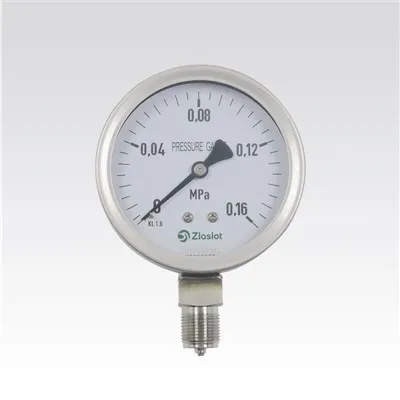

What is the repeatability of a Compact Pressure Transmitter?
Leave a message

Repeatability is a crucial performance metric when it comes to compact pressure transmitters. As a supplier of compact pressure transmitters, understanding and communicating the concept of repeatability is essential for both our customers and our business. In this blog post, we'll delve into what repeatability means in the context of compact pressure transmitters, why it matters, and how it impacts various applications.


What is Repeatability?
Repeatability, in the realm of pressure transmitters, refers to the ability of a device to provide the same output when measuring the same pressure value under the same operating conditions over multiple measurements. It is a measure of the consistency and reliability of the pressure transmitter's performance. When a compact pressure transmitter has high repeatability, it means that it will give very similar output readings each time it measures a specific pressure, regardless of how many times the measurement is repeated.
To illustrate this concept, let's consider a scenario where a compact pressure transmitter is installed in a manufacturing process to monitor the pressure of a fluid in a pipeline. The process requires the pressure to be maintained at a constant level of 100 psi. A pressure transmitter with high repeatability will consistently output a reading close to the actual 100 psi value every time it measures the pressure, even if the measurements are taken at different times throughout the day or over a long period. On the other hand, a transmitter with poor repeatability may give readings that vary significantly from the actual pressure value, such as 98 psi one time and 102 psi the next, which can lead to inaccurate process control and potential quality issues.
Why Repeatability Matters
The importance of repeatability in compact pressure transmitters cannot be overstated, especially in industries where precise pressure measurements are critical. Here are some key reasons why repeatability matters:
Process Control
In industrial processes, accurate pressure control is essential for ensuring product quality, efficiency, and safety. A pressure transmitter with high repeatability provides reliable and consistent pressure readings, which allows for precise control of the process variables. For example, in a chemical manufacturing plant, the pressure of a reaction vessel needs to be maintained within a specific range to ensure the proper chemical reactions take place. If the pressure transmitter has poor repeatability, the control system may receive inaccurate pressure readings, leading to incorrect adjustments and potentially causing the reaction to deviate from the desired outcome.
Quality Assurance
Repeatability is also crucial for quality assurance in manufacturing. Many products, such as automotive components, medical devices, and electronic equipment, require precise pressure measurements during the manufacturing process to meet strict quality standards. A pressure transmitter with high repeatability ensures that the pressure measurements are consistent and accurate, which helps to maintain the quality and consistency of the products. For instance, in the production of hydraulic cylinders, the pressure during the assembly process needs to be carefully controlled to ensure proper sealing and performance. A pressure transmitter with poor repeatability may result in inconsistent pressure measurements, leading to defective cylinders and increased production costs.
Safety
In safety-critical applications, such as oil and gas pipelines, power plants, and aerospace systems, accurate pressure measurements are vital for preventing accidents and ensuring the safety of personnel and equipment. A pressure transmitter with high repeatability provides reliable pressure readings, which allows for early detection of potential pressure abnormalities and timely intervention to prevent dangerous situations. For example, in an oil pipeline, a sudden increase in pressure could indicate a blockage or a leak. A pressure transmitter with poor repeatability may not accurately detect these changes, putting the pipeline at risk of rupture and causing significant environmental and safety hazards.
Factors Affecting Repeatability
Several factors can affect the repeatability of a compact pressure transmitter. Understanding these factors is important for selecting the right transmitter for your application and ensuring optimal performance. Here are some of the key factors:
Sensor Technology
The type of pressure sensor used in the transmitter plays a significant role in determining its repeatability. Different sensor technologies, such as piezoresistive, capacitive, and strain gauge, have varying levels of repeatability. Piezoresistive sensors, for example, are known for their high sensitivity and good repeatability, making them suitable for a wide range of applications. Capacitive sensors, on the other hand, offer excellent linearity and repeatability, especially in low-pressure applications. When choosing a compact pressure transmitter, it's important to consider the sensor technology and its performance characteristics to ensure the desired level of repeatability.
Environmental Conditions
The environmental conditions in which the pressure transmitter operates can also affect its repeatability. Factors such as temperature, humidity, vibration, and electromagnetic interference can cause variations in the sensor's output and reduce the repeatability of the measurements. For example, changes in temperature can cause the sensor's material to expand or contract, leading to changes in its electrical properties and affecting the accuracy of the pressure readings. To minimize the impact of environmental conditions, it's important to choose a pressure transmitter that is designed to operate in the specific environmental conditions of your application and to provide appropriate protection and calibration.
Calibration and Maintenance
Proper calibration and maintenance are essential for ensuring the repeatability of a compact pressure transmitter. Over time, the sensor's performance may degrade due to factors such as wear and tear, aging, and environmental exposure. Regular calibration helps to correct any drift in the sensor's output and ensures that the transmitter continues to provide accurate and repeatable pressure readings. Additionally, proper maintenance, such as cleaning, inspection, and replacement of worn parts, can help to extend the lifespan of the transmitter and maintain its performance. It's important to follow the manufacturer's recommendations for calibration and maintenance to ensure optimal repeatability.
Measuring Repeatability
The repeatability of a compact pressure transmitter is typically specified by the manufacturer as a percentage of the full-scale output (FSO). For example, a transmitter with a repeatability of ±0.1% FSO means that the maximum deviation between consecutive measurements of the same pressure value will be within ±0.1% of the transmitter's full-scale output. To measure the repeatability of a pressure transmitter, a series of pressure measurements are taken at a specific pressure point under the same operating conditions. The difference between the maximum and minimum readings is then calculated, and the repeatability is expressed as a percentage of the full-scale output.
It's important to note that repeatability is different from accuracy. Accuracy refers to how close the measured value is to the true value, while repeatability refers to the consistency of the measurements. A pressure transmitter can have high repeatability but low accuracy if it consistently gives readings that are off from the true value. Conversely, a transmitter can have high accuracy but low repeatability if it gives readings that are close to the true value but vary significantly from one measurement to the next.
Applications of Compact Pressure Transmitters with High Repeatability
Compact pressure transmitters with high repeatability are used in a wide range of applications across various industries. Here are some examples:
Industrial Automation
In industrial automation systems, compact pressure transmitters are used to monitor and control the pressure of fluids and gases in pipelines, tanks, and other equipment. High repeatability is essential for ensuring accurate process control and maintaining the efficiency and quality of the production process. For example, in a food and beverage processing plant, pressure transmitters are used to monitor the pressure during the filling and packaging process to ensure consistent product quality.
HVAC Systems
In heating, ventilation, and air conditioning (HVAC) systems, compact pressure transmitters are used to measure the pressure of refrigerant gases, air, and water. High repeatability is important for ensuring proper system operation and energy efficiency. For example, in a commercial building's HVAC system, pressure transmitters are used to monitor the pressure in the refrigerant lines to ensure optimal cooling performance and prevent system failures.
Medical Devices
In medical devices, such as infusion pumps, ventilators, and blood pressure monitors, compact pressure transmitters are used to measure and control the pressure of fluids and gases. High repeatability is crucial for ensuring accurate and reliable operation of these devices, which can have a direct impact on patient health and safety. For example, in an infusion pump, a pressure transmitter is used to monitor the pressure of the fluid being delivered to the patient to ensure a consistent and accurate flow rate.
Our Compact Pressure Transmitters
As a supplier of compact pressure transmitters, we understand the importance of repeatability in our products. Our compact pressure transmitters are designed and manufactured using the latest sensor technology and advanced manufacturing processes to ensure high repeatability and reliability. We offer a wide range of pressure transmitters, including Intrinsically Safe Pressure Transmitter, Pressure Transmitters, and Sanitary Pressure Transmitter, to meet the diverse needs of our customers in various industries.
Our pressure transmitters are rigorously tested and calibrated to ensure that they meet the highest standards of performance and quality. We also provide comprehensive technical support and after-sales service to help our customers select the right pressure transmitter for their application and ensure its proper installation and operation.
Conclusion
Repeatability is a critical performance metric for compact pressure transmitters. It ensures the consistency and reliability of pressure measurements, which is essential for process control, quality assurance, and safety in a wide range of applications. When choosing a compact pressure transmitter, it's important to consider the repeatability along with other factors such as accuracy, range, and environmental conditions. As a supplier of compact pressure transmitters, we are committed to providing our customers with high-quality products that offer excellent repeatability and performance. If you have any questions or need more information about our compact pressure transmitters, please feel free to contact us. We look forward to working with you to meet your pressure measurement needs.
References
- [1] ISO 9001:2015 - Quality management systems - Requirements
- [2] ASTM E283 - Standard Test Method for Determining Rate of Air Leakage Through Exterior Windows, Curtain Walls, and Doors Under Specified Pressure Differences Across the Specimen
- [3] ASME PTC 19.2 - Pressure Measurement