How do pressure gauges work in refrigeration systems?
Leave a message

How do pressure gauges work in refrigeration systems?
In the complex world of refrigeration systems, pressure gauges play a pivotal role. As a leading pressure gauges supplier, I've witnessed firsthand how these unassuming devices are essential for the efficient and safe operation of refrigeration units. In this blog, we'll delve into the inner workings of pressure gauges in refrigeration systems, exploring their types, functions, and importance.
The Basics of Refrigeration Systems
Before we dive into the details of pressure gauges, it's crucial to understand the fundamental principles of refrigeration systems. At their core, these systems are designed to transfer heat from one location to another, creating a cooling effect. They operate on the principle of the refrigeration cycle, which consists of four main components: the compressor, condenser, expansion valve, and evaporator.


The compressor is the heart of the refrigeration system. It compresses the refrigerant gas, raising its pressure and temperature. The high-pressure, high-temperature gas then flows to the condenser, where it releases heat to the surrounding environment and condenses into a liquid. The liquid refrigerant then passes through the expansion valve, which reduces its pressure and temperature. Finally, the low-pressure, low-temperature refrigerant enters the evaporator, where it absorbs heat from the surrounding space, cooling it down. The refrigerant then returns to the compressor to start the cycle again.
The Role of Pressure Gauges in Refrigeration Systems
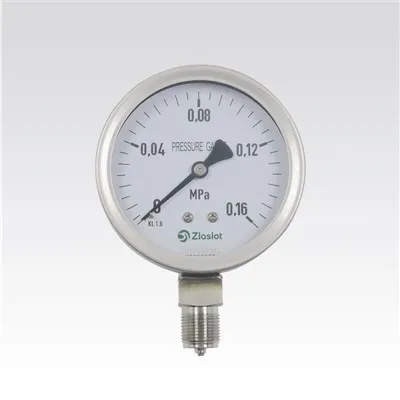
Pressure gauges are used in refrigeration systems to measure the pressure of the refrigerant at various points in the system. By monitoring the pressure, technicians can ensure that the system is operating within the optimal range and detect any potential issues before they cause significant problems.
One of the primary functions of pressure gauges in refrigeration systems is to monitor the pressure in the compressor. The compressor is responsible for compressing the refrigerant gas, and the pressure in the compressor can have a significant impact on its performance. If the pressure is too high, it can cause the compressor to overheat and fail. On the other hand, if the pressure is too low, it can result in poor cooling performance. By using pressure gauges to monitor the pressure in the compressor, technicians can adjust the system to ensure that it is operating at the optimal pressure.
Another important function of pressure gauges in refrigeration systems is to monitor the pressure in the condenser and evaporator. The condenser is responsible for releasing heat from the refrigerant, and the evaporator is responsible for absorbing heat from the surrounding space. The pressure in the condenser and evaporator can affect the efficiency of these components. If the pressure in the condenser is too high, it can cause the refrigerant to condense too quickly, reducing the efficiency of the condenser. If the pressure in the evaporator is too low, it can cause the refrigerant to evaporate too slowly, reducing the efficiency of the evaporator. By using pressure gauges to monitor the pressure in the condenser and evaporator, technicians can adjust the system to ensure that these components are operating at the optimal pressure.
Types of Pressure Gauges Used in Refrigeration Systems
There are several types of pressure gauges used in refrigeration systems, each with its own advantages and disadvantages. The most common types of pressure gauges used in refrigeration systems include mechanical pressure gauges, digital pressure gauges, and high-temperature mechanical melt pressure gauges.
- Mechanical Pressure Gauges: Mechanical pressure gauges are the most traditional type of pressure gauges used in refrigeration systems. They operate on the principle of a Bourdon tube, which is a curved tube that expands or contracts in response to changes in pressure. As the pressure inside the Bourdon tube changes, it causes the tube to straighten or bend, which is then translated into a reading on the gauge face. Mechanical pressure gauges are relatively simple and reliable, and they are often used in applications where a high level of accuracy is not required. You can explore our range of Mechanical Presssure Gauge for more options.
- Digital Pressure Gauges: Digital pressure gauges use electronic sensors to measure the pressure of the refrigerant. They offer several advantages over mechanical pressure gauges, including higher accuracy, faster response times, and the ability to display the pressure in different units. Digital pressure gauges are also more versatile and can be used in a wider range of applications. Our Digital Melt Presssure Gauges are a great example of high-quality digital pressure gauges suitable for refrigeration systems.
- High-Temperature Mechanical Melt Pressure Gauges: High-temperature mechanical melt pressure gauges are designed to withstand high temperatures and pressures. They are often used in applications where the refrigerant is exposed to high temperatures, such as in industrial refrigeration systems. These gauges use a special type of Bourdon tube that is made from a material that can withstand high temperatures. You can find more information about our High Temperature Mechanical Melt Presssure Gauges on our website.
How Pressure Gauges are Installed in Refrigeration Systems
The installation of pressure gauges in refrigeration systems is a critical process that requires careful planning and attention to detail. The pressure gauges should be installed in a location where they can accurately measure the pressure of the refrigerant at the desired point in the system. They should also be installed in a location where they are easily accessible for maintenance and calibration.
When installing pressure gauges in refrigeration systems, it is important to ensure that the gauges are properly calibrated. Calibration is the process of adjusting the gauge to ensure that it provides accurate readings. The calibration process should be performed regularly to ensure that the gauges continue to provide accurate readings over time.
The Importance of Regular Maintenance and Calibration
Regular maintenance and calibration of pressure gauges in refrigeration systems are essential to ensure their accurate and reliable operation. Over time, the components of the pressure gauges can wear out or become damaged, which can affect their accuracy. By performing regular maintenance and calibration, technicians can identify and address any issues before they cause significant problems.
In addition to regular maintenance and calibration, it is also important to use high-quality pressure gauges in refrigeration systems. High-quality pressure gauges are more reliable and accurate, and they are less likely to fail or require frequent maintenance. As a pressure gauges supplier, we offer a wide range of high-quality pressure gauges that are designed to meet the needs of different refrigeration systems.
Conclusion
Pressure gauges are an essential component of refrigeration systems. They play a crucial role in monitoring the pressure of the refrigerant at various points in the system, ensuring that the system is operating within the optimal range and detecting any potential issues before they cause significant problems. By understanding how pressure gauges work in refrigeration systems and the importance of regular maintenance and calibration, technicians can ensure the efficient and safe operation of these systems.
If you're in the market for high-quality pressure gauges for your refrigeration system, we invite you to explore our range of products. Our team of experts is available to assist you in selecting the right pressure gauges for your specific needs. Contact us today to start a procurement discussion and find the perfect pressure gauges for your refrigeration system.
References
- ASHRAE Handbook of Refrigeration. American Society of Heating, Refrigerating and Air-Conditioning Engineers.
- Refrigeration and Air Conditioning Technology. Eugene Silberstein.