
How do pressure gauges work in HVAC systems?
Leave a message

HVAC systems are all around us, keeping our homes, offices, and commercial spaces comfortable. But have you ever wondered how these systems know when the pressure is just right? That's where pressure gauges come in. As a pressure gauges supplier, I've seen firsthand how these nifty little devices play a crucial role in HVAC systems. In this blog, I'm gonna break down how pressure gauges work in HVAC systems, and why they're so important.
What Are Pressure Gauges and Why Are They Needed in HVAC?
Let's start with the basics. A pressure gauge is a device that measures the pressure of a fluid (either a liquid or a gas) in a system. In HVAC systems, pressure gauges are used to monitor the pressure of the refrigerant, which is the substance that transfers heat in the system.
The pressure of the refrigerant can tell us a lot about how the HVAC system is performing. For example, if the pressure is too high, it could mean that there's a blockage in the system, or that the compressor is working too hard. On the other hand, if the pressure is too low, it could indicate a refrigerant leak or a problem with the expansion valve. By monitoring the pressure, technicians can diagnose and fix issues before they cause major problems.
Types of Pressure Gauges Used in HVAC Systems
There are several types of pressure gauges used in HVAC systems, each with its own advantages and disadvantages. Here are some of the most common ones:
Mechanical Pressure Gauge
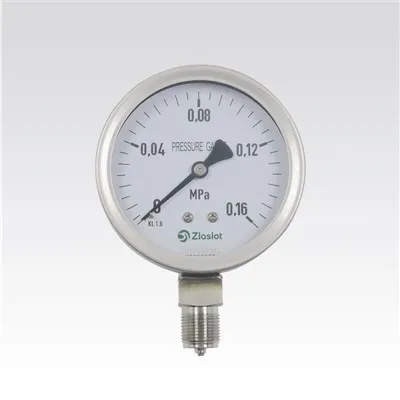
A Mechanical Presssure Gauge is one of the oldest and most reliable types of pressure gauges. It works based on the principle of mechanical deformation. Inside the gauge, there's a Bourdon tube, which is a curved, hollow tube made of metal. When pressure is applied to the inside of the tube, it straightens out. This movement is transferred to a pointer on the gauge face through a series of gears and levers, which shows the pressure reading.
Mechanical pressure gauges are popular because they're simple, durable, and don't require any external power source. They're also relatively inexpensive, making them a cost - effective choice for many HVAC applications.
Vacuum Digital Pressure Gauge
A Vacuum Digital Pressure Gauge is designed to measure very low pressures, often in a vacuum environment. These gauges use electronic sensors to measure pressure and display the reading digitally. The sensors can be based on different technologies, such as piezoresistive or capacitive sensors.
Digital pressure gauges offer several advantages over mechanical ones. They're more accurate, have a wider range of measurement, and can provide additional features like data logging and remote monitoring. They're especially useful in modern HVAC systems that require precise control and monitoring.
Digital Melt Pressure Gauges
Digital Melt Presssure Gauges are used in specific HVAC applications where high - temperature and high - pressure measurements are required, such as in some industrial refrigeration systems. These gauges are designed to withstand harsh conditions and provide accurate pressure readings even in extreme environments.
They use advanced digital technology to measure and display pressure, and often come with features like temperature compensation to ensure accurate readings regardless of the ambient temperature.
How Pressure Gauges Are Installed in HVAC Systems
Installing pressure gauges in an HVAC system is a relatively straightforward process, but it requires some knowledge and expertise. Here's a general overview of how it's done:
First, the technician needs to identify the appropriate locations for the pressure gauges. In most HVAC systems, pressure gauges are installed on the suction and discharge lines of the compressor. The suction line carries the low - pressure refrigerant from the evaporator to the compressor, while the discharge line carries the high - pressure refrigerant from the compressor to the condenser.
Once the locations are identified, the technician will drill holes in the pipes and install pressure ports. These ports are essentially fittings that allow the pressure gauges to be connected to the system. The pressure gauges are then attached to the ports using appropriate fittings and seals to ensure a leak - free connection.
After installation, the technician will calibrate the pressure gauges to ensure accurate readings. This may involve adjusting the zero point and the span of the gauge to match the actual pressure range of the system.
The Importance of Regular Maintenance of Pressure Gauges
Like any other component in an HVAC system, pressure gauges require regular maintenance to ensure accurate and reliable operation. Here are some reasons why maintenance is so important:
Accuracy: Over time, the components of a pressure gauge can wear out or become damaged, which can affect its accuracy. Regular calibration and inspection can help ensure that the gauge is providing accurate pressure readings.
Reliability: A malfunctioning pressure gauge can lead to incorrect diagnoses and improper system operation. By performing regular maintenance, technicians can identify and fix potential problems before they cause major issues.
Safety: In some cases, inaccurate pressure readings can pose a safety risk. For example, if a pressure gauge fails to indicate high pressure in a system, it could lead to a rupture or explosion. Regular maintenance helps ensure the safety of the system and the people using it.
How to Choose the Right Pressure Gauge for Your HVAC System
Choosing the right pressure gauge for your HVAC system depends on several factors, including:
Pressure Range: You need to select a pressure gauge that can measure the pressure range of your system. Make sure to consider both the normal operating pressure and any potential peak pressures.
Accuracy Requirements: Different applications may require different levels of accuracy. For critical systems, you may need a more accurate gauge, while for less critical applications, a less accurate gauge may be sufficient.
Environmental Conditions: Consider the temperature, humidity, and other environmental factors in which the pressure gauge will be operating. For example, if the gauge will be exposed to high temperatures, you may need a gauge that can withstand those conditions.


Type of Refrigerant: Some refrigerants may be corrosive or reactive with certain materials. Make sure to choose a pressure gauge that is compatible with the refrigerant used in your system.
Contact Us for Your Pressure Gauge Needs
If you're in the market for high - quality pressure gauges for your HVAC system, look no further. As a leading pressure gauges supplier, we offer a wide range of pressure gauges, including Vacuum Digital Pressure Gauge, Mechanical Presssure Gauge, and Digital Melt Presssure Gauges. Our gauges are known for their accuracy, reliability, and durability.
Whether you're an HVAC technician, a building owner, or a contractor, we can provide you with the right pressure gauges for your needs. Contact us today to discuss your requirements and get a quote. We're here to help you keep your HVAC system running smoothly.
References
- ASHRAE Handbook of HVAC Systems and Equipment.
- "Fundamentals of HVACR" by Eugene Silberstein.
- Manufacturer's documentation for pressure gauges.