What are the protection measures for a melt pressure indicator in an underwater environment?
Leave a message

Hey there! As a supplier of melt pressure indicators, I often get asked about how to protect these nifty devices when they're used in an underwater environment. It's a valid concern, 'cause underwater conditions can be pretty tough on any piece of equipment. So, let's dive right in and talk about the protection measures for a melt pressure indicator in such a challenging setting.
Understanding the Underwater Challenges
First off, we need to know what we're up against. Underwater environments are full of hazards for a melt pressure indicator. There's high pressure, of course, which increases with depth. Water is also a conductor of electricity, and if it gets inside the indicator, it can cause short - circuits and damage the sensitive electronic components. Corrosion is another biggie. Saltwater, in particular, is extremely corrosive and can eat away at the metal parts of the indicator over time. And let's not forget about the physical impact from things like debris or underwater currents.
Encapsulation and Sealing
One of the most basic and crucial protection measures is proper encapsulation and sealing. We use high - quality, waterproof materials to enclose the sensitive parts of the melt pressure indicator. A good seal keeps water from seeping in and causing damage. For example, we use O - rings made from materials like nitrile rubber or Viton. These O - rings create a tight barrier between different parts of the indicator, preventing water ingress.
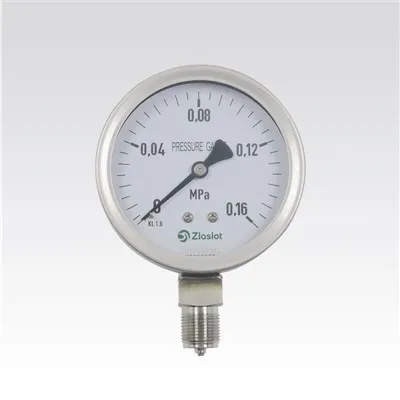
The housing of the indicator is also made from materials that can withstand the underwater environment. Stainless steel is a popular choice. It's strong, durable, and resistant to corrosion. We make sure the housing is well - designed, with no gaps or weak points where water could get in. Some of our indicators even have a double - walled housing for extra protection. The space between the two walls can act as a buffer, reducing the impact of external pressure on the internal components.
Pressure Compensation
Underwater, the pressure can be extremely high. If the melt pressure indicator isn't designed to handle this pressure, it can get damaged. That's where pressure compensation comes in. We design our indicators to balance the external pressure. One way to do this is by using a pressure - compensating diaphragm. This diaphragm can flex in response to changes in external pressure, equalizing the pressure inside and outside the indicator.
Another approach is to use a hydraulic system for pressure compensation. The hydraulic fluid in the system can transfer the external pressure evenly across the indicator, preventing any one part from being over - stressed. This helps to ensure that the indicator can accurately measure the melt pressure even in deep - water applications.
Corrosion Resistance
As I mentioned earlier, corrosion is a major problem in underwater environments, especially in saltwater. To combat this, we use corrosion - resistant materials and coatings. In addition to stainless steel for the housing, we also use special coatings on other metal parts. For example, some of our indicators have a zinc - based coating that provides a sacrificial layer of protection. The zinc corrodes first, protecting the underlying metal.
We also use non - metallic materials in areas where possible. For instance, some of the internal components are made from plastic or ceramic materials. These materials are not only lightweight but also highly resistant to corrosion. They can withstand the harsh underwater conditions without degrading over time.
Electrical Protection
Water and electricity don't mix well. To protect the electrical components of the melt pressure indicator, we use several techniques. First, we insulate all the electrical wires and connections. High - quality insulation materials like polyvinyl chloride (PVC) or fluoropolymers are used to prevent electrical short - circuits.
We also use moisture - resistant circuit boards. These circuit boards are treated with a special coating that repels water. This coating forms a thin, protective layer over the components on the board, preventing water from causing damage. Additionally, we design the electrical system to be as simple as possible, reducing the number of potential failure points.
Impact Resistance
Underwater, there's always a risk of the melt pressure indicator being hit by debris or experiencing strong currents. To protect against this, we design the indicator to be impact - resistant. The housing is made thick enough to withstand a certain amount of impact. We also use shock - absorbing materials inside the housing. For example, foam padding can be used to cushion the internal components and reduce the impact of sudden shocks.
Some of our indicators are also designed with a streamlined shape. This shape reduces the drag caused by underwater currents, minimizing the risk of the indicator being knocked around. It also helps to prevent debris from getting stuck on the indicator, which could cause damage over time.
Monitoring and Maintenance
Even with all these protection measures in place, it's still important to monitor and maintain the melt pressure indicator regularly. We recommend periodic inspections to check for any signs of damage or wear. For example, the O - rings should be checked for any signs of cracking or deformation. The corrosion - resistant coatings should also be inspected to make sure they're still intact.
We also provide calibration services for our melt pressure indicators. Over time, the accuracy of the indicator can drift, especially in a harsh underwater environment. Regular calibration ensures that the indicator is providing accurate readings. If any parts are found to be damaged during the inspection, they should be replaced immediately to prevent further damage to the indicator.
Related Products
If you're interested in other related products, we also offer Pressure Temperature Indicator, Temperature Controller, and Temperature Indicator. These products can work in conjunction with our melt pressure indicators to provide a comprehensive monitoring solution for your underwater applications.


Let's Talk!
If you're in the market for a melt pressure indicator that can withstand the challenges of an underwater environment, we're here to help. Our indicators are designed with all these protection measures in mind, ensuring reliable performance and accurate measurements. Whether you're working on an offshore oil rig, a deep - sea research project, or any other underwater application, we have the right solution for you. Don't hesitate to reach out and start a conversation about your specific needs. We're looking forward to working with you!
References
- Johnson, R. (2018). Underwater Instrumentation: Design and Maintenance. Marine Engineering Press.
- Smith, A. (2020). Corrosion Prevention in Underwater Equipment. Industrial Materials Journal.
- Brown, C. (2019). Pressure Measurement in Harsh Environments. Sensor Technology Magazine.