
Can Indicators and Controllers be programmed?
Leave a message

In the realm of industrial automation and process control, indicators and controllers play a pivotal role. As a leading supplier of indicators and controllers, I often encounter the question: Can indicators and controllers be programmed? This blog post aims to delve into this topic, exploring the programmability of these essential devices, their benefits, and practical applications.
Understanding Indicators and Controllers
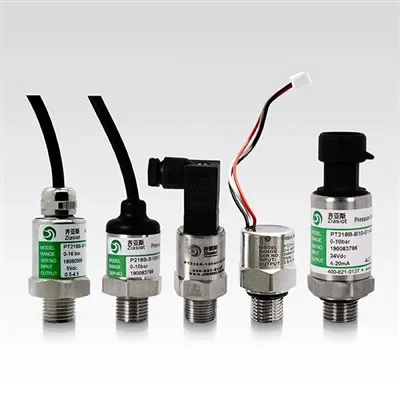
Before we discuss programmability, let's briefly define indicators and controllers. Indicators are devices that display process variables such as temperature, pressure, flow, or level. They provide operators with real - time information about the status of a system. For example, a Pressure Indicator shows the pressure within a pipeline or a vessel, allowing operators to monitor and ensure safe operating conditions.
Controllers, on the other hand, are more sophisticated. They not only monitor process variables but also take action to maintain those variables at a desired setpoint. A temperature controller, for instance, will adjust the heating or cooling system to keep the temperature within a specified range.
Programmability of Indicators
In the past, many indicators were simple analog devices with fixed scales and limited functionality. However, with the advent of digital technology, modern indicators have become highly programmable. Digital indicators can be programmed to display different units of measurement, set alarm limits, and even perform basic calculations.
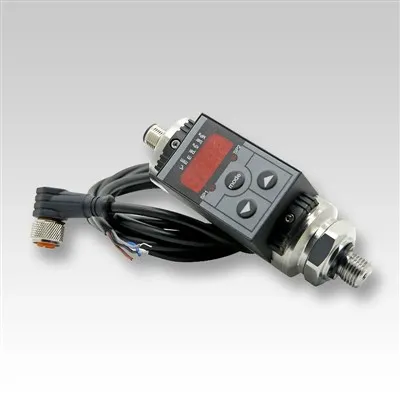
For example, our Homogenizer Digital Pressure Gauge can be programmed to show pressure in various units such as psi, bar, or kPa. This flexibility allows it to be used in different applications and industries. Additionally, users can set high and low alarm limits. When the pressure exceeds or falls below these limits, the indicator can trigger an audible or visual alarm, alerting operators to potential issues.
Programmable indicators also offer the ability to store historical data. This data can be used for analysis, troubleshooting, and compliance purposes. For instance, in a manufacturing process, the stored pressure data from an indicator can be analyzed to identify patterns and optimize the process.
Programmability of Controllers
Controllers are inherently more programmable than indicators. They are designed to implement control algorithms to regulate process variables. The most common control algorithm used in industrial controllers is the PID (Proportional - Integral - Derivative) algorithm. This algorithm calculates the error between the setpoint and the actual process variable and adjusts the control output accordingly.
Modern controllers can be programmed to use different control strategies depending on the application. For example, in a temperature control system, a controller can be programmed to use a cascade control strategy. In cascade control, there are two control loops: a primary loop that controls the main process variable (e.g., the temperature of a furnace) and a secondary loop that controls a related variable (e.g., the flow rate of the heating medium).
Our Melt Pressure Indicator can also function as a controller. It can be programmed to maintain a specific melt pressure in a plastic extrusion process. The user can set the desired pressure setpoint, and the controller will adjust the screw speed or the pressure - regulating valve to keep the pressure constant.
Benefits of Programmable Indicators and Controllers
The programmability of indicators and controllers offers several benefits. Firstly, it provides flexibility. Different applications may require different units of measurement, alarm settings, or control strategies. Programmable devices can be easily configured to meet these specific requirements, eliminating the need for multiple specialized devices.
Secondly, programmability enhances efficiency. By allowing users to fine - tune the operation of indicators and controllers, the process can be optimized for maximum efficiency. For example, in an energy - intensive process, a programmable controller can adjust the heating or cooling system to minimize energy consumption while maintaining the desired process conditions.
Thirdly, it improves safety. Programmable indicators can set accurate alarm limits, and controllers can respond quickly to abnormal conditions. This helps to prevent equipment damage, product quality issues, and potential safety hazards.
Practical Applications
The programmability of indicators and controllers makes them suitable for a wide range of applications. In the food and beverage industry, indicators and controllers are used to monitor and control temperature, pressure, and flow during the production process. For example, in a brewing process, a programmable temperature controller ensures that the fermentation temperature is maintained within the optimal range for yeast activity.


In the pharmaceutical industry, precise control of process variables is crucial for product quality and compliance. Programmable indicators and controllers are used to control variables such as pressure, temperature, and humidity in cleanrooms and manufacturing equipment.
In the automotive industry, indicators and controllers are used in engine testing, paint spraying, and other manufacturing processes. For example, a programmable pressure controller can be used to regulate the pressure in a hydraulic system during engine testing.
How to Program Indicators and Controllers
Programming indicators and controllers typically involves using a user - friendly interface. Most modern devices come with a built - in display and keypad or can be connected to a computer via a communication interface such as USB, Ethernet, or RS - 485.
For simple programming tasks, such as setting alarm limits or changing units of measurement, users can use the device's front - panel keypad and menu system. More complex programming, such as implementing advanced control algorithms, may require the use of software provided by the manufacturer.
The software allows users to create, edit, and download control programs to the device. It also provides tools for monitoring the process variables, analyzing data, and troubleshooting.
Conclusion
In conclusion, both indicators and controllers can be programmed, and this programmability offers significant advantages in terms of flexibility, efficiency, and safety. As a supplier of indicators and controllers, we are committed to providing high - quality, programmable devices that meet the diverse needs of our customers.
If you are interested in learning more about our programmable indicators and controllers or have specific requirements for your application, we encourage you to contact us for a detailed discussion. Our team of experts is ready to assist you in selecting the right products and providing technical support.
References
- Dorf, R. C., & Bishop, R. H. (2017). Modern Control Systems. Pearson.
- Ogata, K. (2010). Modern Control Engineering. Prentice Hall.
- Nise, N. S. (2015). Control Systems Engineering. Wiley.