
Can an electromagnetic flowmeter be used in food processing factories?
Leave a message

Can an electromagnetic flowmeter be used in food processing factories? Well, that's a question I get asked a lot as a supplier of electromagnetic flowmeters. And let me tell you, the answer is a resounding yes! In this blog, I'll dive into why these nifty devices are a great fit for food processing, how they work, and some of the key considerations.
First off, let's talk about what an electromagnetic flowmeter is. It's a type of flow meter that measures the flow of electrically conductive fluids. The basic principle behind it is Faraday's law of electromagnetic induction. When a conductive fluid flows through a magnetic field generated by the flowmeter, a voltage is induced. This voltage is directly proportional to the fluid's flow velocity. By measuring this voltage, we can accurately determine the flow rate of the fluid.
Now, why is this relevant for food processing factories? Well, a lot of the fluids used in food processing are electrically conductive. Think about things like fruit juices, milk, and even some types of syrups. These fluids can easily be measured using an electromagnetic flowmeter.


One of the biggest advantages of using an electromagnetic flowmeter in a food processing plant is its accuracy. In the food industry, precision is key. Whether you're mixing ingredients for a recipe or filling containers with a specific volume of product, you need to know exactly how much fluid is flowing through your pipes. Electromagnetic flowmeters can provide highly accurate measurements, often within a few percentage points of the actual flow rate. This means you can ensure consistent product quality and avoid costly over - or under - filling.
Another great thing about these flowmeters is their non - intrusive nature. Unlike some other types of flow meters, like the Turbine Flow Meter, which have moving parts that can come into contact with the fluid, electromagnetic flowmeters don't have any moving parts in the flow path. This reduces the risk of contamination, which is a major concern in food processing. There's no chance of parts wearing down and releasing particles into the food product, and it also makes the flowmeter easier to clean and maintain.
Cleaning is a crucial aspect of food processing. Hygiene standards are extremely high, and all equipment needs to be thoroughly cleaned on a regular basis. Electromagnetic flowmeters are designed with this in mind. They can be easily integrated into cleaning - in - place (CIP) systems. These systems allow for automated cleaning of the pipes and equipment without the need for disassembly. This saves a lot of time and effort, and ensures that the flowmeter remains in a sanitary condition.
In addition to their accuracy and ease of cleaning, electromagnetic flowmeters are also very versatile. They can handle a wide range of flow rates and fluid viscosities. Whether you're dealing with a slow - flowing, thick syrup or a fast - flowing, thin juice, an electromagnetic flowmeter can provide reliable measurements. This makes them suitable for a variety of applications within a food processing factory, from ingredient dosing to final product filling.
However, there are a few things to consider when using an electromagnetic flowmeter in a food processing environment. One of the main requirements is that the fluid being measured must be electrically conductive. If the fluid has a very low conductivity, the flowmeter may not be able to generate a strong enough signal to accurately measure the flow. So, before installing an electromagnetic flowmeter, it's important to test the conductivity of the fluid.
The installation location also matters. The flowmeter should be installed in a section of the pipe where the flow is fully developed and free from turbulence. This usually means installing it at a straight section of the pipe, away from elbows, valves, or other flow - disturbing elements. Proper installation ensures that the flowmeter can accurately measure the flow without being affected by irregularities in the flow pattern.
When it comes to choosing an electromagnetic flowmeter for your food processing factory, there are many options available. One popular choice is the LDG Electromagnetic Flowmeter. It's known for its high accuracy, reliability, and ease of use. It also has features that are specifically designed for food processing applications, such as hygienic design and compatibility with CIP systems.
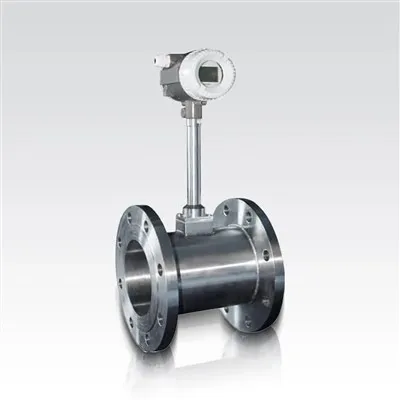
There are also other types of flow meters available in the market, like the Vortex Flowmeter. While vortex flowmeters can also be used in some food processing applications, they have their own set of advantages and limitations. Vortex flowmeters work by measuring the frequency of vortices shed from a bluff body in the flow path. They are generally more suitable for measuring the flow of gases or non - conductive liquids. However, they may not be as accurate as electromagnetic flowmeters for conductive fluids, and they may also be more difficult to clean.
In conclusion, an electromagnetic flowmeter can be a great addition to a food processing factory. Its accuracy, ease of cleaning, versatility, and non - intrusive design make it well - suited for a variety of food processing applications. Just make sure to consider the fluid conductivity and installation requirements. If you're in the market for a reliable flow measurement solution for your food processing plant, I'd highly recommend considering an electromagnetic flowmeter.
If you're interested in learning more about how an electromagnetic flowmeter can benefit your food processing operations or if you have any questions about our products, feel free to reach out. We're here to help you find the best flow measurement solution for your specific needs.
References
- "Flow Measurement Handbook: Principles and Applications" by Richard W. Miller
- Industry standards and guidelines for food processing equipment, such as those provided by the Food and Drug Administration (FDA) and the European Hygienic Engineering and Design Group (EHEDG)