
Can a Vortex Intelligent Flowmeter be used in oil and gas industries?
Leave a message

Can a Vortex Intelligent Flowmeter be used in oil and gas industries?
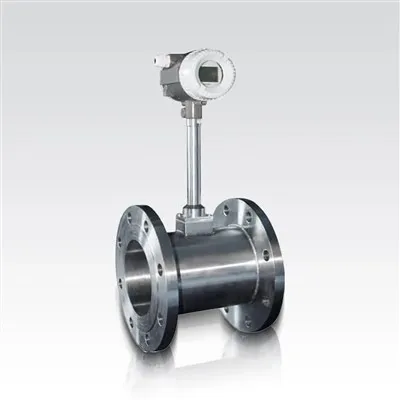
In the vast expanse of the oil and gas industries, accurate flow measurement is a cornerstone for efficient operations, safety, and financial management. As a supplier of Vortex Intelligent Flowmeters, I am often asked whether our product can be effectively utilized in these demanding sectors. In this blog, I will delve into the capabilities of Vortex Intelligent Flowmeters and explore their suitability for the oil and gas industries.
Understanding Vortex Intelligent Flowmeters
Vortex Intelligent Flowmeters operate on the principle of the von Kármán vortex street. When a fluid flows past a bluff body (obstruction) in the flowmeter, alternating vortices are shed on either side of the bluff body. The frequency of these vortex shedding is directly proportional to the flow velocity of the fluid. By measuring this frequency, the flowmeter can accurately determine the flow rate of the fluid.
One of the key advantages of Vortex Intelligent Flowmeters is their high accuracy. They can provide measurement accuracies of up to ±1% of the measured value, which is crucial in industries where even small errors in flow measurement can lead to significant financial losses. Additionally, these flowmeters have a wide turndown ratio, typically ranging from 10:1 to 20:1. This means they can accurately measure flow rates over a wide range of values, from low to high flow conditions.
Another notable feature is their reliability. Vortex Intelligent Flowmeters have no moving parts, which reduces the risk of mechanical failure and wear. This makes them suitable for long - term use in harsh environments, such as those found in the oil and gas industries. They are also relatively easy to install and maintain, as they do not require frequent calibration or complex maintenance procedures.
Applications in the Oil and Gas Industries
-
Upstream Operations
In upstream oil and gas operations, which involve exploration and production, Vortex Intelligent Flowmeters can be used in various applications. For example, in wellhead monitoring, they can measure the flow rate of natural gas or crude oil coming out of the well. Accurate flow measurement at the wellhead is essential for reservoir management, production optimization, and custody transfer.
These flowmeters can also be used in pipeline monitoring during the transportation of oil and gas from the wellsite to the processing facilities. They can detect any changes in flow rate, which may indicate a leak or blockage in the pipeline. This early detection can help prevent environmental disasters and ensure the safe and efficient operation of the pipeline network.

-
Midstream Operations
In midstream operations, which involve the transportation and storage of oil and gas, Vortex Intelligent Flowmeters play a vital role. They are commonly used in gas metering stations to measure the flow of natural gas through transmission pipelines. The high accuracy and reliability of these flowmeters are crucial for ensuring accurate billing and custody transfer between different parties involved in the gas supply chain.
In storage facilities, Vortex Intelligent Flowmeters can be used to monitor the inflow and outflow of oil and gas, helping to manage inventory levels and prevent over - filling or under - filling of storage tanks. -
Downstream Operations
Downstream operations include refining and petrochemical processing. Vortex Intelligent Flowmeters can be used in refineries to measure the flow rate of various fluids, such as crude oil, refined products (e.g., gasoline, diesel), and process gases. Accurate flow measurement is essential for process control, quality assurance, and energy management in these complex industrial processes.
Comparison with Other Flowmeter Types
When considering the use of flowmeters in the oil and gas industries, it is important to compare Vortex Intelligent Flowmeters with other commonly used flowmeter types.
- Turbine Flow Meter
Turbine Flow Meters are another popular choice for flow measurement in the oil and gas industries. They operate by measuring the rotation speed of a turbine blade placed in the flow path. While Turbine Flow Meters can provide high - accuracy measurements, they have moving parts, which are susceptible to wear and tear, especially in dirty or viscous fluids. In contrast, Vortex Intelligent Flowmeters have no moving parts, making them more reliable in harsh environments. - LDG Electromagnetic Flowmeter
LDG Electromagnetic Flowmeters are suitable for measuring the flow of conductive fluids. They work based on Faraday's law of electromagnetic induction. However, they are not suitable for measuring non - conductive fluids, such as natural gas. Vortex Intelligent Flowmeters, on the other hand, can be used for both liquid and gas flow measurement, providing a more versatile solution for the oil and gas industries.
Challenges and Considerations
While Vortex Intelligent Flowmeters offer many advantages for the oil and gas industries, there are also some challenges and considerations to keep in mind.
- Fluid Properties
The performance of Vortex Intelligent Flowmeters can be affected by the properties of the fluid being measured. For example, the accuracy of the flowmeter may be reduced if the fluid has a high viscosity or contains a large amount of solids or bubbles. In such cases, additional pre - treatment of the fluid or the use of specialized flowmeter designs may be required. - Installation Requirements
Proper installation of Vortex Intelligent Flowmeters is crucial for accurate measurement. They require a certain length of straight pipe upstream and downstream of the flowmeter to ensure a fully developed flow profile. Failure to meet these installation requirements can lead to inaccurate flow measurements.
Conclusion
In conclusion, Vortex Intelligent Flowmeters have significant potential for use in the oil and gas industries. Their high accuracy, wide turndown ratio, reliability, and versatility make them suitable for a variety of applications in upstream, midstream, and downstream operations. While there are some challenges and considerations to address, with proper installation and maintenance, these flowmeters can provide valuable solutions for flow measurement in the oil and gas sectors.
If you are in the oil and gas industry and are looking for a reliable and accurate flow measurement solution, I encourage you to explore the capabilities of our Vortex Flowmeters. Our team of experts is ready to assist you in selecting the right flowmeter for your specific application and providing you with the necessary support for installation and maintenance. Contact us today to start a discussion about your flow measurement needs and how we can help you optimize your operations.
References
- ISO 5167 - 1:2003, Measurement of fluid flow by means of pressure differential devices inserted in circular cross - section conduits running full.
- Miller, R. W. (1996). Flow measurement engineering handbook. McGraw - Hill.
- Spitzer, D. W. (2001). Flow measurement: practical guide for measurement and control. ISA - The Instrumentation, Systems, and Automation Society.