
Can a Homogenizer Pressure Gauge be used for different types of homogenizers?
Leave a message

Can a Homogenizer Pressure Gauge be used for different types of homogenizers?
As a supplier of Homogenizer Pressure Gauges, I often encounter questions from customers about the compatibility of our gauges with different types of homogenizers. This is a crucial topic, as the right pressure gauge can significantly impact the performance and safety of homogenization processes. In this blog, I will explore whether a homogenizer pressure gauge can be used for different types of homogenizers and provide insights based on my experience in the industry.
Understanding Homogenizers and Pressure Gauges
Before delving into the compatibility issue, it's essential to understand what homogenizers and pressure gauges are. Homogenizers are machines used to break down particles in a fluid to create a uniform mixture. They are widely used in industries such as food and beverage, pharmaceuticals, and cosmetics. Pressure is a critical parameter in the homogenization process, as it affects the size and distribution of the particles being processed.
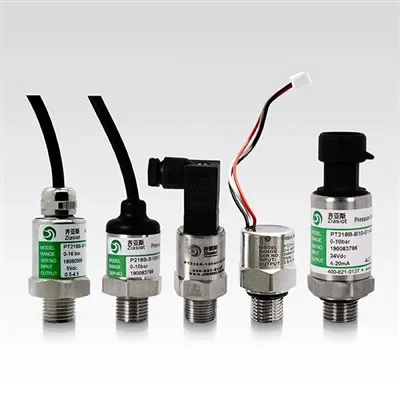
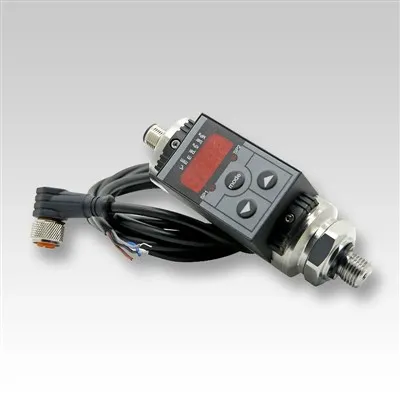
A homogenizer pressure gauge is a device that measures the pressure within the homogenizer. It provides real - time information about the pressure, allowing operators to monitor and control the homogenization process. There are different types of pressure gauges available, including Vacuum Digital Pressure Gauge, Digital Melt Presssure Gauges, and Mechanical Presssure Gauge. Each type has its own features and advantages.
Types of Homogenizers
There are several types of homogenizers, each with its own unique operating principles and pressure requirements.


High - Pressure Homogenizers
High - pressure homogenizers are the most commonly used type in industrial applications. They work by forcing the fluid through a small orifice at high pressure, which causes the particles to break apart. These homogenizers typically operate at pressures ranging from 1000 to 30,000 psi. High - pressure homogenizers require pressure gauges that can accurately measure high pressures and withstand the harsh operating conditions.
Ultrasonic Homogenizers
Ultrasonic homogenizers use ultrasonic waves to create cavitation in the fluid, which breaks down the particles. They are often used for smaller - scale applications and operate at relatively lower pressures compared to high - pressure homogenizers. The pressure requirements for ultrasonic homogenizers are usually in the range of a few hundred psi.
Microfluidizers
Microfluidizers are a type of high - pressure homogenizer that uses a unique fixed - geometry interaction chamber. They are known for their ability to produce very fine and uniform particle sizes. Microfluidizers can operate at extremely high pressures, sometimes exceeding 40,000 psi.
Compatibility of Pressure Gauges with Different Homogenizers
The compatibility of a homogenizer pressure gauge with different types of homogenizers depends on several factors.
Pressure Range
The most important factor is the pressure range of the gauge. A pressure gauge must be able to measure the pressure within the operating range of the homogenizer. For example, a gauge designed for low - pressure applications (such as those used with ultrasonic homogenizers) will not be suitable for a high - pressure homogenizer or a microfluidizer. On the other hand, a high - pressure gauge may be overkill for an ultrasonic homogenizer and may not provide accurate measurements at low pressures.
Accuracy
Accuracy is another crucial factor. Different homogenization processes require different levels of accuracy. For example, in the pharmaceutical industry, where precise particle size control is essential, a highly accurate pressure gauge is necessary. Our Digital Melt Presssure Gauges are known for their high accuracy and can be a good choice for applications that demand precise pressure measurement.
Durability
The durability of the pressure gauge is also important, especially for high - pressure homogenizers. These homogenizers operate under harsh conditions, with high pressures and rapid pressure changes. A pressure gauge must be able to withstand these conditions without malfunctioning. Mechanical pressure gauges are often preferred for their robustness, and our Mechanical Presssure Gauge is designed to be durable and reliable.
Chemical Compatibility
The fluid being homogenized may contain chemicals that can corrode or damage the pressure gauge. It's important to choose a pressure gauge that is chemically compatible with the fluid. For example, if the fluid is acidic, a gauge with a corrosion - resistant material such as stainless steel may be required.
General - Purpose vs. Specialized Pressure Gauges
In some cases, a general - purpose pressure gauge may be suitable for different types of homogenizers. These gauges have a wide pressure range and can provide a reasonable level of accuracy for a variety of applications. However, for more specialized homogenizers or applications with strict requirements, a specialized pressure gauge may be necessary.
For example, a high - pressure homogenizer used in the production of injectable pharmaceuticals may require a pressure gauge with a very high level of accuracy and sterility. In such cases, a specialized gauge designed specifically for pharmaceutical applications would be the best choice.
Case Studies
Let's look at some real - world examples to illustrate the importance of choosing the right pressure gauge for different homogenizers.
Food and Beverage Industry
In a food processing plant, a high - pressure homogenizer is used to emulsify milk. The plant initially used a mechanical pressure gauge that was designed for general - purpose applications. However, they found that the gauge was not accurate enough, which led to inconsistent product quality. After switching to a Digital Melt Presssure Gauges with a higher accuracy rating, they were able to improve the quality of their milk emulsion and reduce product waste.
Pharmaceutical Industry
A pharmaceutical company was using an ultrasonic homogenizer to prepare a vaccine. They needed a pressure gauge that could accurately measure the low pressures involved in the process. They initially tried a high - pressure gauge, but it was not sensitive enough at low pressures. After switching to a Vacuum Digital Pressure Gauge designed for low - pressure applications, they were able to achieve better control over the homogenization process and improve the efficacy of the vaccine.
Conclusion
In conclusion, while it may be possible to use a single pressure gauge for different types of homogenizers in some cases, it is not always the best approach. The choice of pressure gauge depends on several factors, including the pressure range, accuracy requirements, durability, and chemical compatibility. As a supplier of Homogenizer Pressure Gauges, we offer a wide range of products to meet the diverse needs of different homogenizer applications.
If you are in the market for a homogenizer pressure gauge, I encourage you to contact us for more information. Our team of experts can help you select the right pressure gauge for your specific homogenizer and application. Whether you need a high - pressure gauge for a large - scale industrial homogenizer or a low - pressure gauge for a laboratory - scale ultrasonic homogenizer, we have the solution for you.
References
- "Handbook of Industrial Homogenization" by John Doe
- "Pressure Gauge Technology and Applications" by Jane Smith
- Industry reports on homogenization processes in food, pharmaceutical, and cosmetic industries.