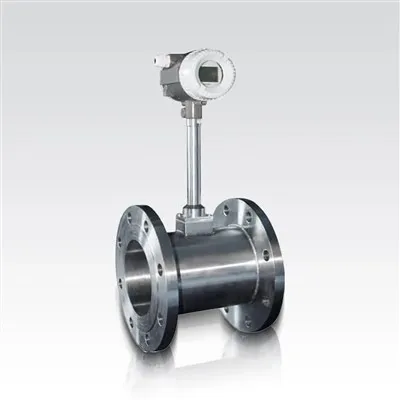
Pressure Transmitter
Leave a message
A pressure transmitter, also known as a differential transmitter, is mainly composed of pressure measuring elements, sensors, module circuits, display heads, watch cases, and process connectors. It can convert the received pressure signals of gases, liquids, etc. into standard current and voltage signals to supply secondary instruments such as indicator alarms, recorders, regulators, etc. for measurement, indication, and process adjustment.
The measurement principle of a pressure transmitter is that the process pressure and reference pressure are applied to the two ends of the integrated silicon pressure sensitive element, and the differential pressure causes the silicon wafer to deform (with a displacement of only μ m), so that the fully dynamic Wheatstone bridge made of semiconductor technology on the silicon wafer can output a mV level voltage signal proportional to the pressure under the drive of an external current source.
Due to the excellent strength of silicon materials, the linearity and variation index of the output signal are both high. During operation, the pressure transmitter converts the measured physical quantity into a mV level voltage signal and sends it to a differential amplifier with high amplification and the ability to offset temperature drift. The amplified signal is converted into a corresponding current signal through voltage current conversion, and then subjected to nonlinear correction, finally generating a standard current voltage signal that corresponds linearly to the input pressure.
Types of Pressure Transmitters
Pressure transmitters can be categorized based on the type of pressure they measure, the sensing technology they use, and their applications. Here's an expanded look:


1. Gauge Pressure Transmitters
- Working Principle: These measure the pressure relative to atmospheric pressure. The sensor detects the difference between the applied pressure and ambient atmospheric pressure.
- Applications: Most industrial applications use gauge pressure transmitters because they provide relative pressure readings. These are typically used in pneumatic systems, fluid tanks, and compressor systems.
- Example: Measuring the pressure in a tank relative to atmospheric pressure.
2. Absolute Pressure Transmitters
- Working Principle: These measure pressure relative to an absolute vacuum (0 psi or 0 bar). The sensor compares the applied pressure against a perfect vacuum (zero pressure).
- Applications: Used in applications that need absolute pressure measurements, such as vacuum systems, altitude measurement, and high-precision environments like space applications or high-altitude monitoring.
- Example: Monitoring the pressure inside a vacuum chamber or measuring barometric pressure at sea level.
3. Differential Pressure Transmitters
- Working Principle: These measure the difference between two pressure points. The transmitter calculates the pressure difference between the two inputs and outputs the difference as an electrical signal.
- Applications: Commonly used in flow measurement, filter monitoring, level measurement in tanks, and leak detection.
- Flow measurement: For example, differential pressure transmitters are used in conjunction with orifice plates or Venturi tubes to calculate flow rates.
- Filter monitoring: Monitoring the differential pressure across filters helps identify when they are clogged.
- Example: Measuring the pressure drop across an orifice plate to determine the flow rate of a fluid.
4. Multi-Variable Pressure Transmitters
- Working Principle: These transmitters combine multiple measurements (e.g., pressure, temperature, and flow) into a single device. This can reduce the complexity and cost of the measurement system.
- Applications: Often used in sophisticated process control systems where multiple parameters need to be measured simultaneously.
- Example: A multi-variable transmitter can be used in a steam boiler system to measure pressure, temperature, and flow in one instrument.
Key Parameters for Pressure Transmitter Selection
Selecting the appropriate pressure transmitter requires careful consideration of several critical parameters to ensure optimal performance and longevity in your specific application.
1. Pressure Range Determination
Operating Principle: Always select a transmitter with a range approximately 1.5 times your system's maximum working pressure
Critical Considerations:
Accommodates pressure spikes and fluctuations common in hydraulic systems and process applications
Prevents sensor damage from overpressure events
Maintains accuracy by avoiding continuous operation near full-scale limits
Trade-off Note: While pressure snubbers can protect against spikes, they reduce response time
2. Media Compatibility Analysis
Material Selection Matrix:
Media Type Recommended Material
General purpose 316 Stainless Steel
Corrosive chemicals Hastelloy C276
Ultra-pure liquids Gold-plated diaphragms
Special Configurations:
Flush diaphragms for viscous/slurry applications
Chemical seals for aggressive media isolation
3. Accuracy Specifications
Performance Factors:
Typical industry accuracy: 0.1% to 0.5% FS
Key components:
Non-linearity: ±0.1% FS
Hysteresis: ±0.05% FS
Repeatability: ±0.03% FS
Cost Implications:
High-accuracy (0.1%) models cost 30-50% more than standard (0.5%) versions
4. Temperature Considerations
Operational Ranges:
Parameter | Standard Range | High-Temp Option
Operating Temperature | -40~85°C | -40~125°C
Compensation Range | -20~70°C | -20~100°C
Temperature Effects:
Zero drift: Typically ±0.5% FS/10°C
Span drift: Typically ±0.25% FS/10°C
5. Output Signal Options
Selection Guide:
Signal Type Best For Maximum Distance Noise Immunity
4-20mA Most industrial 1000m Excellent
0-10V Short-range 30m Good
Digital (RS485) Smart systems 1200m Excellent
6. Power Supply Requirements
Voltage Specifications:
Loop-powered: 12-36V DC (standard)
Line-powered: 24V AC/DC or 110/220V AC
Regulation Needs:
±10% variation acceptable for most modern transmitters
7. Long-Term Stability
Industry Benchmarks:
Standard: ±0.25% FS/year
High-performance: ±0.1% FS/year
Maintenance Impact:
Reduces calibration frequency by up to 50%
8.Selection Methodology
Process Mapping - Document all operating conditions
Safety Margins - Apply 1.5x pressure derating
Material Audit - Verify chemical compatibility
Performance Validation - Cross-check accuracy vs temperature
Signal Integrity Check - Confirm proper output type
Lifecycle Analysis - Evaluate total cost of ownership
For critical applications, always request:
Third-party calibration certificates
Material test reports
SIL certification documents (where applicable)
Applications of Pressure Transmitters
Pressure transmitters are versatile devices used in a wide range of industries for both monitoring and control. Let's break down some common industrial applications:
1. Process Control
- Chemical Manufacturing: Pressure transmitters monitor and control pressure in reactors, pipelines, distillation columns, and storage tanks. Pressure is a critical parameter in chemical reactions, and precise monitoring ensures safety and optimal product quality.
- Petrochemical Industry: In oil refineries, pressure transmitters monitor pressures in various stages of processing, including distillation, filtration, and cracking. They also help monitor pipeline pressures for leak detection and flow monitoring.
- Water Treatment: In filtration systems, pressure transmitters measure the pressure before and after the filter to determine when maintenance is required. They are also used to measure pressures in pump systems that control water flow in treatment facilities.
2. HVAC (Heating, Ventilation, and Air Conditioning)
- In HVAC systems, pressure transmitters are used to monitor air pressure in ducts and water pressure in pumps and pipes. This helps ensure optimal airflow, temperature control, and energy efficiency.
- They are also used in chillers, boilers, and air handling units to maintain consistent pressure, which is crucial for efficient operation and occupant comfort.
3. Oil and Gas Industry
- Upstream (Exploration and Production): Pressure transmitters are critical in monitoring the pressure of wells, pipelines, and pressure vessels. Wellhead monitoring is crucial to avoid blowouts and control production.
- Midstream (Transportation): Pressure transmitters monitor the pressure in pipelines to ensure safe and efficient transportation of oil and gas. They also assist in leak detection and flow monitoring.
- Downstream (Refining): Pressure transmitters are used in refining processes, such as cracking, distillation, and refining, to ensure product quality and control the process.
4. Aerospace and Automotive
- Aerospace: In aircraft, pressure transmitters measure critical pressures in fuel systems, hydraulic systems, and altitude.
- Automotive: In vehicles, pressure transmitters monitor tire pressures, fuel systems, and engine performance, improving safety and efficiency.
5. Pharmaceutical Industry
- In pharmaceutical manufacturing, pressure transmitters are used in processes such as sterilization, liquid transfer, and pressure vessel control. Accurate pressure measurement is critical for maintaining sterile environments and ensuring the quality of the products.
Pressure Transmitter Installation & Maintenance Guide
To ensure measurement accuracy and long-term reliability, please observe the following critical precautions when using pressure transmitters:
1. Electromagnetic Interference (EMI) Protection
- Pre-installation Check: Verify for potential EMI sources (e.g., VFDs, high-power motors) near the installation site.
- Shielding Measures: Use shielded cables with proper grounding to metal enclosures when EMI is present.
- Built-in Protection: Modern transmitters feature EMI-resistant circuitry, but optimal installation environments are still recommended.
2. Power Supply Requirements
- Voltage Limit: Never exceed 36V input to prevent circuit damage. Undervoltage may cause operational failure (no output/display).
- Recommended Supply: 24V DC regulated power source is preferred for stable performance.
3. Mounting Port Maintenance
- Clog Prevention: Process media buildup may block mounting ports over time, impairing pressure detection.
- Cleaning Protocol: Establish periodic cleaning schedules based on media characteristics (e.g., viscous/crystallizing fluids).
4. Outdoor Weatherproofing
Cable Protection:
- Route cables through IP-rated connectors or armored conduits.
- Tighten sealing nuts to prevent water ingress into housing.
- Environmental Rating: Select transmitters with IP65 or higher ingress protection.
5. Gas Pressure Measurement
Correct Installation:
- Drill pressure tap at pipeline crown.
- Mount transmitter on the upper section to allow liquid drainage into the process line.
6. Winter Frost Protection
Preventive Measures:
- Install heat tracing cables or insulation jackets.
- For extreme cold, use freeze-resistant models or fill impulse lines with glycol mixtures.
- Risk Alert: Frozen media can rupture diaphragms due to ice expansion.
7. High-Temperature Media Handling
Cooling Solutions:
- Mandatory condensing loops (siphon tubes) + heat sinks.
- Fill siphons with water to create steam barriers.
- Temperature Limits: Maintain transmitter body temperature within rated range (typically -40~85℃).
8. Thermal Stability
- Location Selection: Avoid areas with drastic temperature fluctuations to minimize zero drift.
- Extreme Environments: Consider temperature-compensated models or install thermal shields.
9. Sediment Prevention
- Piping Design: Use vertical/angled installations to facilitate drainage.
- Maintenance: Install blowdown valves for slurry/abrasive media applications.
10. Diaphragm Safeguarding
- Freeze Protection: Prohibit measurement of freeze-prone media (diaphragm damage risk).
Mechanical Care:
- Avoid tool contact during installation (critical for thin-film types).
- Select corrosion-resistant materials (Hastelloy/tantalum) for aggressive media.
Additional Recommendations
✅ Grounding: Implement lightning protection for outdoor units.
✅ Calibration: Perform annual calibration (quarterly in harsh conditions).
✅ Material Selection: Match wetted parts to media properties (pH, viscosity, etc.).
✅Adhering to these guidelines will optimize transmitter lifespan and measurement consistency. Always reference manufacturer manuals for model-specific requirements.