
What is the sensitivity of a pressure gauge?
Leave a message

What is the sensitivity of a pressure gauge?
As a supplier of pressure gauges, I often get asked about the sensitivity of these essential measuring instruments. Understanding the sensitivity of a pressure gauge is crucial for accurately measuring pressure in various applications. In this blog post, I'll delve into what sensitivity means in the context of pressure gauges, why it matters, and how it impacts the performance of different types of pressure gauges in our product range.
Defining Sensitivity in Pressure Gauges
Sensitivity, in the realm of pressure gauges, refers to the smallest change in pressure that a gauge can detect and display. It is essentially a measure of how responsive the gauge is to pressure variations. A highly sensitive pressure gauge can pick up even the slightest changes in pressure, while a less sensitive one may only register more significant pressure fluctuations.
Mathematically, sensitivity is often expressed as the ratio of the change in the gauge's output (such as the movement of the needle on an analog gauge or the change in digital reading) to the corresponding change in input pressure. For example, if a gauge's needle moves 1 mm for every 1 psi change in pressure, its sensitivity can be described as 1 mm/psi.
Why Sensitivity Matters
The sensitivity of a pressure gauge is critical for several reasons. First and foremost, it determines the accuracy of pressure measurements. In applications where precise pressure control is required, such as in the pharmaceutical, food and beverage, and aerospace industries, a high - sensitivity pressure gauge is essential. For instance, in pharmaceutical manufacturing, even a minor deviation in pressure during the production process can affect the quality and efficacy of drugs. A sensitive pressure gauge ensures that these small but crucial pressure changes are detected and can be addressed promptly.


Secondly, sensitivity impacts the gauge's ability to monitor dynamic pressure changes. In systems where pressure is constantly fluctuating, like in hydraulic systems or pneumatic control circuits, a gauge with high sensitivity can provide real - time and accurate information about the pressure variations. This allows operators to make timely adjustments to maintain system stability and efficiency.
Sensitivity in Different Types of Pressure Gauges
Mechanical Pressure Gauges
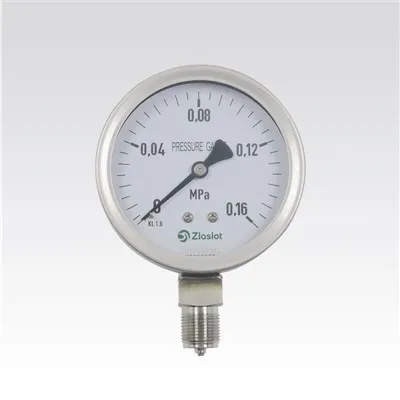
Mechanical pressure gauges, such as the Mechanical Presssure Gauge, are widely used due to their simplicity, reliability, and cost - effectiveness. These gauges typically use a Bourdon tube, diaphragm, or bellows as the sensing element. The sensitivity of a mechanical pressure gauge depends on the design and material of the sensing element.
A Bourdon tube, for example, is a curved tube that straightens when pressure is applied. The more flexible the Bourdon tube material and the more precise its curvature, the higher the sensitivity of the gauge. However, mechanical gauges may have limitations in terms of sensitivity compared to digital gauges, as mechanical components can introduce some friction and hysteresis, which can affect the accuracy of small pressure changes.
Vacuum Digital Pressure Gauges
Digital pressure gauges, like our Vacuum Digital Pressure Gauge, offer several advantages when it comes to sensitivity. They use electronic sensors, such as strain - gauge sensors or capacitive sensors, which can detect very small pressure changes with high precision.
Digital gauges can convert the pressure signal into an electrical signal, which is then processed and displayed on a digital screen. This electronic processing allows for more accurate and sensitive measurements compared to mechanical gauges. Additionally, digital gauges can often be calibrated to different sensitivities, making them highly adaptable to various applications.
High Temperature Mechanical Melt Pressure Gauges
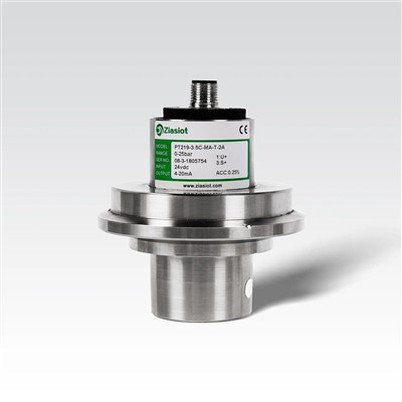
In high - temperature environments, such as in plastic extrusion or metal casting processes, High Temperature Mechanical Melt Presssure Gauges are used. These gauges need to withstand extreme temperatures while still providing accurate pressure measurements.
The sensitivity of high - temperature mechanical melt pressure gauges is a balance between withstanding the heat and detecting pressure changes. Special materials and designs are used to ensure that the sensing element can operate effectively at high temperatures without losing its sensitivity. For example, some gauges use high - temperature - resistant alloys for the Bourdon tube or diaphragm, which can maintain their mechanical properties and sensitivity even in harsh conditions.
Factors Affecting Sensitivity
Several factors can affect the sensitivity of a pressure gauge. One of the most significant factors is the range of the gauge. Generally, gauges with a lower pressure range tend to have higher sensitivity. For example, a gauge with a range of 0 - 10 psi will be more sensitive to small pressure changes compared to a gauge with a range of 0 - 1000 psi.
The quality of the gauge's components also plays a crucial role. High - quality materials and precise manufacturing processes can reduce friction, hysteresis, and other sources of error, thereby improving the gauge's sensitivity. Additionally, environmental factors such as temperature, humidity, and vibration can impact sensitivity. Extreme temperatures can cause the materials in the gauge to expand or contract, affecting the performance of the sensing element.
Selecting the Right Sensitivity for Your Application
When choosing a pressure gauge, it's essential to consider the specific requirements of your application. If you need to measure small pressure changes accurately, a high - sensitivity gauge is necessary. However, if you're dealing with large pressure variations and don't require extreme precision, a gauge with lower sensitivity may be sufficient.
It's also important to consider the environmental conditions in which the gauge will operate. For high - temperature or high - vibration environments, you'll need a gauge that can maintain its sensitivity under these conditions.
Conclusion
In conclusion, the sensitivity of a pressure gauge is a crucial parameter that determines its ability to accurately measure pressure. Whether you're using a mechanical pressure gauge, a digital pressure gauge, or a high - temperature melt pressure gauge, understanding sensitivity is essential for selecting the right gauge for your application.
At our company, we offer a wide range of pressure gauges with different sensitivities to meet the diverse needs of our customers. If you're in the market for a pressure gauge and need help choosing the right one based on sensitivity and other factors, we're here to assist you. Contact us to start a conversation about your pressure measurement requirements and let's find the perfect solution together.
References
- ASME B40.100 - 2013, Pressure Gauges and Gauge Attachments.
- ISO 5167 - 1:2003, Measurement of fluid flow by means of pressure differential devices inserted in circular cross - section conduits running full.