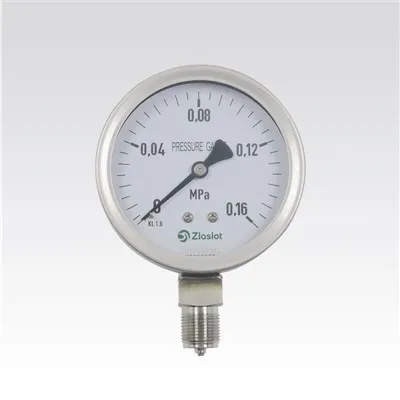

What is the maximum pressure a digital pressure gauge can measure?
Leave a message

Hey folks! As a supplier of digital pressure gauges, I often get asked, "What's the maximum pressure a digital pressure gauge can measure?" Well, let's dive right into this topic and break it down.
First off, digital pressure gauges are pretty nifty tools. They're used in a whole bunch of industries, from manufacturing and automotive to aerospace and oil and gas. The great thing about them is that they offer high precision and can display pressure readings in various units, like psi, bar, kPa, and more.
The maximum pressure a digital pressure gauge can measure varies quite a bit. It depends on a few key factors, such as the design, the materials used, and the intended application.
Design and Technology
The design of a digital pressure gauge plays a huge role in determining its maximum pressure capacity. There are different types of pressure sensors used in these gauges, and each has its own limits.
One common type is the strain - gauge sensor. These sensors work by measuring the deformation of a material under pressure. They're pretty reliable and can handle a decent amount of pressure. For general - purpose digital pressure gauges using strain - gauge sensors, the maximum pressure can range from a few hundred psi to several thousand psi. For example, in some industrial applications where you're measuring the pressure in a small - scale hydraulic system, a gauge with a maximum pressure of around 3000 psi might do the job just fine.
Another type is the piezoelectric sensor. These sensors generate an electrical charge when subjected to pressure. They're often used in high - frequency and high - pressure applications. Piezoelectric - based digital pressure gauges can handle extremely high pressures, sometimes reaching up to tens of thousands of psi. They're commonly used in applications like rocketry and high - pressure testing facilities.
Materials Matter
The materials used in the construction of a digital pressure gauge also have a big impact on its maximum pressure rating. The housing of the gauge needs to be strong enough to withstand the pressure without deforming or breaking. Stainless steel is a popular choice for the housing because it's durable and resistant to corrosion.
The internal components, such as the diaphragm or the sensing element, also need to be made of materials that can handle high pressures. For instance, in high - pressure gauges, the diaphragm might be made of a special alloy that can withstand the stress without failing.
Intended Applications
The application for which the digital pressure gauge is designed is a major factor in determining its maximum pressure.
In the automotive industry, digital pressure gauges are used to measure things like tire pressure, oil pressure, and fuel pressure. For tire pressure gauges, the maximum pressure is usually around 100 - 150 psi, which is more than enough for regular car tires. Oil pressure gauges might have a maximum pressure of a few hundred psi, as the oil pressure in an engine doesn't typically get extremely high.
On the other hand, in the oil and gas industry, where you're dealing with high - pressure pipelines and wellheads, the digital pressure gauges need to be able to handle much higher pressures. Some gauges used in these applications can measure pressures up to 10,000 psi or even more.
Comparing with Mechanical Pressure Gauges
It's worth comparing digital pressure gauges with Mechanical Presssure Gauge. Mechanical pressure gauges, like bourdon tube gauges, have been around for a long time. They're simple and reliable, but they do have some limitations when it comes to measuring high pressures.
Digital pressure gauges generally offer better accuracy and can handle a wider range of pressures compared to mechanical ones. However, mechanical gauges still have their place, especially in applications where you need a simple and cost - effective solution.
High - Temperature and Vacuum Applications
In high - temperature environments, you might need a special type of pressure gauge. High Temperature Mechanical Melt Presssure Gauges are designed to work in conditions where the temperature can get really high. Digital pressure gauges also have their own versions for high - temperature applications. These gauges are built with materials that can withstand the heat and still provide accurate pressure readings.
When it comes to vacuum applications, Vacuum Digital Pressure Gauge are the go - to. They can measure pressures below atmospheric pressure accurately. The maximum "negative pressure" or vacuum level they can measure also varies depending on the design and the application. Some vacuum gauges can measure down to a few millitorr, which is a very low pressure.
How to Choose the Right Maximum Pressure Rating
So, how do you choose the right digital pressure gauge with the appropriate maximum pressure rating for your application?


First, you need to know the maximum pressure that you'll be measuring in your system. It's always a good idea to add a safety margin. For example, if you expect the pressure in your system to reach a maximum of 2000 psi, you might want to choose a gauge with a maximum pressure rating of 3000 psi or more. This gives you some leeway in case there are any sudden pressure spikes.
You also need to consider the accuracy and the resolution of the gauge. A higher - accuracy gauge might be more expensive, but it can provide more precise readings, which is crucial in some applications.
Conclusion
In conclusion, the maximum pressure a digital pressure gauge can measure varies widely depending on factors like design, materials, and application. Whether you're in a low - pressure automotive application or a high - pressure oil and gas operation, there's a digital pressure gauge out there that can meet your needs.
If you're in the market for a digital pressure gauge and need help choosing the right one with the appropriate maximum pressure rating, don't hesitate to reach out. We're here to assist you in finding the perfect gauge for your specific requirements. Let's have a chat and see how we can work together to get you the best digital pressure gauge solution.
References
- "Pressure Measurement Handbook" by Peter H. Sydenham
- Various industry standards and technical documents related to pressure gauges.