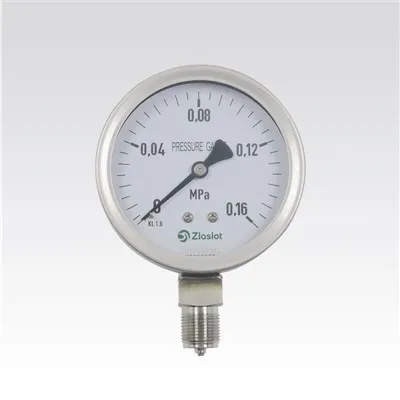
Do digital pressure gauges require calibration?
Leave a message

Do digital pressure gauges require calibration? That's a question I get asked a lot as a supplier of Digital Pressure Gauges. And the short answer is yes, they do. But let's dig deeper into why that is and what calibration means for these handy devices.
First off, let's talk about what a digital pressure gauge is. It's a tool that measures pressure and displays the reading digitally. These gauges are used in a wide range of industries, from manufacturing and automotive to food and beverage. They're super useful because they give accurate and easy - to - read measurements.
Now, why do they need calibration? Well, over time, the accuracy of a digital pressure gauge can drift. This can happen due to a variety of reasons. One common cause is wear and tear. Just like any other piece of equipment, the internal components of a digital pressure gauge can degrade with use. For example, the sensors that detect pressure might start to lose their sensitivity.
Another factor is environmental conditions. If a gauge is exposed to extreme temperatures, humidity, or vibrations, it can affect its performance. Say you're using a gauge in a factory where there's a lot of machinery running, creating constant vibrations. These vibrations can gradually throw off the calibration of the gauge.
Let's take a look at some specific types of digital pressure gauges. If you're in the market for a Vacuum Digital Pressure Gauge, it's crucial to keep it calibrated. This type of gauge is used to measure pressure in vacuum systems, like in laboratories or semiconductor manufacturing. An inaccurate reading could lead to faulty experiments or production issues.
Similarly, Digital Melt Presssure Gauges are used in industries where molten materials are involved, such as plastics manufacturing. These gauges need to be precise because the pressure of the molten material affects the quality of the final product. If the gauge isn't calibrated correctly, you might end up with products that don't meet the required standards.
And then there are High Temperature Mechanical Melt Presssure Gauges. Working in high - temperature environments, they are even more prone to calibration issues. The extreme heat can cause the materials inside the gauge to expand or contract, altering the pressure readings.
So, what does calibration actually involve? When you calibrate a digital pressure gauge, you're comparing its readings to a known standard. This standard is usually a highly accurate reference gauge. The calibration process may involve adjusting the gauge so that its readings match the reference as closely as possible. It's a bit like tuning a musical instrument to make sure it plays the right notes.
How often should you calibrate your digital pressure gauge? Well, it depends on several factors. If the gauge is used in a high - precision application, it might need to be calibrated more frequently, maybe once a month or even more often. For less critical applications, an annual calibration might be sufficient. Some manufacturers also recommend calibration based on the number of operating hours.


Now, you might be thinking, "Calibration sounds like a hassle. Can't I just keep using the gauge as it is?" Well, you could, but it's not a good idea. Using an uncalibrated gauge can lead to a whole host of problems. In industrial settings, inaccurate pressure measurements can result in product defects, equipment damage, and even safety hazards. For example, if a pressure gauge in a boiler system isn't calibrated correctly, it could give a false reading of the pressure. This could lead to over - pressurization, which is extremely dangerous.
In addition to the practical problems, there are also regulatory requirements in many industries. For instance, in the medical field, pressure gauges used in equipment like anesthesia machines need to be calibrated regularly to ensure patient safety. Failure to comply with these regulations can result in fines and legal issues.
As a supplier of digital pressure gauges, I understand that calibration can seem like an added expense. But think of it as an investment. A properly calibrated gauge will give you accurate readings, which in turn will save you money in the long run. You'll avoid costly product recalls, equipment repairs, and potential legal problems.
So, if you're in the market for a digital pressure gauge or you already have one and need calibration services, don't hesitate to reach out. We have a team of experts who can help you choose the right gauge for your needs and provide professional calibration services. Whether you're in a small business or a large corporation, we can offer solutions that fit your budget and requirements.
In conclusion, digital pressure gauges definitely require calibration. It's an essential part of maintaining their accuracy and ensuring the smooth operation of your processes. Don't let calibration be an afterthought. Make it a regular part of your maintenance routine, and you'll reap the benefits in terms of product quality, safety, and cost - savings. If you're interested in learning more about our digital pressure gauges or our calibration services, feel free to contact us. We're here to help you make the most of your pressure measurement equipment.
References
- Industry standards and guidelines for pressure gauge calibration
- Manufacturer's manuals for digital pressure gauges