
What is the influence of ambient temperature on a Vortex Flowmeter?
Leave a message

Hey there! As a supplier of Vortex Flowmeters, I've seen firsthand how ambient temperature can have a real impact on these nifty devices. So, let's dive right in and explore what's going on when it comes to the influence of ambient temperature on a Vortex Flowmeter.
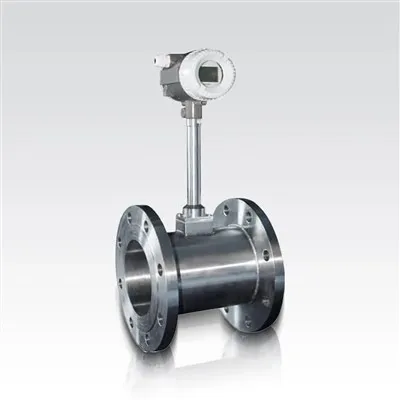
First off, what the heck is a Vortex Flowmeter anyway? Well, a Vortex Flowmeter is a type of flow measurement device that works on the principle of the von Kármán vortex street. When a fluid (that could be a gas or a liquid) flows past a bluff body in the flowmeter, it creates alternating vortices on either side of the body. These vortices generate pressure fluctuations, and the frequency of these fluctuations is directly proportional to the flow velocity of the fluid. This allows us to measure the flow rate accurately.
Now, let's talk about ambient temperature. The ambient temperature is basically the temperature of the surrounding environment where the flowmeter is installed. And trust me, it can play a big role in how well a Vortex Flowmeter performs.


One of the most significant ways ambient temperature affects a Vortex Flowmeter is through its impact on the materials used in the flowmeter's construction. Most Vortex Flowmeters are made of metals like stainless steel or other alloys. Metals expand and contract with changes in temperature. When the ambient temperature rises, the metal parts of the flowmeter will expand. This expansion can cause changes in the dimensions of the bluff body and the flow path inside the meter.
If the bluff body expands, it can alter the size and shape of the vortices that are formed. Remember, the frequency of these vortices is what we use to measure the flow rate. So, any change in the vortex characteristics can lead to inaccurate flow measurements. For example, if the bluff body gets bigger due to thermal expansion, the vortices might form at a different frequency than they would at a normal temperature. This can result in the flowmeter reporting a flow rate that's either higher or lower than the actual flow rate.
On the flip side, when the ambient temperature drops, the metal parts of the flowmeter will contract. This contraction can also affect the flow measurement. The bluff body might become smaller, and the flow path could narrow. These changes can again disrupt the formation of the vortices and lead to measurement errors.
Another aspect to consider is the effect of ambient temperature on the electronics inside the Vortex Flowmeter. Most modern flowmeters have electronic components that are used to detect the pressure fluctuations caused by the vortices and convert them into a readable flow rate. These electronic components are sensitive to temperature changes.
High ambient temperatures can cause the electronic components to overheat. When electronic components overheat, their performance can degrade. They might become less accurate in detecting the pressure fluctuations or in processing the signals. This can lead to unreliable flow measurements. Additionally, overheating can also shorten the lifespan of the electronic components, which means more frequent maintenance and replacement costs for the users.
Low ambient temperatures can also be a problem for the electronics. Cold temperatures can make the components more brittle and increase their electrical resistance. This can affect the signal transmission and processing within the flowmeter, leading to errors in the flow measurement.
Now, you might be wondering how we can deal with these temperature-related issues. Well, as a Vortex Flowmeter supplier, we take several steps to minimize the impact of ambient temperature on our products.
One of the things we do is use materials with low coefficients of thermal expansion. By choosing materials that expand and contract less with temperature changes, we can reduce the dimensional changes in the flowmeter's components. This helps to maintain the accuracy of the flow measurements over a wider range of ambient temperatures.
We also design our flowmeters with temperature compensation features. These features use sensors to measure the ambient temperature and then adjust the flow measurement calculations accordingly. For example, if the temperature sensor detects a rise in temperature, the flowmeter's electronics can make corrections to account for the expansion of the bluff body and ensure that the reported flow rate is accurate.
In addition to these design features, we also provide proper installation guidelines to our customers. We recommend that the flowmeters be installed in locations where the ambient temperature is relatively stable. Avoiding areas near heat sources or in direct sunlight can help to keep the temperature within an acceptable range for the flowmeter's operation.
It's also important to note that ambient temperature isn't the only type of temperature that can affect a Vortex Flowmeter. The temperature of the fluid being measured can also have an impact. The fluid temperature can influence the density and viscosity of the fluid, which in turn can affect the formation of the vortices. However, in this blog, we're mainly focusing on the influence of ambient temperature.
When comparing Vortex Flowmeters with other types of flowmeters, like the Turbine Flow Meter and the LDG Electromagnetic Flowmeter, each type has its own set of temperature-related characteristics.
Turbine Flow Meters work by having the fluid rotate a turbine, and the rotation speed is used to measure the flow rate. Similar to Vortex Flowmeters, temperature can affect the materials and the performance of the turbine. Thermal expansion and contraction can change the dimensions of the turbine blades and the flow path, leading to measurement errors. However, Turbine Flow Meters might be more sensitive to fluid viscosity changes caused by temperature, as the rotation of the turbine is affected by the fluid's resistance.
LDG Electromagnetic Flowmeters, on the other hand, work based on the principle of electromagnetic induction. They measure the flow rate of conductive fluids by detecting the voltage generated as the fluid moves through a magnetic field. While they are generally less affected by ambient temperature compared to Vortex and Turbine Flow Meters, extreme temperature changes can still have an impact on the electrical conductivity of the fluid and the performance of the electronic components.
In conclusion, ambient temperature can have a significant influence on the performance of a Vortex Flowmeter. It can affect the materials, the electronics, and ultimately the accuracy of the flow measurements. But as a reliable Vortex Flowmeter supplier, we're committed to providing high-quality products that are designed to minimize these temperature-related issues.
If you're in the market for a Vortex Flowmeter or have any questions about how ambient temperature might affect your specific application, don't hesitate to reach out. We're here to help you find the best flow measurement solution for your needs. Whether you're dealing with high or low ambient temperatures, we have the expertise and the products to ensure accurate and reliable flow measurements. So, let's start a conversation and see how we can work together to meet your flow measurement requirements.
References
- "Flow Measurement Handbook: Industrial Designs and Applications" by Richard W. Miller
- "Principles of Flow Measurement" by Robert W. Spitzer