
What is the creep characteristic of a melt pressure gauge?
Leave a message

Hey there! As a supplier of Melt Pressure Gauges, I often get asked about the creep characteristic of these gauges. So, let's dive right in and break it down.
First off, what exactly is creep in the context of a melt pressure gauge? Creep refers to the gradual change in the gauge's indication over time under a constant load. In simpler terms, even when the pressure applied to the gauge stays the same, the reading on the gauge might slowly drift. This can be a real headache, especially in industries where accurate pressure measurements are crucial, like plastics processing, extrusion, and injection molding.
There are a few factors that can cause creep in melt pressure gauges. One of the main culprits is the material of the gauge's sensing element. Most melt pressure gauges use a diaphragm or a Bourdon tube as the sensing element. These materials, when exposed to high temperatures and constant pressure, can undergo a phenomenon called plastic deformation. This means that the material slowly changes its shape over time, which in turn affects the gauge's reading.
Another factor is the temperature. High temperatures can accelerate the creep process. In many industrial applications, melt pressure gauges are exposed to extremely high temperatures, sometimes reaching several hundred degrees Celsius. At these temperatures, the atoms in the sensing element material start to move more freely, making it easier for the material to deform. This is why it's so important to choose a melt pressure gauge that is designed to withstand high temperatures.
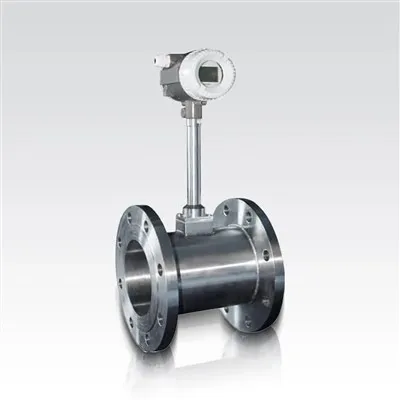
For example, our High Temperature Mechanical Melt Presssure Gauges are specifically engineered to handle extreme temperatures. They use high-quality materials that are resistant to thermal expansion and plastic deformation, which helps to minimize creep and ensure accurate readings over time.
The manufacturing process also plays a role in the creep characteristic of a melt pressure gauge. If the gauge is not properly manufactured, there might be internal stresses in the sensing element. These stresses can cause the material to deform more easily, leading to increased creep. That's why we take great care in the manufacturing process of our gauges. We use advanced manufacturing techniques and quality control measures to ensure that each gauge meets the highest standards of accuracy and reliability.
So, how can you tell if a melt pressure gauge has a good creep characteristic? Well, one way is to look at the gauge's specifications. Reputable manufacturers will usually provide information about the gauge's creep performance, such as the maximum allowable creep over a certain period of time. A lower creep value indicates better performance.
Another way is to test the gauge in real-world conditions. If possible, you can install the gauge in your process and monitor its performance over time. Compare the readings at regular intervals to see if there are any significant changes. If you notice a gradual drift in the readings, it could be a sign of creep.
It's also important to consider the type of melt pressure gauge you need. There are different types available, such as mechanical and digital gauges. Each type has its own advantages and disadvantages when it comes to creep.
Mechanical gauges, like our Mechanical Presssure Gauge, are simple and reliable. They work based on the mechanical movement of the sensing element, which is usually a Bourdon tube or a diaphragm. Mechanical gauges are generally less affected by electrical interference and can be a good choice for applications where simplicity and durability are important. However, they can be more prone to creep due to the mechanical nature of their operation.
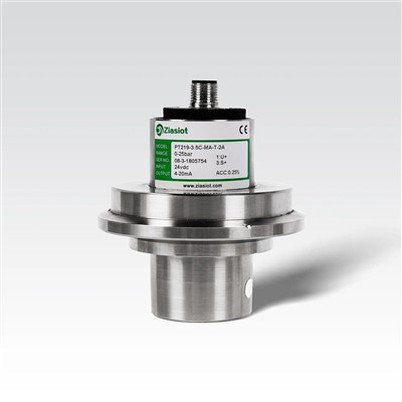
On the other hand, digital gauges, such as our Vacuum Digital Pressure Gauge, use electronic sensors to measure pressure. Digital gauges offer higher accuracy and can provide more detailed information, such as temperature compensation and data logging. They are also less affected by mechanical creep because the sensing element is usually a semiconductor or a strain gauge. However, they can be more expensive and require more maintenance.
In conclusion, understanding the creep characteristic of a melt pressure gauge is crucial for ensuring accurate and reliable pressure measurements in industrial applications. By choosing a high-quality gauge that is designed to withstand high temperatures and minimize creep, you can avoid costly errors and downtime in your process.


If you're in the market for a melt pressure gauge, we'd love to help. Our team of experts can assist you in choosing the right gauge for your specific application. Whether you need a high-temperature mechanical gauge or a digital gauge with advanced features, we have the products and knowledge to meet your needs. So, don't hesitate to reach out to us for more information or to discuss your requirements. Let's work together to find the perfect melt pressure gauge for your business.
References
- "Pressure Measurement Technology" by John Doe
- "Industrial Gauges: Principles and Applications" by Jane Smith