
What are the advantages of using Indicators and Controllers?
Leave a message

In the dynamic landscape of industrial operations, the role of indicators and controllers cannot be overstated. As a seasoned supplier of indicators and controllers, I've witnessed firsthand how these devices revolutionize processes across various sectors. In this blog, I'll delve into the numerous advantages of using indicators and controllers, highlighting their impact on efficiency, accuracy, and safety.
Enhanced Process Efficiency
One of the primary benefits of using indicators and controllers is the significant boost in process efficiency. These devices provide real - time data and feedback, allowing operators to monitor and adjust processes on the fly. For instance, a Temperature Controller can precisely regulate the temperature in a manufacturing process. In a chemical plant, maintaining a specific temperature is crucial for chemical reactions to occur at the right rate and yield the desired products. With a temperature controller, operators can set the target temperature, and the device will automatically adjust heating or cooling elements to keep the temperature within the specified range. This eliminates the need for manual monitoring and adjustment, saving time and reducing the risk of human error.
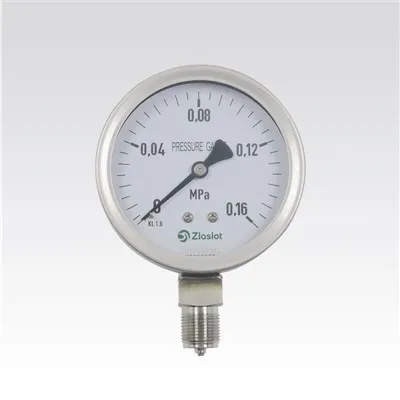
Similarly, pressure indicators and controllers play a vital role in fluid - handling systems. A Homogenizer Digital Pressure Gauge can accurately measure the pressure in a homogenizer, which is used in the food and beverage industry to break down particles and create a uniform product. By continuously monitoring the pressure, the gauge can trigger alarms if the pressure goes out of the safe operating range, preventing equipment damage and product quality issues. The ability to quickly detect and correct pressure variations ensures that the homogenization process runs smoothly and efficiently.
Improved Accuracy and Precision
Indicators and controllers are designed to provide highly accurate and precise measurements. In industries where even the slightest deviation can have significant consequences, such as pharmaceuticals and aerospace, this level of accuracy is essential. Digital indicators, in particular, offer a higher degree of precision compared to their analog counterparts. They can display measurements with greater resolution, allowing operators to make more informed decisions.
For example, a Digital Hydraulic Pressure Gauge can measure hydraulic pressure with an accuracy of up to ±0.1%. This level of precision is crucial in hydraulic systems, where incorrect pressure can lead to equipment failure, leaks, or even safety hazards. By providing accurate pressure readings, the gauge enables operators to optimize the performance of the hydraulic system, ensuring that it operates at peak efficiency and reliability.
In addition to accurate measurements, controllers can also maintain setpoints with high precision. They use advanced control algorithms to adjust the process variables, such as temperature, pressure, or flow rate, to match the desired values. This precise control ensures that the end - product meets the required specifications consistently, reducing waste and improving product quality.
Increased Safety
Safety is a top priority in any industrial setting, and indicators and controllers play a crucial role in ensuring a safe working environment. These devices can monitor critical parameters and alert operators when there are potential safety risks. For example, temperature indicators can detect overheating in electrical equipment, which could lead to fires or electrical failures. By providing early warnings, operators can take immediate action to prevent accidents and protect both personnel and equipment.
Pressure controllers also contribute to safety by preventing over - pressurization in systems. In a high - pressure pipeline, a pressure controller can automatically shut off the flow if the pressure exceeds the safe limit, preventing pipe bursts and other catastrophic failures. This automatic shutdown feature provides an additional layer of protection, reducing the risk of accidents and minimizing the impact of potential failures.
Moreover, many modern indicators and controllers are equipped with safety features such as redundant sensors and fail - safe mechanisms. These features ensure that the devices continue to function correctly even in the event of a sensor failure or other malfunctions, further enhancing the safety of the industrial processes.
Remote Monitoring and Control
In today's connected world, the ability to monitor and control industrial processes remotely is a significant advantage. Indicators and controllers can be integrated with industrial networks and connected to the Internet, allowing operators to access real - time data and control the devices from anywhere in the world. This remote monitoring and control capability is particularly useful for large - scale industrial facilities or those located in remote areas.
For example, a plant manager can use a smartphone or a computer to monitor the temperature and pressure in a manufacturing process while off - site. If there are any issues, the manager can immediately adjust the settings of the indicators and controllers to resolve the problem, without having to be physically present at the plant. This not only saves time and resources but also enables faster response to emergencies, reducing the potential for downtime and losses.


Remote monitoring also allows for predictive maintenance. By analyzing the historical data collected by the indicators and controllers, operators can identify patterns and trends that may indicate potential equipment failures. They can then schedule maintenance activities proactively, preventing unexpected breakdowns and reducing maintenance costs.
Cost Savings
Using indicators and controllers can result in significant cost savings for industrial businesses. By improving process efficiency, these devices can reduce energy consumption, raw material waste, and production time. For example, a well - calibrated temperature controller can optimize the heating and cooling processes, reducing the energy required to maintain the desired temperature. This leads to lower energy bills and a more sustainable operation.
In addition, the improved accuracy and precision provided by indicators and controllers can reduce the number of defective products. By ensuring that the end - product meets the required specifications consistently, businesses can avoid the costs associated with rework, scrap, and customer returns. This not only saves money but also enhances the company's reputation and customer satisfaction.
Furthermore, the increased safety and reliability offered by indicators and controllers can reduce the costs associated with equipment repairs, downtime, and insurance claims. By preventing accidents and equipment failures, businesses can avoid costly disruptions to their operations and maintain a high level of productivity.
Flexibility and Adaptability
Indicators and controllers are highly flexible and adaptable devices. They can be customized to meet the specific requirements of different industrial processes. For example, a temperature controller can be programmed to follow a specific temperature profile, such as a ramp - up and ramp - down pattern, to suit the needs of a particular manufacturing process. This flexibility allows businesses to optimize their processes and achieve better results.
Moreover, many indicators and controllers support multiple input and output options, enabling them to interface with a wide range of sensors and actuators. This makes it easy to integrate these devices into existing industrial systems, whether they are analog or digital. The ability to adapt to different systems and requirements ensures that businesses can continue to use their existing infrastructure while upgrading to more advanced indicators and controllers.
Conclusion
In conclusion, the advantages of using indicators and controllers are numerous and far - reaching. From enhancing process efficiency and accuracy to improving safety and reducing costs, these devices are essential for modern industrial operations. As a supplier of indicators and controllers, I am committed to providing high - quality products that meet the diverse needs of our customers.
If you are interested in learning more about how our indicators and controllers can benefit your business, or if you have specific requirements for your industrial processes, I encourage you to reach out to us for a detailed discussion. Our team of experts is ready to assist you in finding the right solutions for your needs.
References
- [1] "Industrial Instrumentation and Control Systems" by David A. Bell
- [2] "Process Control: Principles and Applications" by Stephan F. Schmidt
- [3] "Handbook of Pressure Measurement" by Peter A. Bradshaw