How does the Vortex Intelligent Flowmeter work in a corrosive gas environment?
Leave a message

In the industrial realm, accurately measuring the flow of corrosive gases is a critical yet challenging task. As a trusted supplier of Vortex Intelligent Flowmeters, I am thrilled to delve into how these sophisticated devices operate effectively in a corrosive gas environment.
Understanding the Basics of Vortex Intelligent Flowmeters
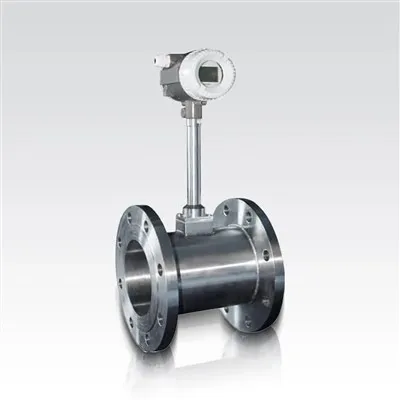
Before we explore their performance in corrosive settings, let's first understand the fundamental working principle of Vortex Intelligent Flowmeters. These flowmeters operate based on the von Kármán vortex street phenomenon. When a fluid (in this case, a gas) flows past a bluff body (also known as a shedder bar) placed in the flow path, vortices are alternately shed from either side of the bluff body. The frequency of these vortex shedding is directly proportional to the fluid velocity.
The Vortex Intelligent Flowmeter is equipped with sensors that detect these vortices. As the vortices are shed, they create pressure fluctuations around the bluff body. These pressure fluctuations are picked up by the sensors, which then convert them into electrical signals. The meter's electronics analyze these signals to determine the frequency of vortex shedding and, subsequently, calculate the flow rate of the gas.
One of the key advantages of Vortex Intelligent Flowmeters is their wide rangeability. They can accurately measure flow rates over a broad spectrum, from relatively low to high flow velocities. This makes them suitable for a variety of industrial applications where the flow rate may vary significantly.
Challenges in a Corrosive Gas Environment
Corrosive gases pose a significant threat to the integrity and performance of flow measurement devices. These gases can react chemically with the materials of the flowmeter, leading to corrosion, erosion, and degradation of the components. Over time, this can result in inaccurate measurements, reduced reliability, and even complete failure of the flowmeter.
Some common corrosive gases encountered in industrial settings include sulfur dioxide (SO₂), hydrogen sulfide (H₂S), chlorine (Cl₂), and ammonia (NH₃). Each of these gases has unique chemical properties and reactivity, which require careful consideration when selecting a flowmeter for a corrosive gas environment.
Design Features for Corrosive Gas Resistance
To ensure reliable operation in a corrosive gas environment, our Vortex Intelligent Flowmeters are designed with several key features.
Material Selection
The choice of materials is crucial in resisting corrosion. Our flowmeters are constructed using high - quality, corrosion - resistant materials. For the wetted parts (the parts that come into contact with the corrosive gas), we often use materials such as stainless steel (e.g., 316L), which has excellent resistance to a wide range of corrosive substances. In more severe corrosive environments, we may also offer options with exotic alloys like Hastelloy or titanium, which provide enhanced protection against highly aggressive gases.
Coating Technologies
In addition to using corrosion - resistant materials, we also employ advanced coating technologies. These coatings act as a barrier between the corrosive gas and the underlying metal surface, further enhancing the flowmeter's resistance to corrosion. For example, ceramic coatings can provide a hard, inert surface that is highly resistant to chemical attack.
Sealing and Enclosure Design
Proper sealing is essential to prevent the corrosive gas from entering the internal components of the flowmeter. Our flowmeters are designed with high - quality seals and gaskets that are resistant to the corrosive effects of the gas. The enclosure of the flowmeter is also designed to be airtight, protecting the electronics from exposure to the corrosive environment.
How the Vortex Intelligent Flowmeter Maintains Accuracy in Corrosive Gases
Despite the challenges posed by corrosive gases, our Vortex Intelligent Flowmeters are engineered to maintain high levels of accuracy.
Self - Diagnostic Capabilities
The intelligent electronics in our flowmeters are equipped with self - diagnostic capabilities. These features continuously monitor the performance of the flowmeter and can detect any signs of corrosion or component degradation. For example, the meter can detect changes in the signal strength or frequency that may indicate a problem with the sensors or the bluff body. If an issue is detected, the flowmeter can alert the operator, allowing for timely maintenance and calibration.
Calibration and Compensation
Regular calibration is essential for ensuring accurate flow measurements, especially in a corrosive gas environment. Our Vortex Intelligent Flowmeters can be easily calibrated using standard calibration procedures. Additionally, the meter's electronics can perform compensation for factors such as temperature and pressure variations, which can affect the accuracy of the flow measurement. This helps to maintain accurate readings even as the operating conditions change.
Comparison with Other Flowmeters in Corrosive Gas Environments
When it comes to measuring the flow of corrosive gases, there are several types of flowmeters available in the market. Let's compare our Vortex Intelligent Flowmeter with two other popular types: the LDG Electromagnetic Flowmeter and the Turbine Flow Meter.
LDG Electromagnetic Flowmeter
The LDG Electromagnetic Flowmeter works based on Faraday's law of electromagnetic induction. It is mainly used for measuring the flow of conductive fluids. In a corrosive gas environment, its applicability is limited because gases are generally non - conductive. Additionally, the wetted parts of the electromagnetic flowmeter may be susceptible to corrosion, which can affect its performance. In contrast, our Vortex Intelligent Flowmeter is suitable for gas flow measurement and is designed to resist corrosion, making it a better choice for corrosive gas applications.
Turbine Flow Meter
The Turbine Flow Meter measures flow by the rotation of a turbine rotor in the fluid stream. In a corrosive gas environment, the moving parts of the turbine flow meter, such as the rotor and bearings, are at risk of corrosion and wear. This can lead to reduced accuracy and reliability over time. Our Vortex Intelligent Flowmeter, on the other hand, has no moving parts in the flow path, which reduces the risk of corrosion - related wear and tear and provides more stable and accurate measurements.
Real - World Applications
Our Vortex Intelligent Flowmeters have been successfully applied in various industries dealing with corrosive gases.
Chemical Industry
In chemical plants, where corrosive gases are commonly produced and processed, our flowmeters are used to measure the flow of gases such as chlorine, hydrogen chloride, and sulfur dioxide. They provide accurate and reliable flow measurements, which are essential for process control, safety, and quality assurance.
Oil and Gas Industry
In the oil and gas sector, our flowmeters are used to measure the flow of corrosive gases such as hydrogen sulfide in pipelines and refineries. By accurately measuring the flow rate of these gases, operators can ensure the efficient and safe operation of the facilities.
Conclusion and Call to Action
In conclusion, our Vortex Intelligent Flowmeters are a reliable solution for measuring the flow of corrosive gases. Their advanced design features, including corrosion - resistant materials, self - diagnostic capabilities, and accurate calibration, enable them to maintain high levels of performance and accuracy in even the most challenging corrosive gas environments.


If you are in need of a high - quality flowmeter for your corrosive gas application, we invite you to contact us for more information. Our team of experts is ready to assist you in selecting the right flowmeter for your specific needs and providing you with the best possible solution. Let us work together to ensure accurate and reliable flow measurement in your industrial processes.
References
- "Flow Measurement Handbook: Industrial Designs and Applications" by Richard W. Miller.
- "Corrosion Engineering" by Mars G. Fontana.
- Technical documents and research papers from the flow measurement industry.