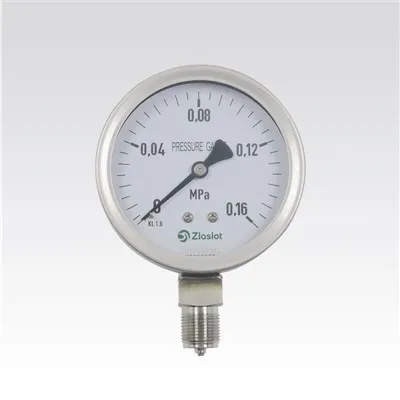
What is the impact of pressure cycling on a homogenizer pressure gauge?
Leave a message

Pressure cycling is a common occurrence in industrial settings where homogenizers are used. As a supplier of Homogenizer Pressure Gauges, I've seen firsthand how pressure cycling can impact these crucial instruments. In this blog, I'll dive into what pressure cycling is, how it affects homogenizer pressure gauges, and what you can do to mitigate any potential issues.
What is Pressure Cycling?
Pressure cycling refers to the repeated increase and decrease of pressure within a system. In the context of homogenizers, this can happen during normal operation as the machine processes different batches of materials. For example, when a homogenizer is used to break down particles in a liquid, the pressure inside the chamber will fluctuate as the liquid is forced through small openings at high speeds.
These fluctuations can occur rapidly and frequently, creating a cycle of high and low pressure. Over time, this cycling can have a significant impact on the performance and longevity of the pressure gauge.
How Pressure Cycling Affects Homogenizer Pressure Gauges
Mechanical Wear and Tear
One of the most immediate effects of pressure cycling is mechanical wear and tear on the gauge. The constant expansion and contraction of the gauge's internal components can cause them to fatigue over time. This is especially true for Mechanical Presssure Gauge, which rely on mechanical mechanisms to measure pressure.
The moving parts inside the gauge, such as the Bourdon tube or diaphragm, are designed to withstand a certain amount of stress. However, repeated pressure cycling can cause these parts to stretch, bend, or break. This can lead to inaccurate readings or even complete gauge failure.
Accuracy Degradation
Pressure cycling can also affect the accuracy of the pressure gauge. As the internal components wear down, the gauge may start to give readings that are either too high or too low. This can be a major problem in industries where precise pressure control is essential, such as in the pharmaceutical or food and beverage industries.


For example, if a homogenizer is used to produce a pharmaceutical product, inaccurate pressure readings could result in a product that does not meet the required quality standards. This could lead to product recalls, loss of revenue, and damage to the company's reputation.
Seal and Leakage Issues
Another issue that can arise from pressure cycling is seal and leakage problems. The seals in the pressure gauge are designed to prevent the escape of pressure and ensure accurate readings. However, the constant pressure changes can cause the seals to deteriorate over time, leading to leaks.
Leaks can not only affect the accuracy of the gauge but also pose a safety hazard. In some cases, leaks can result in the release of hazardous materials, which can be harmful to workers and the environment.
Impact on High Temperature Gauges
If you're using High Temperature Mechanical Melt Presssure Gauges, pressure cycling can be even more problematic. High temperatures can exacerbate the effects of pressure cycling, causing the gauge's internal components to expand and contract more rapidly.
This can lead to increased wear and tear, as well as a higher risk of seal failure. In addition, high temperatures can also affect the accuracy of the gauge, as the materials used in the gauge may be more prone to thermal expansion and contraction.
Digital Gauges and Pressure Cycling
While Vacuum Digital Pressure Gauge are generally more resistant to pressure cycling than mechanical gauges, they are not immune to its effects. Digital gauges rely on electronic sensors to measure pressure, and these sensors can be affected by the repeated pressure changes.
Over time, the sensors may start to drift, leading to inaccurate readings. In addition, the electrical components in the gauge can also be damaged by the pressure cycling, which can result in complete gauge failure.
Mitigating the Impact of Pressure Cycling
Regular Maintenance
One of the most effective ways to mitigate the impact of pressure cycling is to perform regular maintenance on the pressure gauges. This includes cleaning the gauges, checking for leaks, and calibrating them regularly.
Regular maintenance can help to identify and address any potential issues before they become major problems. It can also extend the lifespan of the gauges and ensure that they continue to provide accurate readings.
Use of Shock Absorbers
Another way to reduce the impact of pressure cycling is to use shock absorbers. Shock absorbers are devices that are designed to dampen the effects of pressure fluctuations. They can be installed between the pressure source and the gauge to protect the gauge from sudden changes in pressure.
Shock absorbers can help to reduce the mechanical wear and tear on the gauge, as well as improve its accuracy. They are especially useful in applications where the pressure cycling is severe.
Selecting the Right Gauge
When selecting a pressure gauge for your homogenizer, it's important to choose a gauge that is designed to withstand the specific conditions of your application. This includes considering factors such as the maximum pressure, temperature, and frequency of pressure cycling.
For example, if you're working in a high-temperature environment, you may want to choose a High Temperature Mechanical Melt Presssure Gauges. If you need a gauge that can provide accurate readings in a vacuum environment, a Vacuum Digital Pressure Gauge may be a better choice.
Conclusion
Pressure cycling can have a significant impact on the performance and longevity of homogenizer pressure gauges. However, by understanding the effects of pressure cycling and taking steps to mitigate them, you can ensure that your gauges continue to provide accurate readings and operate safely.
As a supplier of Homogenizer Pressure Gauges, I'm here to help you select the right gauge for your application and provide you with the support and maintenance services you need to keep your gauges in top condition. If you have any questions or need more information, please don't hesitate to contact me. We're always happy to help you with your pressure gauge needs and discuss potential procurement opportunities.
References
- [List of relevant industry standards or technical papers on pressure cycling and pressure gauges if available]
- [Any internal documentation or research from your company related to the topic]